

Join Our Newsletter To Be Informed When New Videos Are Posted
Hebrew Text
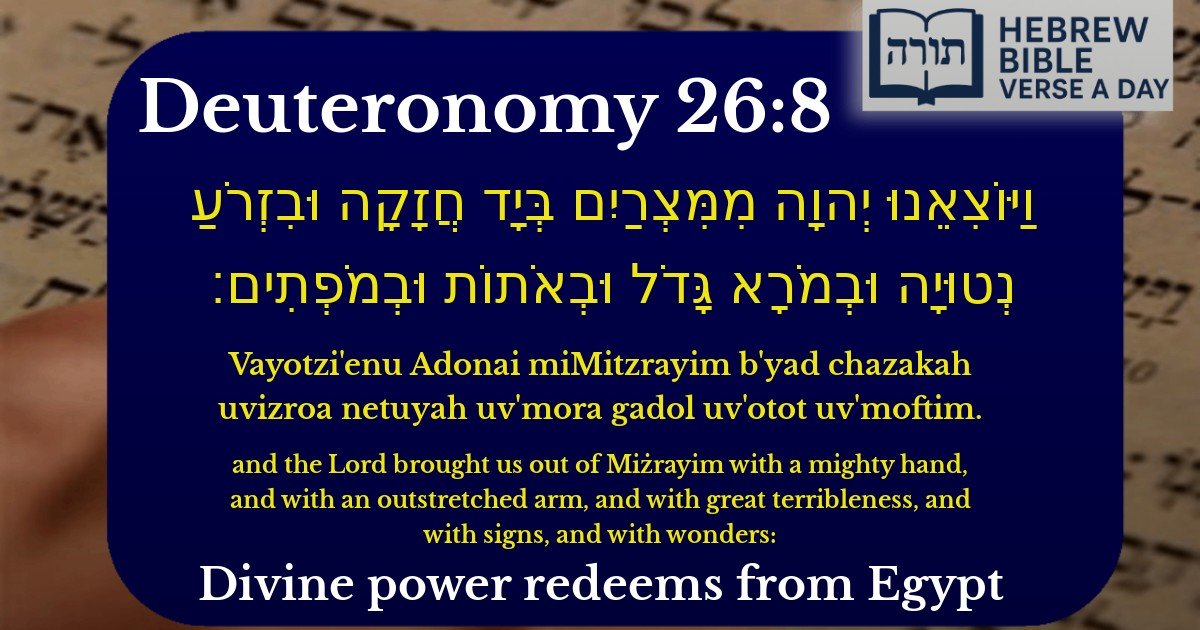
וַיּוֹצִאֵנוּ יְהוָה מִמִּצְרַיִם בְּיָד חֲזָקָה וּבִזְרֹעַ נְטוּיָה וּבְמֹרָא גָּדֹל וּבְאֹתוֹת וּבְמֹפְתִים׃
English Translation
and the Lord brought us out of Miżrayim with a mighty hand, and with an outstretched arm, and with great terribleness, and with signs, and with wonders:
Transliteration
Vayotzi'enu Adonai miMitzrayim b'yad chazakah uvizroa netuyah uv'mora gadol uv'otot uv'moftim.
Hebrew Leining Text
וַיּוֹצִאֵ֤נוּ יְהֹוָה֙ מִמִּצְרַ֔יִם בְּיָ֤ד חֲזָקָה֙ וּבִזְרֹ֣עַ נְטוּיָ֔ה וּבְמֹרָ֖א גָּדֹ֑ל וּבְאֹת֖וֹת וּבְמֹפְתִֽים׃
🎵 Listen to leining
Parasha Commentary
📚 Talmud Citations
This verse is quoted in the Talmud.
📖 Berakhot 9b
The verse is referenced in a discussion about the Exodus from Egypt and the miracles performed by God.
📖 Pesachim 116a
The verse is quoted in the context of the Haggadah, discussing the signs and wonders God performed during the Exodus.
📖 Sotah 11b
The verse is mentioned in a discussion about the hardships endured by the Israelites in Egypt and God's intervention.
The Mighty Hand and Outstretched Arm
The phrase "בְּיָד חֲזָקָה" (with a mighty hand) refers to the fifth plague, דֶּבֶר (pestilence), as explained by Rashi (Devarim 26:8). The "בִזְרֹעַ נְטוּיָה" (outstretched arm) alludes to the sword of divine retribution, as the Midrash (Mechilta Bo 6) teaches that this represents Hashem's direct intervention against Pharaoh and his army.
Great Terribleness and Manifestations
The term "בְמֹרָא גָּדֹל" (with great terribleness) is interpreted by Ramban (Devarim 4:34) as referring to the revelation of the Shechinah at the splitting of the Red Sea, where even the simplest maidservant perceived divine visions greater than those of the prophet Yechezkel (Mechilta Beshalach 15:2). The "אֹתוֹת" (signs) and "מֹפְתִים" (wonders) correspond respectively to the plagues in Egypt and the miracles at the sea, as per Ibn Ezra's distinction.
Four Expressions of Redemption
The Sifrei (Devarim 26:8) notes that this verse contains four expressions of redemption, paralleling the four terms of redemption in Shemot 6:6-7. These correspond to:
Contemporary Significance
The Kli Yakar (Devarim 26:8) emphasizes that these phrases serve as an eternal reminder that our redemption wasn't through natural means, but through overt divine miracles. This forms the basis for our obligation in hagadah (telling) at the Seder, as codified in Rambam's Hilchot Chametz U'Matzah 7:1.