

Join Our Newsletter To Be Informed When New Videos Are Posted
Hebrew Text
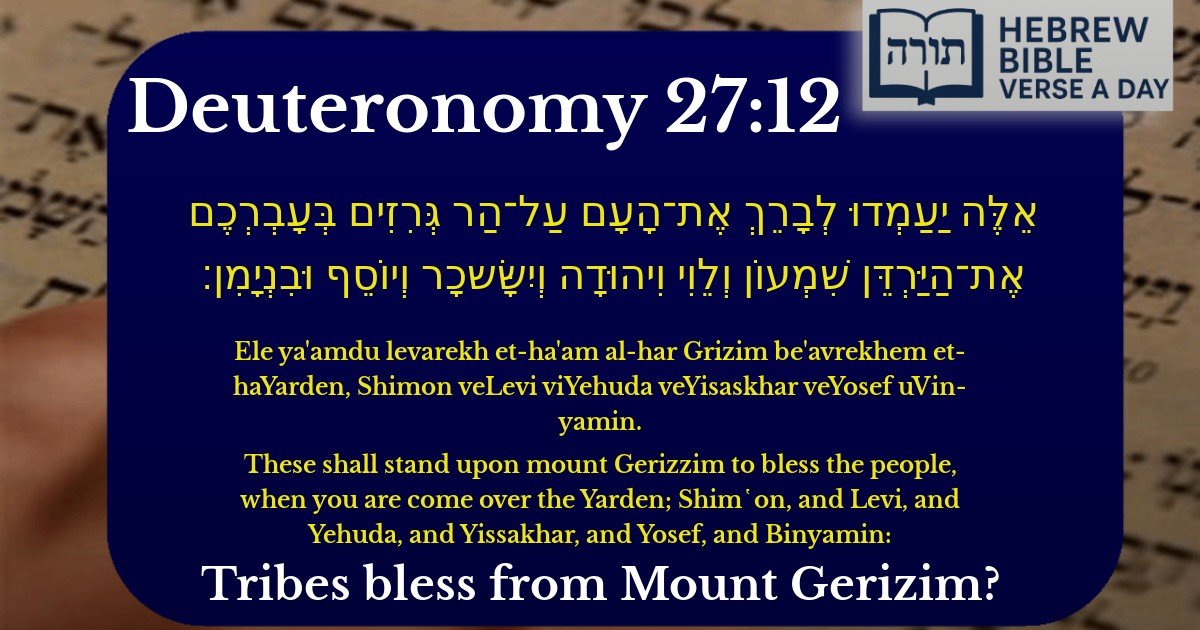
אֵלֶּה יַעַמְדוּ לְבָרֵךְ אֶת־הָעָם עַל־הַר גְּרִזִים בְּעָבְרְכֶם אֶת־הַיַּרְדֵּן שִׁמְעוֹן וְלֵוִי וִיהוּדָה וְיִשָּׂשכָר וְיוֹסֵף וּבִנְיָמִן׃
English Translation
These shall stand upon mount Gerizzim to bless the people, when you are come over the Yarden; Shim῾on, and Levi, and Yehuda, and Yissakhar, and Yosef, and Binyamin:
Transliteration
Ele ya'amdu levarekh et-ha'am al-har Grizim be'avrekhem et-haYarden, Shimon veLevi viYehuda veYisaskhar veYosef uVin-yamin.
Hebrew Leining Text
אֵ֠לֶּה יַֽעַמְד֞וּ לְבָרֵ֤ךְ אֶת־הָעָם֙ עַל־הַ֣ר גְּרִזִ֔ים בְּעׇבְרְכֶ֖ם אֶת־הַיַּרְדֵּ֑ן שִׁמְעוֹן֙ וְלֵוִ֣י וִֽיהוּדָ֔ה וְיִשָּׂשכָ֖ר וְיוֹסֵ֥ף וּבִנְיָמִֽן׃
🎵 Listen to leining
Parasha Commentary
📚 Talmud Citations
This verse is quoted in the Talmud.
📖 Sotah 37a
The verse is discussed in the context of the blessings and curses pronounced on Mount Gerizim and Mount Ebal, detailing the tribes assigned to each mountain for this purpose.
Context in the Torah
The verse (Devarim 27:12) describes the tribes designated to stand on Har Gerizim to recite blessings upon Klal Yisrael upon entering Eretz Yisrael. This follows the mitzvah of Hakhel (assembly) and the ceremony of blessings and curses at Har Gerizim and Har Eival, as commanded by Moshe Rabbeinu.
Selection of the Six Tribes
Rashi (Devarim 27:12) explains that the six tribes chosen to stand on Har Gerizim—Shimon, Levi, Yehuda, Yissachar, Yosef, and Binyamin—were selected because they were born to Yaakov Avinu from Leah and Rachel, the primary wives. The remaining six tribes (Reuven, Gad, Asher, Zevulun, Dan, and Naftali), descended from maidservants or Leah's later children, stood on Har Eival for the curses.
Symbolism of Har Gerizim
The Midrash (Sifrei Devarim 11:29) notes that Har Gerizim was lush and fertile, symbolizing blessing, while Har Eival was barren, representing curses. The tribes standing on Har Gerizim were associated with Torah study and righteousness:
Role of the Kohanim and Leviim
Rambam (Hilchos Beis Habechira 7:5) explains that the Leviim, including the Kohanim, played a central role in proclaiming the blessings and curses. The Ibn Ezra (Devarim 27:12) adds that their presence ensured the sanctity of the ceremony, as they were entrusted with teaching Torah to the nation.
Connection to Kabbalistic Interpretation
The Kli Yakar (Devarim 27:12) suggests that the six tribes on Har Gerizim correspond to the six sefirot (Divine attributes) of Chesed through Yesod, representing Hashem's benevolence. Their positioning on the mountain reinforced the spiritual flow of blessing to Am Yisrael.