Frequently Asked Questions
Q: What does Deuteronomy 27:15 mean?
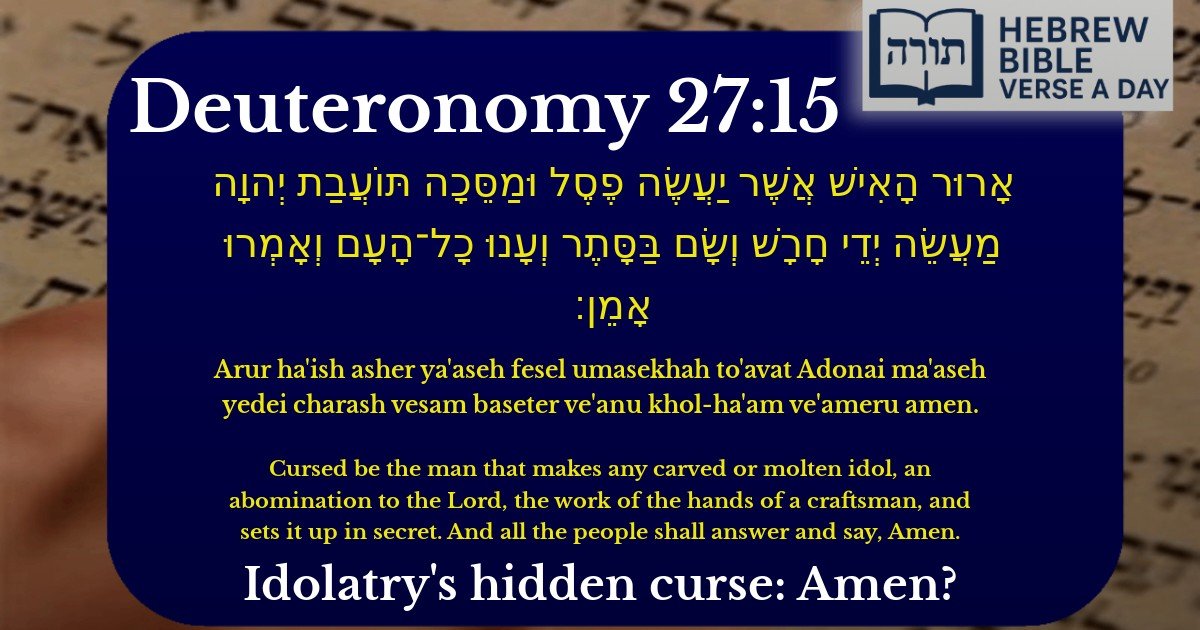
A: Deuteronomy 27:15 states a severe warning against idolatry, specifically cursing anyone who creates or worships a carved or molten idol in secret. The verse emphasizes that idolatry is an abomination to Hashem (God), and the entire nation must respond with 'Amen,' affirming this prohibition. This reflects the Torah's absolute rejection of any form of idol worship.
Q: Why is idolatry considered such a serious sin in Judaism?
A: Idolatry is considered one of the gravest sins in Judaism because it denies the fundamental belief in Hashem's absolute oneness and sovereignty. The Rambam (Maimonides) explains in Hilchot Avodah Zarah that idolatry contradicts the first of the Ten Commandments ('I am the Lord your God'). The Talmud (Sanhedrin 74a) teaches that rejecting idolatry is equivalent to upholding the entire Torah, showing its foundational importance.
Q: Why does the verse mention setting up an idol 'in secret'?
A: Rashi explains that the phrase 'in secret' highlights that even if someone worships idols privately, thinking they can hide it from others, they are still held accountable before Hashem. The Talmud (Sanhedrin 7b) teaches that nothing is hidden from God, and secret sins are just as severe as public ones. This reinforces the idea that true devotion to Hashem requires sincerity in both public and private actions.
Q: Why do the people respond 'Amen' to this curse?
A: The response 'Amen' signifies the nation's collective acceptance of the prohibition against idolatry. The Midrash (Sifrei Devarim) explains that by saying 'Amen,' the people affirm their commitment to Hashem and reject idol worship. This public declaration strengthens communal unity in upholding Torah values and serves as a reminder of the severe consequences of violating this commandment.
Q: How does this verse apply to us today if we don’t worship physical idols?
A: While physical idol worship is rare today, the Torah’s warning extends to any form of misplaced devotion. The Rambam (Hilchot Avodah Zarah 2:1) teaches that idolatry includes attributing divine power to anything other than Hashem, such as excessive obsession with money, fame, or other distractions. The verse reminds us to examine our priorities and ensure that nothing takes the place of serving Hashem wholeheartedly.


Understanding the Verse in Context
This verse appears in Devarim (Deuteronomy) 27:15 as part of the Tochacha (admonitions) and the curses proclaimed on Mount Eival. The Torah commands the Jewish people to affirm these curses with "Amen," demonstrating their rejection of idolatry and commitment to Hashem's commandments. Rashi explains that this specific curse targets one who creates an idol in secret, suggesting that even hidden idolatry is abhorrent and punishable.
The Severity of Idolatry
The verse emphasizes the gravity of idol worship by describing it as "תּוֹעֲבַת יְהוָה" (an abomination to Hashem). The Rambam (Hilchot Avodah Zarah 2:1) teaches that idolatry contradicts the foundation of Torah—the belief in One G-d—and is therefore among the gravest sins. The Sefer HaChinuch (Mitzvah 429) adds that crafting an idol, even if not worshiped, is forbidden because it enables others to stumble into idolatry.
The Role of the Craftsman and Secrecy
The verse specifies "מַעֲשֵׂה יְדֵי חָרָשׁ" (the work of a craftsman's hands), highlighting that human skill should not be misused to create false deities. The Talmud (Sanhedrin 7b) discusses the liability of those who assist in idol-making, including the craftsman. The phrase "וְשָׂם בַּסָּתֶר" (and sets it up in secret) is interpreted by the Ibn Ezra as an attempt to conceal idolatry from public view, indicating hypocrisy—outwardly appearing righteous while secretly sinning.
Public Affirmation with "Amen"
The communal response of "אָמֵן" (Amen) signifies collective acceptance of the curse. The Mishnah (Sotah 7:2) describes how the Levites would proclaim these curses, and the people would respond with "Amen." The Ramban explains that this public declaration reinforces the severity of the sin and unites the nation in rejecting idolatry.
Key Lessons from the Verse