

Join Our Newsletter To Be Informed When New Videos Are Posted
Hebrew Text
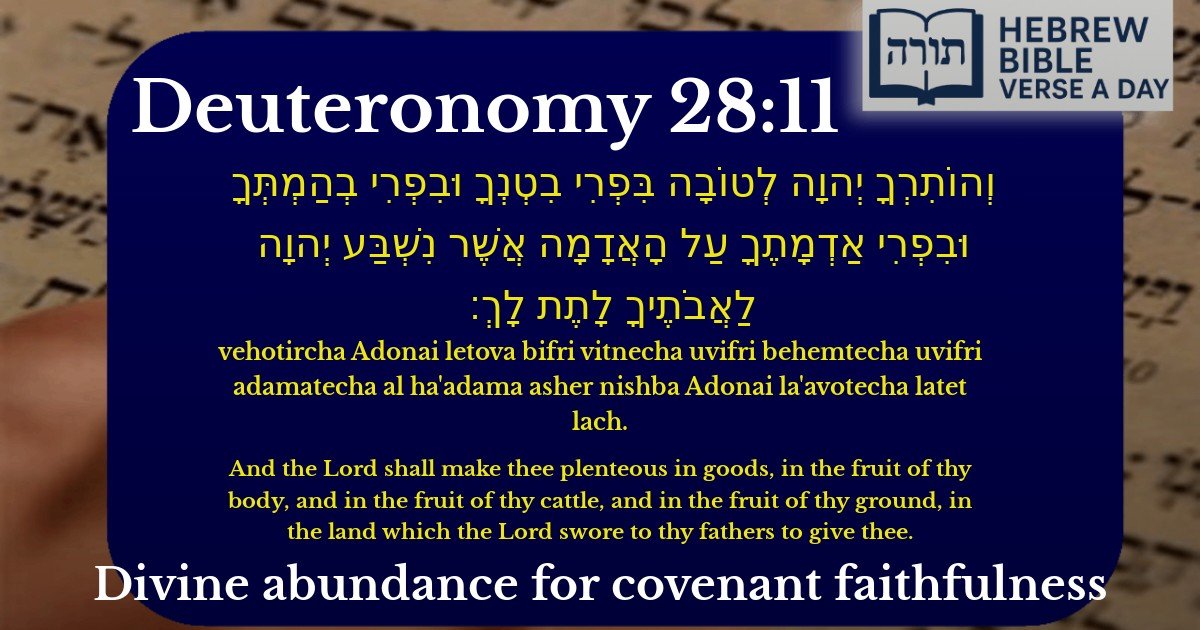
וְהוֹתִרְךָ יְהוָה לְטוֹבָה בִּפְרִי בִטְנְךָ וּבִפְרִי בְהַמְתְּךָ וּבִפְרִי אַדְמָתֶךָ עַל הָאֲדָמָה אֲשֶׁר נִשְׁבַּע יְהוָה לַאֲבֹתֶיךָ לָתֶת לָךְ׃
English Translation
And the Lord shall make thee plenteous in goods, in the fruit of thy body, and in the fruit of thy cattle, and in the fruit of thy ground, in the land which the Lord swore to thy fathers to give thee.
Transliteration
Vehotircha Adonai letova bifri vitnecha uvifri behemtecha uvifri adamatecha al ha'adama asher nishba Adonai la'avotecha latet lach.
Hebrew Leining Text
וְהוֹתִרְךָ֤ יְהֹוָה֙ לְטוֹבָ֔ה בִּפְרִ֧י בִטְנְךָ֛ וּבִפְרִ֥י בְהֶמְתְּךָ֖ וּבִפְרִ֣י אַדְמָתֶ֑ךָ עַ֚ל הָאֲדָמָ֔ה אֲשֶׁ֨ר נִשְׁבַּ֧ע יְהֹוָ֛ה לַאֲבֹתֶ֖יךָ לָ֥תֶת לָֽךְ׃
🎵 Listen to leining
Parasha Commentary
📚 Talmud Citations
This verse is not quoted in the Talmud.
Overview of the Verse
The verse (Devarim 28:11) is part of the Tochacha (rebuke) in Parshat Ki Tavo, where Moshe details the blessings that will come to Bnei Yisrael if they follow the commandments of Hashem. This particular verse emphasizes abundance in three key areas: children, livestock, and agricultural produce—all tied to the Land of Israel, which Hashem swore to give to the Avot (Avraham, Yitzchak, and Yaakov).
Rashi's Commentary
Rashi explains that the phrase "וְהוֹתִרְךָ לְטוֹבָה" ("And the Lord shall make thee plenteous in goods") means that Hashem will elevate Bnei Yisrael above all other nations in material and spiritual prosperity. The term "לְטוֹבָה" ("for good") implies that this abundance will be a true blessing, free from negative consequences like arrogance or wastefulness.
Rambam's Perspective
In Hilchot Teshuva (9:1), the Rambam teaches that material blessings—such as children, livestock, and produce—are contingent upon mitzvah observance. This verse underscores that prosperity in Eretz Yisrael is not merely a natural phenomenon but a direct result of Divine reward for faithfulness to the Torah.
Midrashic Insights
Chassidic Interpretation
The Baal Shem Tov teaches that "פְּרִי בְהַמְתְּךָ" ("fruit of your cattle") symbolizes the refinement of one's animalistic tendencies. True abundance comes when a person elevates their physical desires to serve Hashem, transforming even mundane aspects of life into holiness.
Practical Implications
This verse serves as a reminder that material success is a Divine gift, not an end in itself. The Torah emphasizes that prosperity in Eretz Yisrael is meant to facilitate Torah study, mitzvah observance, and communal welfare—fulfilling the covenant between Hashem and our forefathers.