

Join Our Newsletter To Be Informed When New Videos Are Posted
Hebrew Text
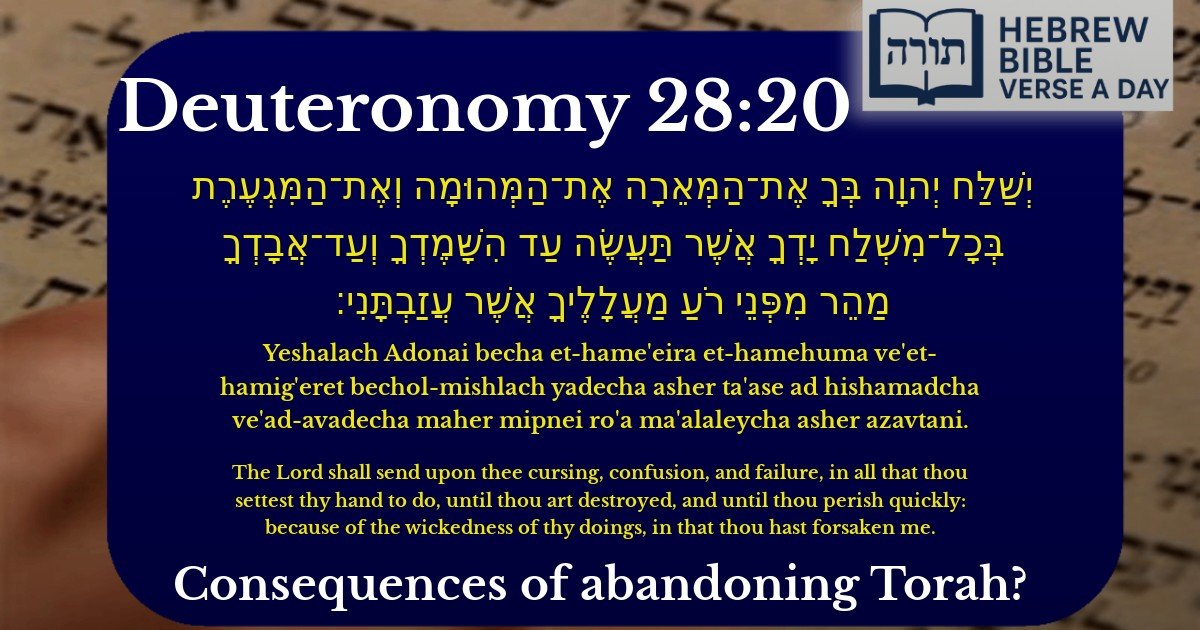
יְשַׁלַּח יְהוָה בְּךָ אֶת־הַמְּאֵרָה אֶת־הַמְּהוּמָה וְאֶת־הַמִּגְעֶרֶת בְּכָל־מִשְׁלַח יָדְךָ אֲשֶׁר תַּעֲשֶׂה עַד הִשָּׁמֶדְךָ וְעַד־אֲבָדְךָ מַהֵר מִפְּנֵי רֹעַ מַעֲלָלֶיךָ אֲשֶׁר עֲזַבְתָּנִי׃
English Translation
The Lord shall send upon thee cursing, confusion, and failure, in all that thou settest thy hand to do, until thou art destroyed, and until thou perish quickly: because of the wickedness of thy doings, in that thou hast forsaken me.
Transliteration
Yeshalach Adonai becha et-hame'eira et-hamehuma ve'et-hamig'eret bechol-mishlach yadecha asher ta'ase ad hishamadcha ve'ad-avadecha maher mipnei ro'a ma'alaleycha asher azavtani.
Hebrew Leining Text
יְשַׁלַּ֣ח יְהֹוָ֣ה ׀ בְּ֠ךָ֠ אֶת־הַמְּאֵרָ֤ה אֶת־הַמְּהוּמָה֙ וְאֶת־הַמִּגְעֶ֔רֶת בְּכׇל־מִשְׁלַ֥ח יָדְךָ֖ אֲשֶׁ֣ר תַּעֲשֶׂ֑ה עַ֣ד הִשָּׁמֶדְךָ֤ וְעַד־אֲבׇדְךָ֙ מַהֵ֔ר מִפְּנֵ֛י רֹ֥עַ מַֽעֲלָלֶ֖יךָ אֲשֶׁ֥ר עֲזַבְתָּֽנִי׃
🎵 Listen to leining
Parasha Commentary
📚 Talmud Citations
This verse is quoted in the Talmud.
📖 Sotah 38b
The verse is referenced in the context of discussing the consequences of forsaking God's commandments and the resulting divine retribution.
📖 Sanhedrin 90b
The verse is cited in a discussion about the severity of divine punishment for those who abandon God's ways.
Understanding the Verse in Context
This verse (Devarim 28:20) appears in the section of the Torah known as the Tochacha (Rebuke), where Moshe warns Bnei Yisrael of the severe consequences they will face if they abandon the mitzvos of Hashem. The verse describes three forms of divine retribution: ha-me’erah (the curse), ha-mehumah (confusion), and ha-mig’eret (failure). These punishments are a direct result of forsaking Hashem and engaging in wicked deeds.
Explanation of the Three Punishments
The Severity of the Consequences
The phrase "until thou art destroyed, and until thou perish quickly" underscores the severity of the punishment. The Rambam (Hilchos Teshuvah 9:1) teaches that these consequences are not arbitrary but are meant to awaken the people to repentance. The Sifrei notes that the speed of destruction ("quickly") is a measure-for-measure response to the rapidity with which Bnei Yisrael may have turned away from Hashem.
The Root Cause: Forsaking Hashem
The verse concludes by identifying the root cause of these punishments: "because of the wickedness of thy doings, in that thou hast forsaken me." Rashi emphasizes that forsaking Hashem means abandoning the Torah and its commandments. The Midrash Tanchuma (Re’eh 3) elaborates that this abandonment leads to moral and spiritual decay, which in turn brings about the described calamities.
Lessons for Today
The Chofetz Chaim (in his commentary on the Torah) highlights that this verse serves as a timeless warning. Even in times of prosperity, one must remain vigilant in Torah observance, as neglect can lead to spiritual and material downfall. The verse reminds us that divine providence is directly linked to our adherence to mitzvos and our relationship with Hashem.