
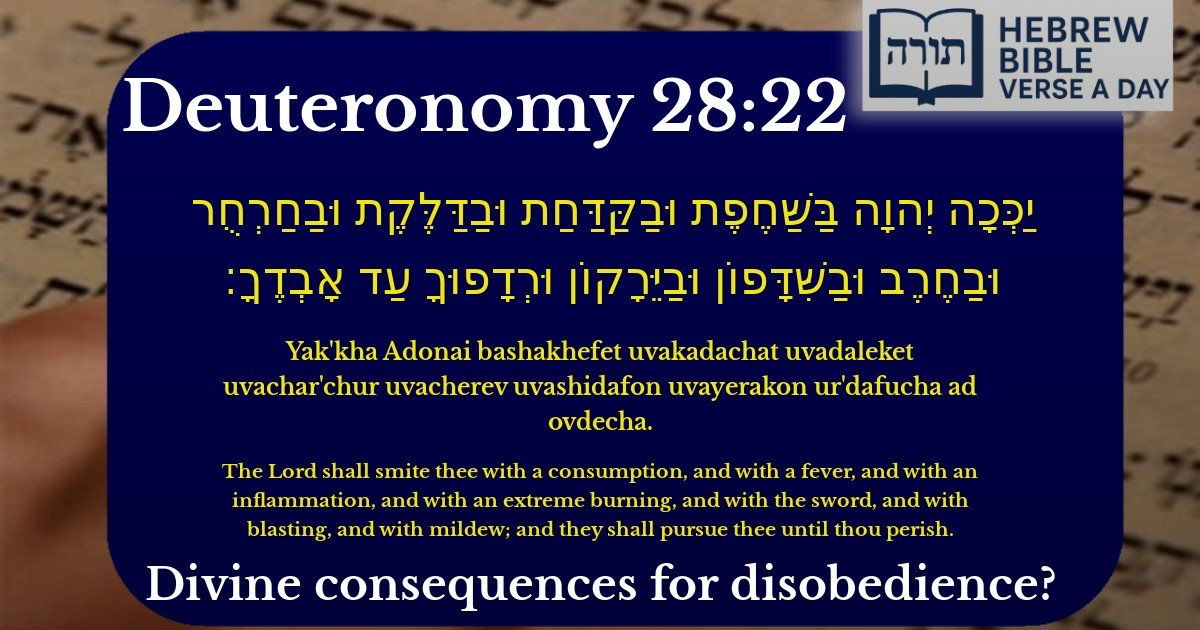

Deuteronomy 28:22 - Divine consequences for disobedience?

Deuteronomy 28:22 - דברים 28:22

Hebrew Text

יַכְּכָה יְהוָה בַּשַּׁחֶפֶת וּבַקַּדַּחַת וּבַדַּלֶּקֶת וּבַחַרְחֻר וּבַחֶרֶב וּבַשִּׁדָּפוֹן וּבַיֵּרָקוֹן וּרְדָפוּךָ עַד אָבְדֶךָ׃

English Translation

The Lord shall smite thee with a consumption, and with a fever, and with an inflammation, and with an extreme burning, and with the sword, and with blasting, and with mildew; and they shall pursue thee until thou perish.

Transliteration

Yak'kha Adonai bashakhefet uvakadachat uvadaleket uvachar'chur uvacherev uvashidafon uvayerakon ur'dafucha ad ovdecha.

Hebrew Leining Text

יַכְּכָ֣ה יְ֠הֹוָ֠ה בַּשַּׁחֶ֨פֶת וּבַקַּדַּ֜חַת וּבַדַּלֶּ֗קֶת וּבַֽחַרְחֻר֙ וּבַחֶ֔רֶב וּבַשִּׁדָּפ֖וֹן וּבַיֵּרָק֑וֹן וּרְדָפ֖וּךָ עַ֥ד אׇבְדֶֽךָ׃

🎵 Listen to leining

Parasha Commentary

Context in the Torah

This verse appears in Devarim (Deuteronomy) 28:22 as part of the Tochacha (the Admonition), a section detailing the consequences that will befall the Jewish people if they fail to uphold the covenant with Hashem. The curses listed here are among the many that serve as warnings against abandoning the Torah's commandments.

Explanation of the Curses

Rashi (Devarim 28:22) explains that these afflictions are severe forms of illness and natural disasters:

  • שַׁחֶפֶת (Consumption) – A wasting disease that causes the body to deteriorate.
  • קַדַּחַת (Fever) – A burning fever that weakens a person.
  • דַּלֶּקֶת (Inflammation) – A fiery sickness, possibly referring to internal inflammation.
  • חַרְחֻר (Extreme Burning) – According to the Sifrei, this refers to intense fevers or skin afflictions.
  • חֶרֶב (Sword) – War and violence brought by enemies.
  • שִׁדָּפוֹן (Blasting) – Crop destruction by scorching winds.
  • יֵרָקוֹן (Mildew) – A plant disease causing withering.

Spiritual and Moral Lessons

The Rambam (Hilchos Ta’anis 1:1-3) teaches that these afflictions are not arbitrary punishments but are meant to awaken repentance. When suffering occurs, one must examine their deeds and return to Hashem. The Tochacha serves as a stark reminder that observance of mitzvos brings blessing, while neglect leads to hardship.

Midrashic Insights

The Midrash Tanchuma (Ki Savo 1) emphasizes that these curses are conditional—they only take effect if the Jewish people stray from Torah. However, even in times of punishment, Hashem’s love for Israel remains, as the ultimate purpose is to bring them back to righteousness.

Practical Implications

The Chofetz Chaim (in his commentary on the Torah) notes that these warnings should inspire vigilance in mitzvah observance. The physical afflictions symbolize spiritual decay, reinforcing the idea that Torah is the source of life and protection.

📚 Talmud Citations

This verse is quoted in the Talmud.

📖 Sotah 38b
The verse is referenced in a discussion about the curses mentioned in the Torah and their implications for those who do not follow the commandments.
📖 Sanhedrin 90a
The verse is cited in a broader discussion about divine punishment and the consequences of sin, particularly in the context of the covenant between God and Israel.

Frequently Asked Questions

Q: What does Deuteronomy 28:22 mean?
A: Deuteronomy 28:22 is part of the 'Tochacha' (Rebuke), where the Torah warns of consequences for not following Hashem's commandments. This verse lists various forms of suffering—illnesses like fever and inflammation, natural disasters like blight and mildew, and war ('the sword')—that may occur as a result of straying from the Torah's path. Rashi explains that these are punishments that come in stages, escalating if repentance does not occur.
Q: Why does the Torah mention specific punishments like fever and blight?
A: The Torah specifies these punishments to emphasize that both physical health (fever, inflammation) and livelihood (blight, mildew) are dependent on our relationship with Hashem. The Rambam (Hilchos Ta'anis 1:1–3) teaches that hardships are meant to awaken us to repent and return to Torah observance. These afflictions are not arbitrary but are directly connected to spiritual causes.
Q: How does this verse apply to us today?
A: While we no longer experience direct prophetic rebukes, the principle remains: our physical and material well-being is tied to our spiritual actions. The Talmud (Berachos 5a) states that suffering can serve as a 'wake-up call' to examine our deeds. Today, we respond to hardships with prayer, repentance, and increased Torah study, as taught by our sages.
Q: What is the significance of the phrase 'they shall pursue thee until thou perish'?
A: This phrase underscores the severity of unrepentant behavior. The Sifri (a Midrashic commentary) explains that these curses are cumulative—each one leads to the next if there is no change. However, the Torah always leaves room for repentance; the Rambam (Hilchos Teshuvah 7:5) teaches that sincere teshuvah (repentance) can nullify harsh decrees.
Q: Are these punishments literal or symbolic?
A: Traditional Jewish interpretation (e.g., Rashi, Ibn Ezra) understands them as literal consequences, though they may also carry deeper spiritual meanings. For example, 'the sword' represents war, while 'blasting and mildew' symbolize agricultural failures. The Midrash (Devarim Rabbah) often links physical afflictions to specific sins, showing how they mirror the spiritual damage caused by wrongdoing.