

Join Our Newsletter To Be Informed When New Videos Are Posted
Hebrew Text
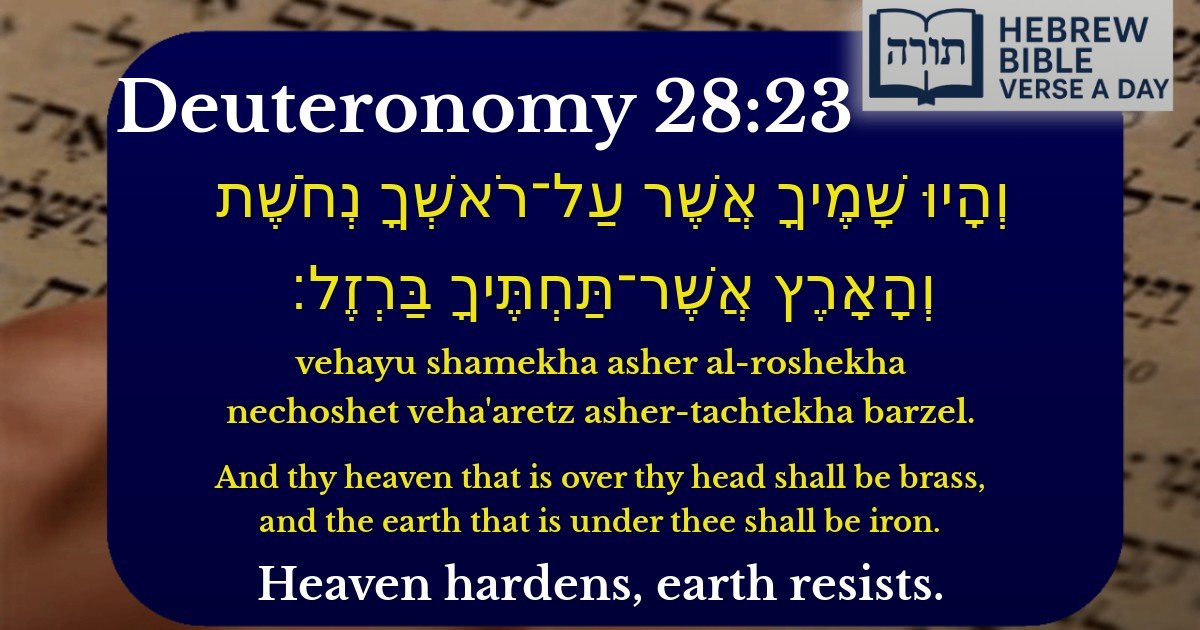
וְהָיוּ שָׁמֶיךָ אֲשֶׁר עַל־רֹאשְׁךָ נְחֹשֶׁת וְהָאָרֶץ אֲשֶׁר־תַּחְתֶּיךָ בַּרְזֶל׃
English Translation
And thy heaven that is over thy head shall be brass, and the earth that is under thee shall be iron.
Transliteration
Vehayu shamekha asher al-roshekha nechoshet veha'aretz asher-tachtekha barzel.
Hebrew Leining Text
וְהָי֥וּ שָׁמֶ֛יךָ אֲשֶׁ֥ר עַל־רֹאשְׁךָ֖ נְחֹ֑שֶׁת וְהָאָ֥רֶץ אֲשֶׁר־תַּחְתֶּ֖יךָ בַּרְזֶֽל׃
🎵 Listen to leining
Parasha Commentary
📚 Talmud Citations
This verse is quoted in the Talmud.
📖 Ta'anit 7b
The verse is referenced in a discussion about the consequences of not fulfilling Torah commandments, illustrating the severity of divine punishment.
📖 Chagigah 12b
The verse is mentioned in a broader discussion about the heavens and the earth, symbolizing harsh conditions as a result of sin.
Context in the Torah
This verse appears in Devarim (Deuteronomy) 28:23, as part of the Tochacha (the rebuke), where Moshe warns Bnei Yisrael of the severe consequences that will befall them if they abandon the mitzvos of Hashem. The imagery of a brazen heaven and an iron earth symbolizes harsh conditions—drought, famine, and divine withholding of blessing.
Rashi's Explanation
Rashi explains that "heaven of brass" means the skies will not release rain, as if sealed by metal, while "earth of iron" implies the ground will not yield produce, as hard as iron. This reflects a state where tefillah (prayer) for rain is ineffective (Rashi on Devarim 28:23).
Ibn Ezra's Insight
Ibn Ezra emphasizes the severity: brass and iron are impermeable, representing a complete cessation of heavenly and earthly bounty. Unlike temporary hardship, this describes a prolonged, unrelenting curse where even basic sustenance is denied (Ibn Ezra on Devarim 28:23).
Midrashic Interpretation
The Midrash Tanchuma (Re’eh 4) links this verse to the spiritual state of the people: when they harden their hearts like metal, Heaven responds in kind. The metals symbolize mutual rigidity—Hashem’s judgment mirrors human obstinacy.
Rambam on Divine Retribution
Rambam (Hilchos Ta’anis 1:1–3) teaches that such curses are measure-for-measure consequences for abandoning Torah. Drought and famine are not arbitrary punishments but direct results of severing the covenantal bond with Hashem.
Practical Implications
Symbolic Layers
The metals also allude to exile: brass (nechoshet) hints to Babylon (Daniel 2:32), and iron (barzel) to Edom (Rome), foreshadowing future subjugations if the covenant is violated (Sifri Devarim 28:23).