

Join Our Newsletter To Be Informed When New Videos Are Posted
Hebrew Text
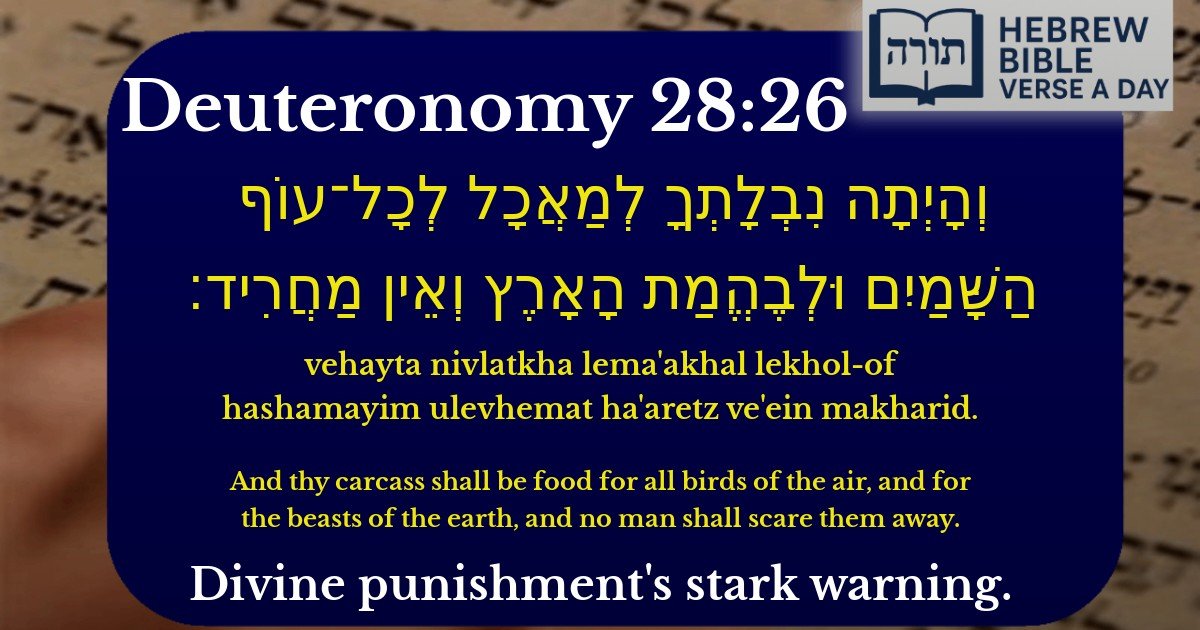
וְהָיְתָה נִבְלָתְךָ לְמַאֲכָל לְכָל־עוֹף הַשָּׁמַיִם וּלְבֶהֱמַת הָאָרֶץ וְאֵין מַחֲרִיד׃
English Translation
And thy carcass shall be food for all birds of the air, and for the beasts of the earth, and no man shall scare them away.
Transliteration
Vehayta nivlatkha lema'akhal lekhol-of hashamayim ulevhemat ha'aretz ve'ein makharid.
Hebrew Leining Text
וְהָיְתָ֤ה נִבְלָֽתְךָ֙ לְמַֽאֲכָ֔ל לְכׇל־ע֥וֹף הַשָּׁמַ֖יִם וּלְבֶהֱמַ֣ת הָאָ֑רֶץ וְאֵ֖ין מַחֲרִֽיד׃
🎵 Listen to leining
Parasha Commentary
📚 Talmud Citations
This verse is quoted in the Talmud.
📖 Sanhedrin 90b
The verse is referenced in a discussion about the resurrection of the dead, where it is argued that the dead will be revived even if their bodies have been scattered or consumed by animals.
📖 Gittin 56b
The verse is cited in the context of a narrative about the destruction of Jerusalem, illustrating the severity of divine punishment.
Context in the Torah
This verse appears in Devarim (Deuteronomy 28:26) as part of the Tochacha (the Rebuke), a series of severe warnings for failing to observe the commandments. The imagery of unburied corpses being devoured by birds and beasts is one of the curses for abandoning the covenant with Hashem.
Rashi's Explanation
Rashi (Devarim 28:26) explains that this curse signifies utter disgrace—the deceased will not receive a proper burial, and no one will even care to chase away the scavengers. This reflects a complete breakdown of societal compassion and dignity, a consequence of straying from Torah values.
Ibn Ezra's Insight
Ibn Ezra emphasizes that the phrase "וְאֵין מַחֲרִיד" ("and no man shall scare them away") indicates a state of total abandonment. Even those who would normally show respect for the dead will be indifferent, highlighting the severity of divine retribution for forsaking the mitzvot.
Midrashic Interpretation
The Sifrei (a halachic Midrash on Devarim) connects this verse to the concept of Kiddush Hashem (sanctification of G-d's name). When Jews live righteously, their dignity reflects well on Hashem; conversely, this curse represents a Chillul Hashem (desecration of G-d's name), where Israel's suffering leads to scorn among the nations.
Rambam's Perspective
In Hilchot Teshuvah (Laws of Repentance 9:1), Rambam teaches that these curses are not inevitable but serve as warnings to inspire repentance. The degradation described here is avoidable through sincere teshuvah (repentance) and recommitment to Torah observance.
Symbolic Meaning