

Join Our Newsletter To Be Informed When New Videos Are Posted
Hebrew Text
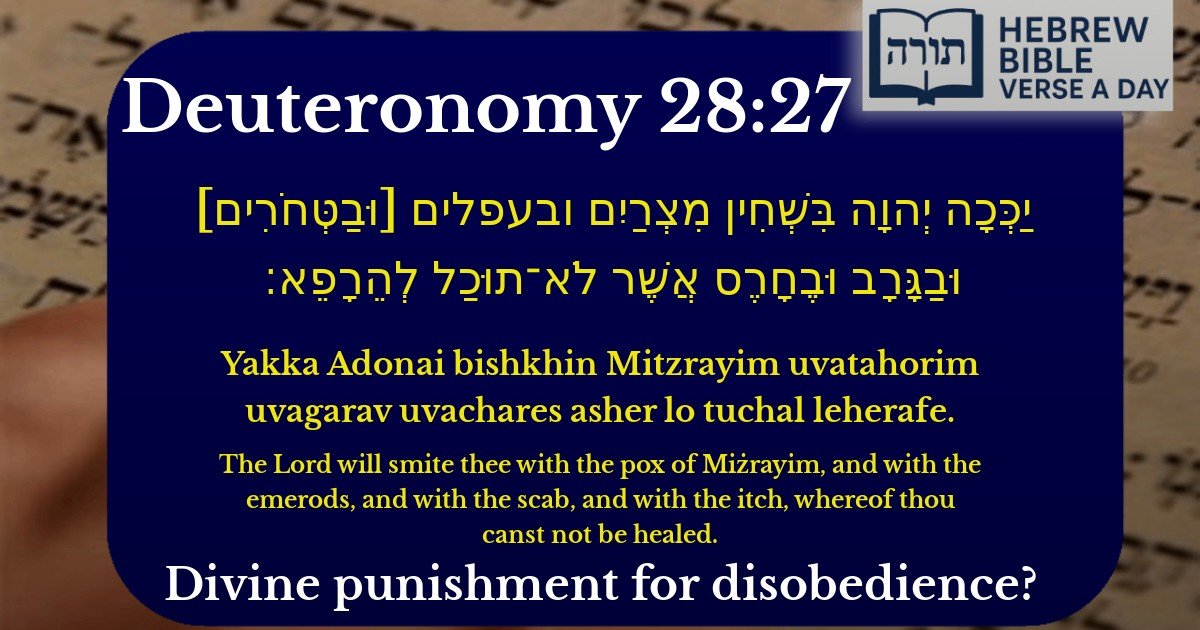
יַכְּכָה יְהוָה בִּשְׁחִין מִצְרַיִם ובעפלים [וּבַטְּחֹרִים] וּבַגָּרָב וּבֶחָרֶס אֲשֶׁר לֹא־תוּכַל לְהֵרָפֵא׃
English Translation
The Lord will smite thee with the pox of Miżrayim, and with the emerods, and with the scab, and with the itch, whereof thou canst not be healed.
Transliteration
Yakka Adonai bishkhin Mitzrayim uvatahorim uvagarav uvachares asher lo tuchal leherafe.
Hebrew Leining Text
יַכְּכָ֨ה יְהֹוָ֜ה בִּשְׁחִ֤ין מִצְרַ֙יִם֙ (ובעפלים) [וּבַטְּחֹרִ֔ים] וּבַגָּרָ֖ב וּבֶחָ֑רֶס אֲשֶׁ֥ר לֹא־תוּכַ֖ל לְהֵרָפֵֽא׃
🎵 Listen to leining
Parasha Commentary
📚 Talmud Citations
This verse is not quoted in the Talmud.
Context in the Torah
This verse appears in Devarim (Deuteronomy) 28:27 as part of the Tochacha (the Admonition), a section detailing the severe consequences that will befall the Jewish people if they abandon the covenant with Hashem. The curses listed here are physical afflictions, mirroring some of the plagues that struck Mitzrayim (Egypt), emphasizing that those who reject Torah will suffer similar punishments.
Explanation of the Afflictions
Spiritual Implications
The Kli Yakar teaches that these afflictions are not merely physical but reflect spiritual decay. Just as Egypt was punished for its cruelty and arrogance, so too will those who stray from Torah suffer ailments that defy healing, symbolizing a rupture in their relationship with Hashem. The phrase "אֲשֶׁר לֹא־תוּכַל לְהֵרָפֵא" (which you cannot be healed from) underscores that without repentance, these curses remain inescapable.
Connection to Repentance
The Rambam in Hilchot Ta’anit (Laws of Fasting) emphasizes that suffering should prompt introspection and teshuvah (repentance). The Midrash Tanchuma (Re’eh 4) notes that even in punishment, Hashem leaves room for mercy—if the people return to Him, healing becomes possible.