

Join Our Newsletter To Be Informed When New Videos Are Posted
Hebrew Text
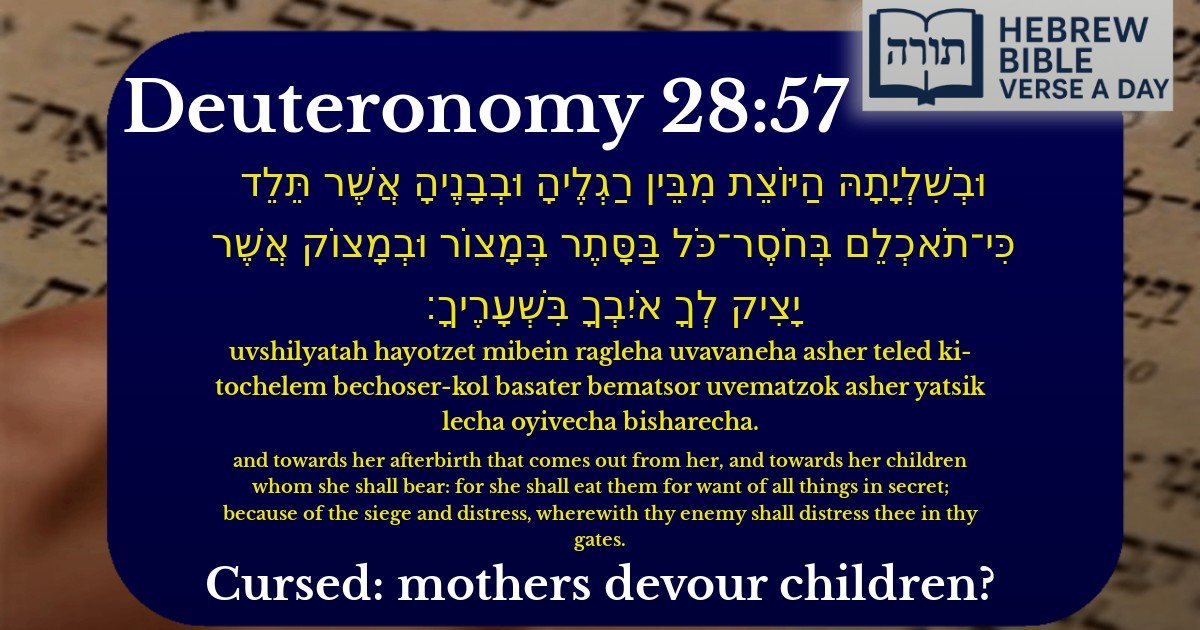
וּבְשִׁלְיָתָהּ הַיּוֹצֵת מִבֵּין רַגְלֶיהָ וּבְבָנֶיהָ אֲשֶׁר תֵּלֵד כִּי־תֹאכְלֵם בְּחֹסֶר־כֹּל בַּסָּתֶר בְּמָצוֹר וּבְמָצוֹק אֲשֶׁר יָצִיק לְךָ אֹיִבְךָ בִּשְׁעָרֶיךָ׃
English Translation
and towards her afterbirth that comes out from her, and towards her children whom she shall bear: for she shall eat them for want of all things in secret; because of the siege and distress, wherewith thy enemy shall distress thee in thy gates.
Transliteration
Uvshilyatah hayotzet mibein ragleha uvavaneha asher teled ki-tochelem bechoser-kol basater bematsor uvematzok asher yatsik lecha oyivecha bisharecha.
Hebrew Leining Text
וּֽבְשִׁלְיָתָ֞הּ הַיּוֹצֵ֣ת ׀ מִבֵּ֣ין רַגְלֶ֗יהָ וּבְבָנֶ֙יהָ֙ אֲשֶׁ֣ר תֵּלֵ֔ד כִּֽי־תֹאכְלֵ֥ם בְּחֹסֶר־כֹּ֖ל בַּסָּ֑תֶר בְּמָצוֹר֙ וּבְמָצ֔וֹק אֲשֶׁ֨ר יָצִ֥יק לְךָ֛ אֹיִבְךָ֖ בִּשְׁעָרֶֽיךָ׃
🎵 Listen to leining
Parasha Commentary
📚 Talmud Citations
This verse is not quoted in the Talmud.
Context in Devarim (Deuteronomy)
This verse appears in Devarim 28:57 as part of the Tochacha (the Admonition), a section detailing the severe consequences that will befall the Jewish people if they abandon the covenant with Hashem. The imagery is graphic and serves as a stark warning about the horrors of siege warfare and famine.
Literal Interpretation (Peshat)
Rashi explains that this verse describes the desperation of a mother during a siege, where food is so scarce that she secretly consumes her own afterbirth and even her newborn children to survive. The phrase "בְּחֹסֶר־כֹּל" ("for want of all things") emphasizes the extremity of the famine, where no sustenance remains. The enemy's siege ("בְּמָצוֹר") and distress ("וּבְמָצוֹק") will be so overwhelming that even basic human dignity is lost.
Midrashic Insights
The Midrash (Sifrei Devarim 307) elaborates that this curse reflects the inversion of natural maternal instincts—a mother who would typically nurture her child is reduced to consuming it due to the severity of the punishment. The Talmud (Gittin 56b) connects this imagery to the destruction of the Second Temple, where such horrors were tragically witnessed during the Roman siege of Jerusalem.
Halachic and Ethical Dimensions
Spiritual Message
The Kli Yakar teaches that this verse underscores the principle of middah k'neged middah (measure for measure). If the Jewish people neglect Torah and kindness, they will experience the opposite—extreme cruelty and deprivation. The "gates" ("שְׁעָרֶיךָ") symbolize both physical vulnerability and spiritual decline, as the city's defenses and moral foundations collapse together.