

Join Our Newsletter To Be Informed When New Videos Are Posted
Hebrew Text
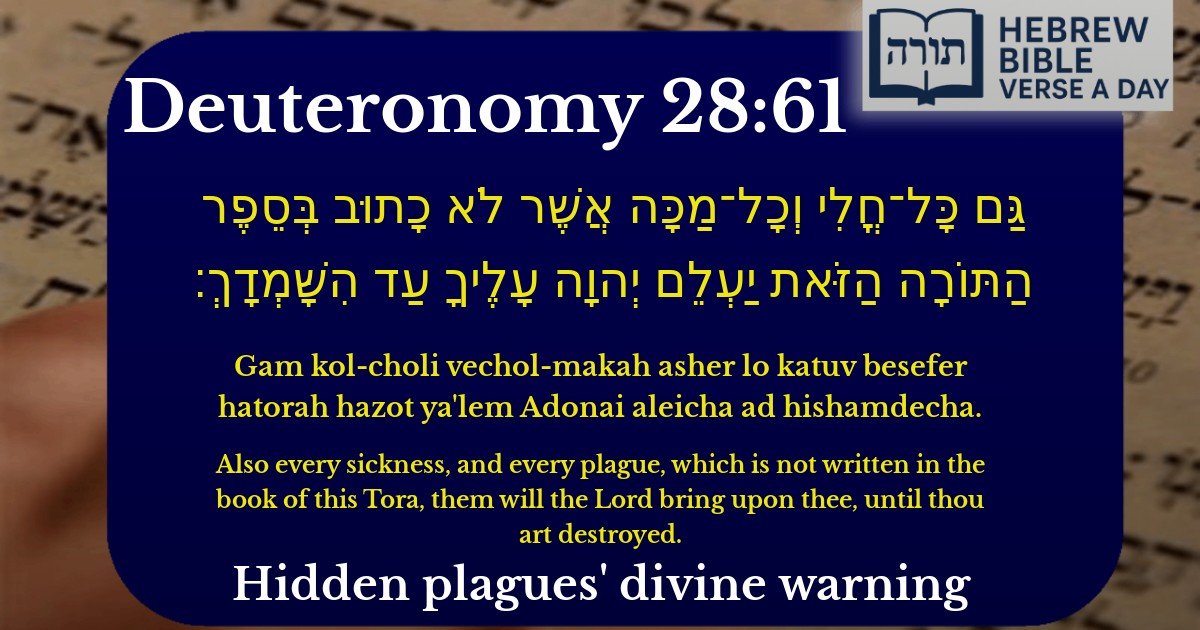
גַּם כָּל־חֳלִי וְכָל־מַכָּה אֲשֶׁר לֹא כָתוּב בְּסֵפֶר הַתּוֹרָה הַזֹּאת יַעְלֵם יְהוָה עָלֶיךָ עַד הִשָּׁמְדָךְ׃
English Translation
Also every sickness, and every plague, which is not written in the book of this Tora, them will the Lord bring upon thee, until thou art destroyed.
Transliteration
Gam kol-choli vechol-makah asher lo katuv besefer hatorah hazot ya'lem Adonai aleicha ad hishamdecha.
Hebrew Leining Text
גַּ֤ם כׇּל־חֳלִי֙ וְכׇל־מַכָּ֔ה אֲשֶׁר֙ לֹ֣א כָת֔וּב בְּסֵ֖פֶר הַתּוֹרָ֣ה הַזֹּ֑את יַעְלֵ֤ם יְהֹוָה֙ עָלֶ֔יךָ עַ֖ד הִשָּׁמְדָֽךְ׃
🎵 Listen to leining
Parasha Commentary
📚 Talmud Citations
This verse is not quoted in the Talmud.
Context in Devarim (Deuteronomy)
The verse (Devarim 28:61) appears in the Tochacha (the rebuke), a section detailing the consequences of abandoning the covenant with Hashem. It warns of additional afflictions beyond those explicitly listed in the Torah if Bnei Yisrael fail to uphold their obligations.
Rashi's Explanation
Rashi (Devarim 28:61) clarifies that this verse refers to illnesses and plagues not mentioned earlier in the Torah. He connects this to the phrase "until thou art destroyed," explaining that these hidden afflictions will persist until the nation repents or faces exile. Rashi emphasizes that even unlisted punishments stem from divine justice, reinforcing the principle of middah k'neged middah (measure for measure).
Rambam's Perspective
In Hilchot Ta'anit (1:1-3), Rambam discusses how suffering serves as a wake-up call for teshuvah (repentance). This verse aligns with his view that all hardships—whether explicitly mentioned in the Torah or not—are ultimately meant to redirect us toward mitzvot and divine service.
Midrashic Interpretation
The Sifrei (Devarim 303) links this verse to the curses in Vayikra (Leviticus 26), suggesting that the "unwritten plagues" include historical calamities like the destruction of the Temples. The Midrash teaches that these sufferings are not arbitrary but reflect the severity of straying from Torah.
Ibn Ezra's Insight
Ibn Ezra notes that the phrase "book of this Torah" refers specifically to the written Torah, implying that oral traditions (later codified in the Talmud) may elaborate on these afflictions. This underscores the interdependence of written and oral Torah in understanding divine retribution.
Practical Implications