

Join Our Newsletter To Be Informed When New Videos Are Posted
Hebrew Text
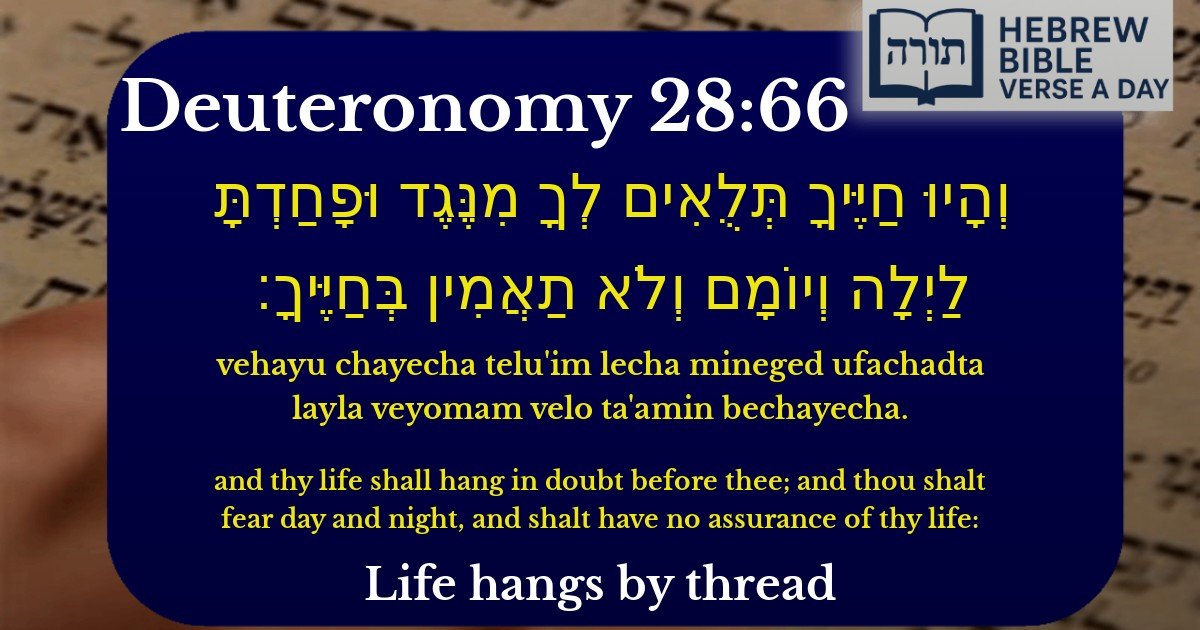
וְהָיוּ חַיֶּיךָ תְּלֻאִים לְךָ מִנֶּגֶד וּפָחַדְתָּ לַיְלָה וְיוֹמָם וְלֹא תַאֲמִין בְּחַיֶּיךָ׃
English Translation
and thy life shall hang in doubt before thee; and thou shalt fear day and night, and shalt have no assurance of thy life:
Transliteration
Vehayu chayecha telu'im lecha mineged ufachadta layla veyomam velo ta'amin bechayecha.
Hebrew Leining Text
וְהָי֣וּ חַיֶּ֔יךָ תְּלֻאִ֥ים לְךָ֖ מִנֶּ֑גֶד וּפָֽחַדְתָּ֙ לַ֣יְלָה וְיוֹמָ֔ם וְלֹ֥א תַאֲמִ֖ין בְּחַיֶּֽיךָ׃
🎵 Listen to leining
Parasha Commentary
📚 Talmud Citations
This verse is quoted in the Talmud.
📖 Sanhedrin 97a
The verse is referenced in the context of discussing the hardships and uncertainties of the period preceding the coming of the Messiah.
📖 Megillah 17b
The verse is alluded to in a discussion about the suffering and fear experienced during times of divine judgment.
Context in the Torah
This verse (Devarim 28:66) appears in the Tochacha (Rebuke), a section of dire warnings for failing to observe the mitzvos. The Torah describes the severe consequences of abandoning the covenant, including existential insecurity and constant fear.
Rashi's Explanation
Rashi interprets "thy life shall hang in doubt before thee" as a state where a person lives in perpetual uncertainty—never knowing whether they will live or die. He connects this to the historical exile, where Jews were subjected to unpredictable persecution and danger. The phrase "and shalt have no assurance of thy life" further emphasizes this instability, where even basic survival is uncertain.
Rambam's Perspective
In Hilchos Teshuvah (Laws of Repentance), Rambam teaches that these curses are not arbitrary punishments but corrective measures meant to inspire repentance. The psychological torment described in this verse—fearing both day and night—serves as a wake-up call to return to Hashem.
Midrashic Interpretation
The Midrash Tanchuma (Ki Savo 4) elaborates that this verse reflects the suffering of exile, where Jews live under oppressive regimes, never secure in their lives or property. The phrase "and thou shalt fear day and night" is understood as a state of unrelenting anxiety, where even moments of rest are disturbed by dread.
Ibn Ezra's Insight
Ibn Ezra notes that the phrase "thy life shall hang in doubt" suggests a life suspended between hope and despair, where one cannot trust even the most basic aspects of existence. This mirrors the historical experiences of persecution, where survival was never guaranteed.
Practical Lessons