

Join Our Newsletter To Be Informed When New Videos Are Posted
Hebrew Text
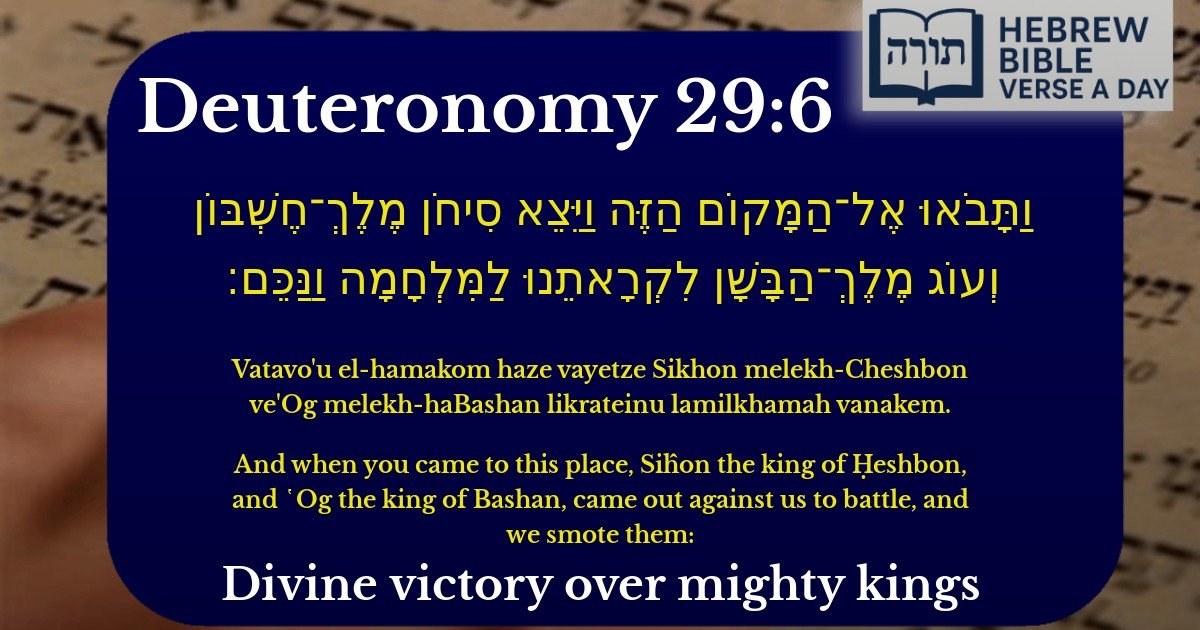
וַתָּבֹאוּ אֶל־הַמָּקוֹם הַזֶּה וַיֵּצֵא סִיחֹן מֶלֶךְ־חֶשְׁבּוֹן וְעוֹג מֶלֶךְ־הַבָּשָׁן לִקְרָאתֵנוּ לַמִּלְחָמָה וַנַּכֵּם׃
English Translation
And when you came to this place, Siĥon the king of Ḥeshbon, and ῾Og the king of Bashan, came out against us to battle, and we smote them:
Transliteration
Vatavo'u el-hamakom haze vayetze Sikhon melekh-Cheshbon ve'Og melekh-haBashan likrateinu lamilkhamah vanakem.
Hebrew Leining Text
וַתָּבֹ֖אוּ אֶל־הַמָּק֣וֹם הַזֶּ֑ה וַיֵּצֵ֣א סִיחֹ֣ן מֶֽלֶךְ־חֶ֠שְׁבּ֠וֹן וְע֨וֹג מֶלֶךְ־הַבָּשָׁ֧ן לִקְרָאתֵ֛נוּ לַמִּלְחָמָ֖ה וַנַּכֵּֽם׃
🎵 Listen to leining
Parasha Commentary
📚 Talmud Citations
This verse is quoted in the Talmud.
📖 Berakhot 54b
The verse is referenced in the context of discussing the miracles performed for the Israelites, particularly the victories over Sihon and Og, which are considered among the great miracles that warrant special blessings.
📖 Megillah 3a
The verse is mentioned in a discussion about the historical battles of the Israelites and the significance of these victories in Jewish history.
Context of the Verse
This verse (Devarim 2:32) recounts the military confrontation between Bnei Yisrael and the Emorite kings, Sichon and Og, as they approached Eretz Yisrael. The Torah emphasizes that these kings initiated the battle, and Hashem granted Bnei Yisrael victory over them.
Rashi's Explanation
Rashi (Devarim 2:32) notes that the phrase "וַיֵּצֵא סִיחֹן" ("Sichon came out") implies that Sichon took the initiative to attack Bnei Yisrael, despite the fact that Moshe had initially sought peaceful passage through their land (as described in Devarim 2:26-29). This aggression justified Bnei Yisrael's subsequent conquest of their territory.
Midrashic Insights
Rambam's Perspective
In Hilchot Melachim (6:1-5), the Rambam discusses the laws of war, including the requirement to first offer terms of peace before engaging in battle. Here, Sichon and Og rejected peaceful overtures, making war inevitable. Their defeat was thus a fulfillment of divine justice.
Significance of the Victory
The conquest of Sichon and Og served as a critical step in Bnei Yisrael's entry into Eretz Yisrael. The Gemara (Berachot 54b) includes these victories among the miracles for which one must recite Birkat HaGomel, emphasizing their importance in Jewish history.