

Join Our Newsletter To Be Informed When New Videos Are Posted
Hebrew Text
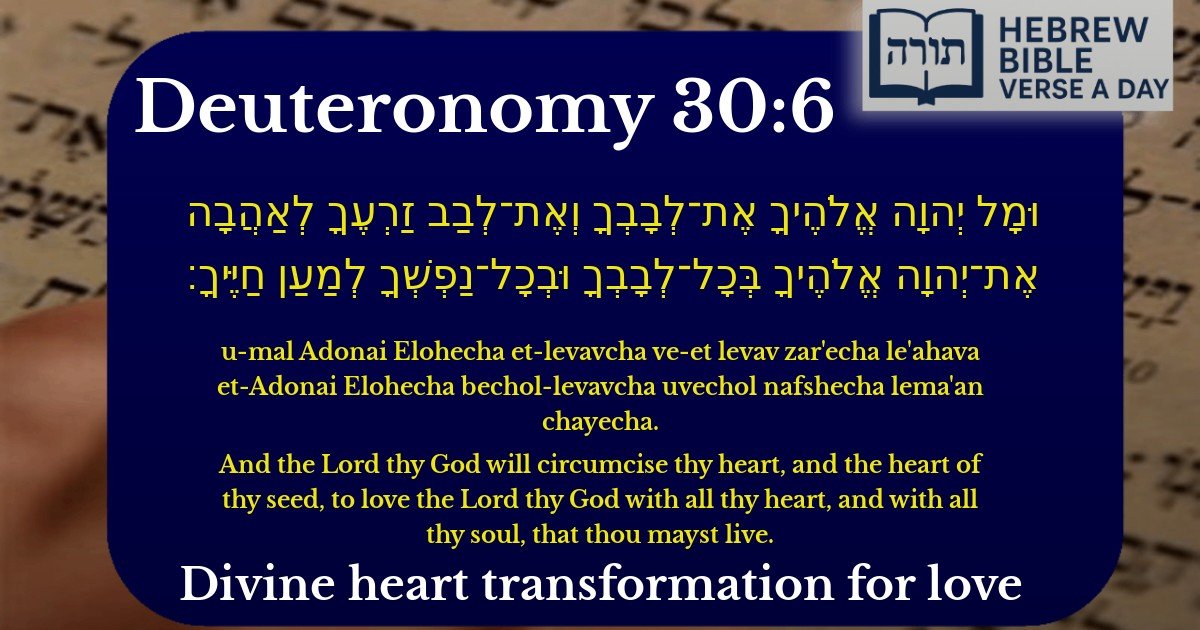
וּמָל יְהוָה אֱלֹהֶיךָ אֶת־לְבָבְךָ וְאֶת־לְבַב זַרְעֶךָ לְאַהֲבָה אֶת־יְהוָה אֱלֹהֶיךָ בְּכָל־לְבָבְךָ וּבְכָל־נַפְשְׁךָ לְמַעַן חַיֶּיךָ׃
English Translation
And the Lord thy God will circumcise thy heart, and the heart of thy seed, to love the Lord thy God with all thy heart, and with all thy soul, that thou mayst live.
Transliteration
U-mal Adonai Elohecha et-levavcha ve-et levav zar'echa le'ahava et-Adonai Elohecha bechol-levavcha uvechol nafshecha lema'an chayecha.
Hebrew Leining Text
וּמָ֨ל יְהֹוָ֧ה אֱלֹהֶ֛יךָ אֶת־לְבָבְךָ֖ וְאֶת־לְבַ֣ב זַרְעֶ֑ךָ לְאַהֲבָ֞ה אֶת־יְהֹוָ֧ה אֱלֹהֶ֛יךָ בְּכׇל־לְבָבְךָ֥ וּבְכׇל־נַפְשְׁךָ֖ לְמַ֥עַן חַיֶּֽיךָ׃
🎵 Listen to leining
Parasha Commentary
📚 Talmud Citations
This verse is quoted in the Talmud.
The verse is referenced in a discussion about the covenant of circumcision and its spiritual significance, emphasizing the transformation of the heart to love God.
📖 Avodah Zarah 3a
The verse is cited in a broader discussion about the nature of divine service and the inner transformation required to truly serve God.
The Meaning of "Circumcision of the Heart"
The phrase "וּמָל יְהוָה אֱלֹהֶיךָ אֶת־לְבָבְךָ" ("And the Lord thy God will circumcise thy heart") is a metaphorical expression referring to the removal of spiritual barriers that prevent a person from fully serving Hashem. Just as physical brit milah (circumcision) represents a covenant with Hashem, the "circumcision of the heart" symbolizes the purification of one's inner desires and inclinations to align with divine will (Rashi, Devarim 30:6).
The Role of Divine Assistance in Teshuvah
This verse emphasizes that true repentance (teshuvah) and love for Hashem require divine assistance. The Rambam (Hilchot Teshuvah 5:2) explains that while human effort is necessary, ultimate spiritual refinement comes from Hashem’s mercy. The "circumcision of the heart" suggests that Hashem will help remove the yetzer hara (evil inclination) that obstructs sincere devotion.
Loving Hashem with All One’s Heart and Soul
The verse connects this spiritual purification with the mitzvah of "לְאַהֲבָה אֶת־יְהוָה אֱלֹהֶיךָ בְּכָל־לְבָבְךָ וּבְכָל־נַפְשְׁךָ" ("to love the Lord thy God with all thy heart and with all thy soul"). The Talmud (Berachot 54a) teaches that loving Hashem "with all thy soul" means being willing to sacrifice one’s life for Kiddush Hashem (sanctification of His name). The Sifrei (Devarim 32) further elaborates that this love must be wholehearted, without ulterior motives.
The Promise of Life Through Divine Connection
The concluding phrase, "לְמַעַן חַיֶּיךָ" ("that thou mayst live"), underscores that true life—both physical and spiritual—is attained through closeness to Hashem. The Midrash (Devarim Rabbah 11:1) interprets this as a promise that those who serve Hashem with sincerity will merit eternal life in Olam Haba (the World to Come).
Key Teachings from Orthodox Commentators