

Join Our Newsletter To Be Informed When New Videos Are Posted
Hebrew Text
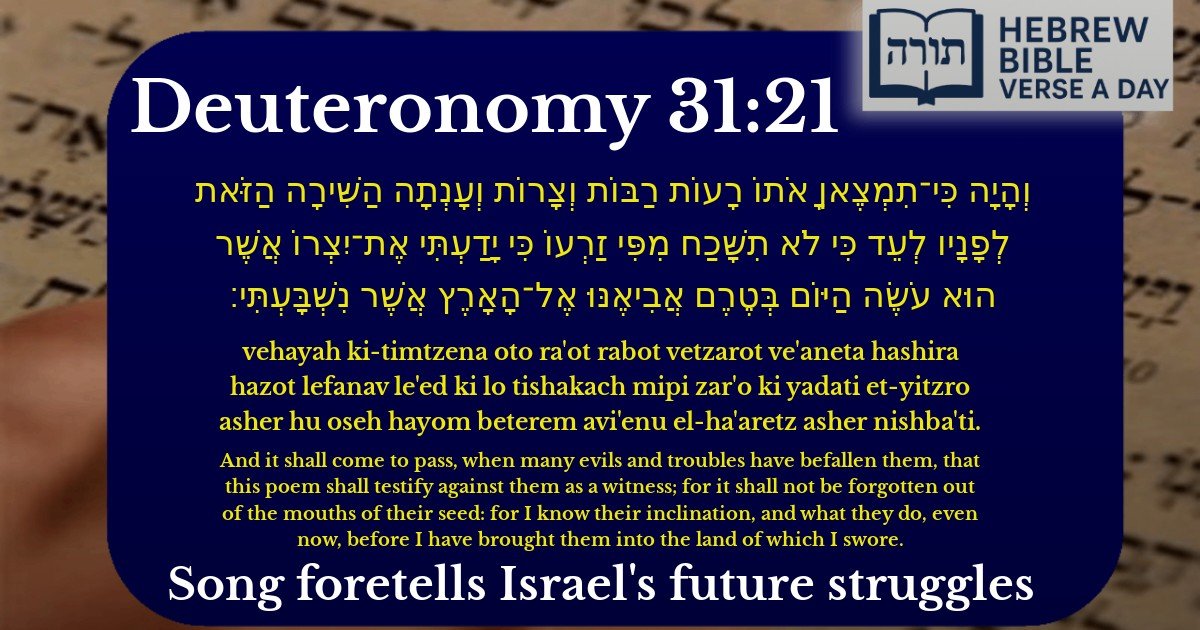
וְהָיָה כִּי־תִמְצֶאןָ אֹתוֹ רָעוֹת רַבּוֹת וְצָרוֹת וְעָנְתָה הַשִּׁירָה הַזֹּאת לְפָנָיו לְעֵד כִּי לֹא תִשָּׁכַח מִפִּי זַרְעוֹ כִּי יָדַעְתִּי אֶת־יִצְרוֹ אֲשֶׁר הוּא עֹשֶׂה הַיּוֹם בְּטֶרֶם אֲבִיאֶנּוּ אֶל־הָאָרֶץ אֲשֶׁר נִשְׁבָּעְתִּי׃
English Translation
And it shall come to pass, when many evils and troubles have befallen them, that this poem shall testify against them as a witness; for it shall not be forgotten out of the mouths of their seed: for I know their inclination, and what they do, even now, before I have brought them into the land of which I swore.
Transliteration
Vehayah ki-timtzena oto ra'ot rabot vetzarot ve'aneta hashira hazot lefanav le'ed ki lo tishakach mipi zar'o ki yadati et-yitzro asher hu oseh hayom beterem avi'enu el-ha'aretz asher nishba'ti.
Hebrew Leining Text
וְ֠הָיָ֠ה כִּי־תִמְצֶ֨אןָ אֹת֜וֹ רָע֣וֹת רַבּוֹת֮ וְצָרוֹת֒ וְ֠עָנְתָ֠ה הַשִּׁירָ֨ה הַזֹּ֤את לְפָנָיו֙ לְעֵ֔ד כִּ֛י לֹ֥א תִשָּׁכַ֖ח מִפִּ֣י זַרְע֑וֹ כִּ֧י יָדַ֣עְתִּי אֶת־יִצְר֗וֹ אֲשֶׁ֨ר ה֤וּא עֹשֶׂה֙ הַיּ֔וֹם בְּטֶ֣רֶם אֲבִיאֶ֔נּוּ אֶל־הָאָ֖רֶץ אֲשֶׁ֥ר נִשְׁבַּֽעְתִּי׃
🎵 Listen to leining
Parasha Commentary
📚 Talmud Citations
This verse is quoted in the Talmud.
📖 Sanhedrin 21b
The verse is referenced in the discussion about the nature of the Song of Moses (Ha'azinu) and its role as a witness against the Jewish people.
📖 Sotah 35a
The verse is cited in the context of discussing the Song of Moses and its eternal relevance as a testimony against Israel.
Context in Parashat Ha'azinu
This verse (Devarim 31:21) appears in the context of Moshe Rabbeinu's final instructions to Bnei Yisrael before his passing. The "song" (השירה הזאת) refers to Shirat Ha'azinu, which serves as both a warning and a testimony about the consequences of abandoning the covenant with Hashem.
The Role of the Song as a Witness
Rashi explains that the song will serve as a "witness" (לעד) because it will always be remembered by future generations, even during times of exile and suffering. The Midrash Tanchuma (Ha'azinu 2) elaborates that the song's poetic nature makes it memorable, ensuring its transmission through the ages.
Understanding "Their Inclination" (יצרו)
The phrase "I know their inclination" (ידעתי את יצרו) is interpreted by Rambam (Hilchot Teshuvah 5:4) as referring to the yetzer hara (evil inclination) that leads people astray. The Sforno adds that Hashem foresaw Bnei Yisrael's future struggles with idolatry and moral failings even before entering Eretz Yisrael.
The Eternal Nature of the Covenant
Practical Implications
The Ramban (Nachmanides) notes that this verse teaches that times of suffering should prompt introspection, as the words of the Torah - including this prophetic song - will testify that the troubles were foretold as consequences of abandoning mitzvot. This awareness can lead to teshuvah (repentance).