

Join Our Newsletter To Be Informed When New Videos Are Posted
Hebrew Text
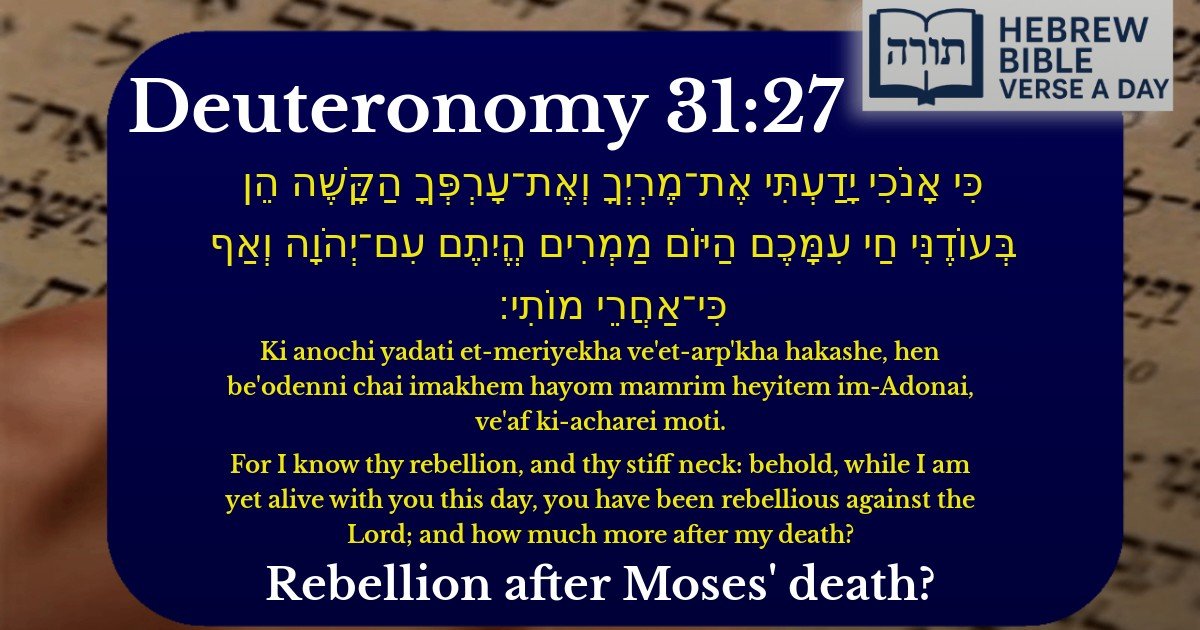
כִּי אָנֹכִי יָדַעְתִּי אֶת־מֶרְיְךָ וְאֶת־עָרְפְּךָ הַקָּשֶׁה הֵן בְּעוֹדֶנִּי חַי עִמָּכֶם הַיּוֹם מַמְרִים הֱיִתֶם עִם־יְהֹוָה וְאַף כִּי־אַחֲרֵי מוֹתִי׃
English Translation
For I know thy rebellion, and thy stiff neck: behold, while I am yet alive with you this day, you have been rebellious against the Lord; and how much more after my death?
Transliteration
Ki anochi yadati et-meriyekha ve'et-arp'kha hakashe, hen be'odenni chai imakhem hayom mamrim heyitem im-Adonai, ve'af ki-acharei moti.
Hebrew Leining Text
כִּ֣י אָנֹכִ֤י יָדַ֙עְתִּי֙ אֶֽת־מֶרְיְךָ֔ וְאֶֽת־עׇרְפְּךָ֖ הַקָּשֶׁ֑ה הֵ֣ן בְּעוֹדֶ֩נִּי֩ חַ֨י עִמָּכֶ֜ם הַיּ֗וֹם מַמְרִ֤ים הֱיִתֶם֙ עִם־יְהֹוָ֔ה וְאַ֖ף כִּי־אַחֲרֵ֥י מוֹתִֽי׃
🎵 Listen to leining
Parasha Commentary
📚 Talmud Citations
This verse is quoted in the Talmud.
📖 Sanhedrin 43a
The verse is referenced in a discussion about the rebellious nature of the Israelites and their tendency to stray from God's commandments, even after the death of Moses.
📖 Sotah 37a
The verse is cited in the context of discussing the stiff-necked nature of the Israelites and their persistent rebellion against God, highlighting the challenges Moses faced in leading them.
Context in Devarim (Deuteronomy)
The verse appears in Devarim 31:27, where Moshe Rabbeinu addresses Bnei Yisrael before his passing. He rebukes them for their history of rebellion and stiff-necked behavior, expressing concern that this tendency will persist after his death. This is part of Moshe's final discourse, preparing the nation for leadership under Yehoshua (Joshua) and life in Eretz Yisrael.
Rashi's Explanation
Rashi (Devarim 31:27) emphasizes Moshe's prophetic insight: "כי אנכי ידעתי" ("For I know") refers to Moshe's divine understanding of Israel's nature. He highlights their past rebellions (e.g., the Golden Calf, complaints in the wilderness) as proof of their stubbornness. Rashi notes that Moshe fears their behavior will worsen after his death, as his leadership had been a restraining influence.
Ibn Ezra's Insight
Ibn Ezra observes that Moshe's phrase "בעודני חי עמכם היום" ("while I am yet alive with you this day") underscores the immediacy of their rebelliousness—even in Moshe's presence, they struggled with obedience. The phrase "ואף כי אחרי מותי" ("how much more after my death") reflects Moshe's realistic assessment of human nature: without strong leadership, moral decline is likely.
Midrashic Interpretation
The Sifrei Devarim (Piska 305) connects this verse to the broader theme of zechut avot (merit of the ancestors). It suggests that Moshe's presence provided spiritual protection, and his departure would leave Bnei Yisrael more vulnerable to their inclinations. The Midrash also links this warning to later historical rebellions, such as the era of the Judges.
Rambam on Human Nature
In Hilchot De'ot (1:4), Rambam discusses how ingrained traits (like being "stiff-necked") require conscious effort to change. Moshe's rebuke aligns with this idea—the people's rebelliousness was a deep-seated characteristic requiring constant vigilance, especially after losing Moshe's guidance.
Practical Lessons