

Join Our Newsletter To Be Informed When New Videos Are Posted
Hebrew Text
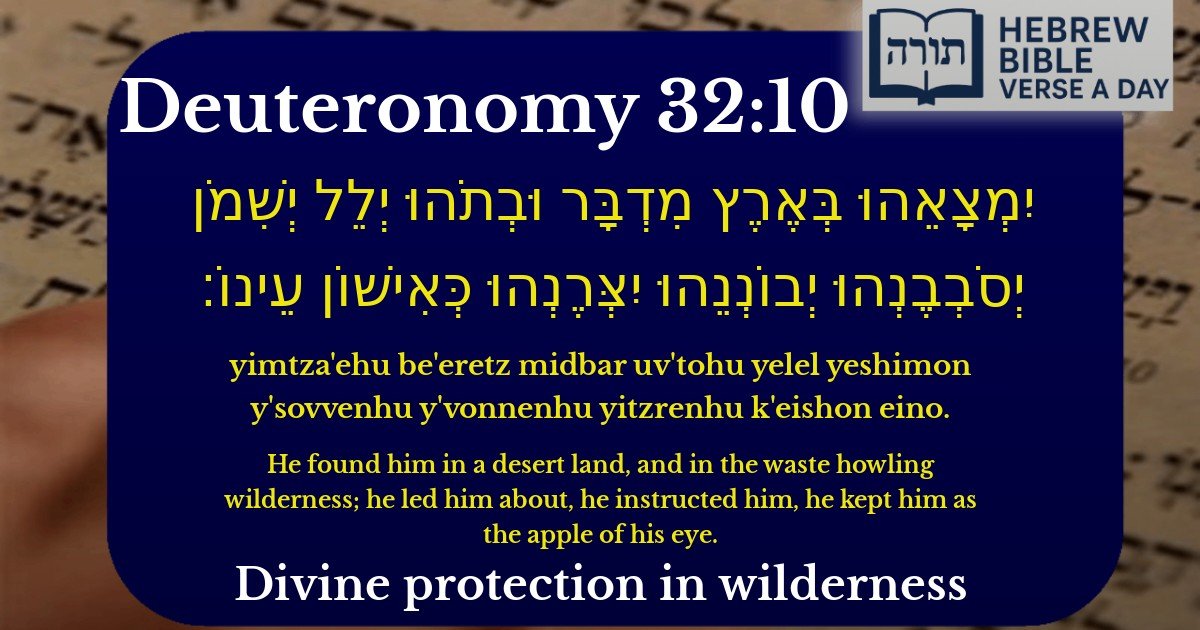
יִמְצָאֵהוּ בְּאֶרֶץ מִדְבָּר וּבְתֹהוּ יְלֵל יְשִׁמֹן יְסֹבְבֶנְהוּ יְבוֹנְנֵהוּ יִצְּרֶנְהוּ כְּאִישׁוֹן עֵינוֹ׃
English Translation
He found him in a desert land, and in the waste howling wilderness; he led him about, he instructed him, he kept him as the apple of his eye.
Transliteration
Yimtza'ehu be'eretz midbar uv'tohu yelel yeshimon y'sovvenhu y'vonnenhu yitzrenhu k'eishon eino.
Hebrew Leining Text
יִמְצָאֵ֙הוּ֙ בְּאֶ֣רֶץ מִדְבָּ֔ר וּבְתֹ֖הוּ יְלֵ֣ל יְשִׁמֹ֑ן יְסֹבְבֶ֙נְהוּ֙ יְב֣וֹנְנֵ֔הוּ יִצְּרֶ֖נְהוּ כְּאִישׁ֥וֹן עֵינֽוֹ׃
🎵 Listen to leining
Parasha Commentary
📚 Talmud Citations
This verse is quoted in the Talmud.
📖 Chagigah 12b
The verse is referenced in a discussion about God's protection and guidance of Israel, likened to the care one has for the apple of one's eye.
📖 Sotah 11a
The verse is cited in the context of God's providence over the Israelites during their time in the wilderness.
Context in Devarim (Deuteronomy)
The verse (Devarim 32:10) appears in Shirat Ha'azinu, Moshe's prophetic song describing Hashem's relationship with Bnei Yisrael. It poetically recounts how Hashem guided and protected the Jewish people during their wilderness journey.
Rashi's Explanation
Rashi interprets "יִמְצָאֵהוּ" ("He found him") as referring to Avraham Avinu, whom Hashem discovered in a spiritually barren world (like a desert) and brought close through divine love. The wilderness imagery symbolizes the Jewish people's early formation as a nation under Hashem's direct care.
Wilderness as a Place of Preparation
The Midrash (Bamidbar Rabbah 1:7) teaches that the desert was chosen as the setting for receiving the Torah because:
Divine Protection
The phrase "כְּאִישׁוֹן עֵינוֹ" ("as the apple of His eye") is explained by the Rambam (Moreh Nevuchim 1:47) as illustrating Hashem's constant vigilance over Israel. The Ishon (pupil) represents the most sensitive and protected part of the eye, suggesting:
Sforno's Insight
Sforno explains the sequence of verbs (led, instructed, protected) as describing Hashem's comprehensive guidance: