

Join Our Newsletter To Be Informed When New Videos Are Posted
Hebrew Text
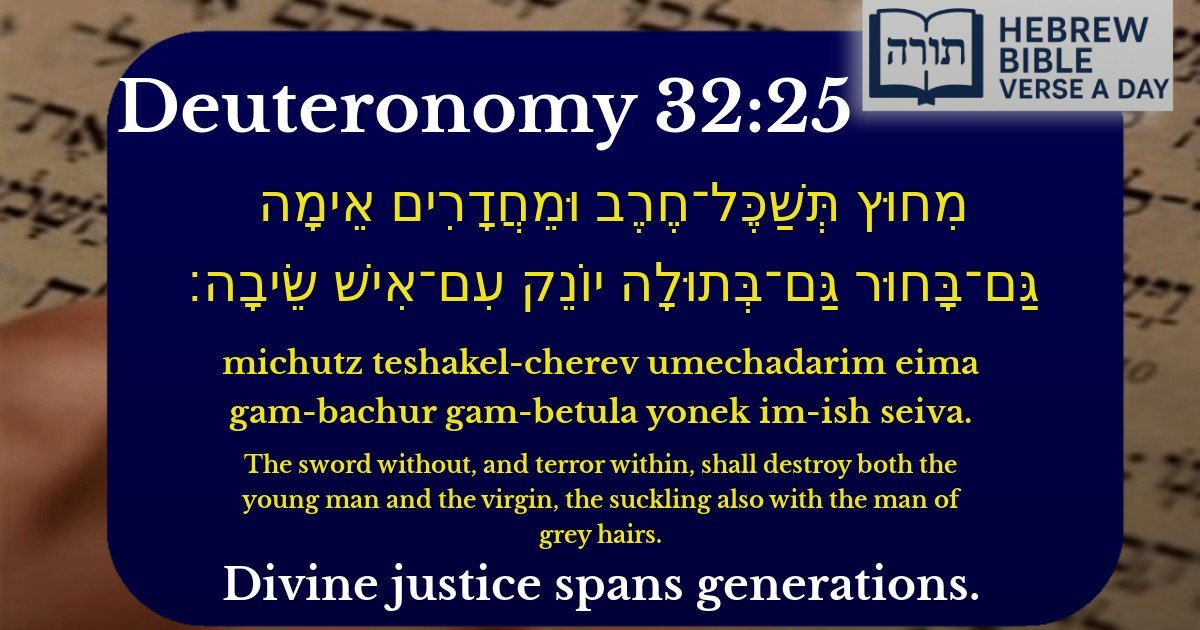
מִחוּץ תְּשַׁכֶּל־חֶרֶב וּמֵחֲדָרִים אֵימָה גַּם־בָּחוּר גַּם־בְּתוּלָה יוֹנֵק עִם־אִישׁ שֵׂיבָה׃
English Translation
The sword without, and terror within, shall destroy both the young man and the virgin, the suckling also with the man of grey hairs.
Transliteration
Michutz teshakel-cherev umechadarim eima gam-bachur gam-betula yonek im-ish seiva.
Hebrew Leining Text
מִחוּץ֙ תְּשַׁכֶּל־חֶ֔רֶב וּמֵחֲדָרִ֖ים אֵימָ֑ה גַּם־בָּחוּר֙ גַּם־בְּתוּלָ֔ה יוֹנֵ֖ק עִם־אִ֥ישׁ שֵׂיבָֽה׃
🎵 Listen to leining
Parasha Commentary
📚 Talmud Citations
This verse is not quoted in the Talmud.
Context and Source
The verse (Devarim 32:25) appears in Shirat Ha'azinu, the song Moses recited before his death, warning of the consequences of Israel's abandonment of Torah. It describes the severe punishments that will befall the nation if they stray from Hashem's commandments.
Literal Interpretation (Peshat)
Rashi explains that "the sword without" refers to enemies attacking from outside, while "terror within" alludes to internal strife and panic. The verse emphasizes that no one will be spared—neither the young nor the old—highlighting the totality of the devastation.
Midrashic Insight (Derash)
The Midrash (Devarim Rabbah 10:4) elaborates that "the sword without" represents external enemies, while "terror within" symbolizes machalot ra'ot (deadly plagues) or civil discord. The inclusion of "the suckling with the man of grey hairs" teaches that even the most vulnerable and innocent will suffer due to the collective sins of the generation.
Moral and Theological Implications
Halachic and Ethical Lessons
The Talmud (Sanhedrin 98a) cites this verse in discussions of chevlei Mashiach (the tribulations preceding redemption), teaching that suffering precedes renewal. The inclusion of all ages reminds us that Torah observance is a communal obligation—every individual's actions impact the collective.