

Join Our Newsletter To Be Informed When New Videos Are Posted
Hebrew Text
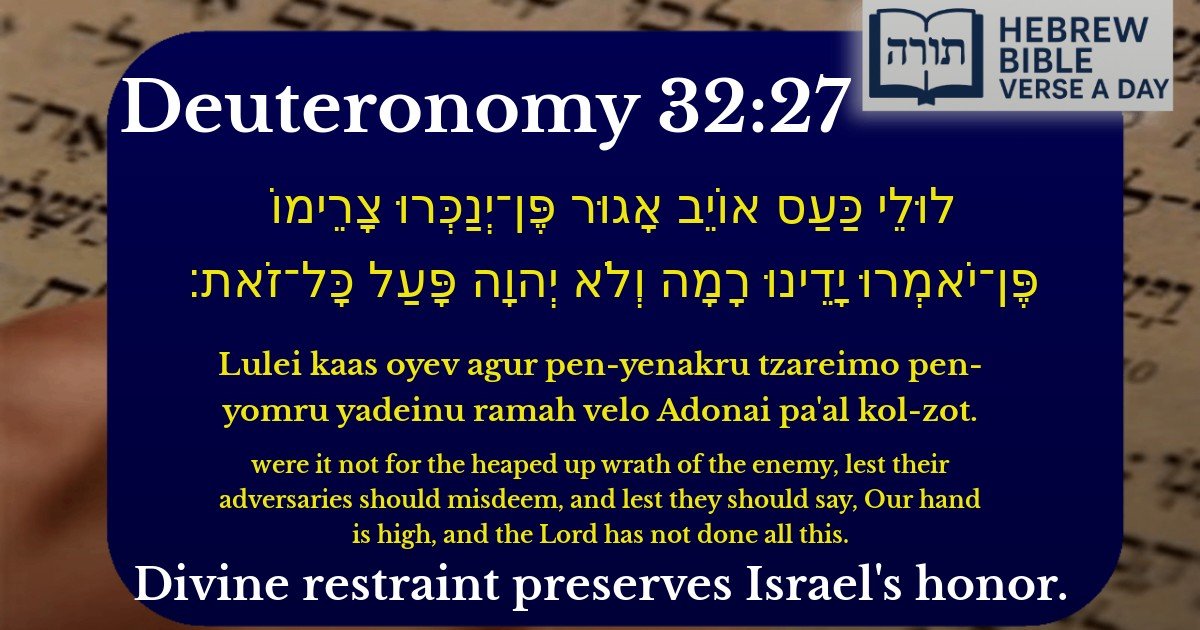
לוּלֵי כַּעַס אוֹיֵב אָגוּר פֶּן־יְנַכְּרוּ צָרֵימוֹ פֶּן־יֹאמְרוּ יָדֵינוּ רָמָה וְלֹא יְהוָה פָּעַל כָּל־זֹאת׃
English Translation
were it not for the heaped up wrath of the enemy, lest their adversaries should misdeem, and lest they should say, Our hand is high, and the Lord has not done all this.
Transliteration
Lulei kaas oyev agur pen-yenakru tzareimo pen-yomru yadeinu ramah velo Adonai pa'al kol-zot.
Hebrew Leining Text
לוּלֵ֗י כַּ֤עַס אוֹיֵב֙ אָג֔וּר פֶּֽן־יְנַכְּר֖וּ צָרֵ֑ימוֹ פֶּן־יֹֽאמְרוּ֙ יָדֵ֣נוּ רָ֔מָה וְלֹ֥א יְהֹוָ֖ה פָּעַ֥ל כׇּל־זֹֽאת׃
🎵 Listen to leining
Parasha Commentary
📚 Talmud Citations
This verse is not quoted in the Talmud.
Context and Meaning of the Verse
The verse (Devarim 32:27) appears in Shirat Ha'azinu, Moshe's prophetic song warning Bnei Yisrael about the consequences of straying from Hashem. The verse expresses Hashem's restraint in punishing Israel fully, lest their enemies attribute their downfall to their own strength rather than Divine decree.
Rashi's Explanation
Rashi interprets the phrase "לוּלֵי כַּעַס אוֹיֵב אָגוּר" ("were it not for the heaped up wrath of the enemy") to mean that Hashem holds back His full anger against Israel to prevent their enemies from boasting. If Israel were completely destroyed, the nations would claim victory by their own power ("יָדֵינוּ רָמָה"—"our hand is high") rather than recognizing it as Hashem's judgment.
Rambam's Perspective
Rambam (Hilchot Teshuvah 7:5) discusses how Divine punishment serves a corrective purpose. Here, Hashem tempers His judgment to ensure that the nations do not misinterpret Israel's suffering as their own triumph, thereby preserving the recognition of His sovereignty.
Midrashic Insights
Theological Implications
The verse underscores the principle of Kiddush Hashem (sanctification of G-d's Name). Even in punishment, Hashem ensures that His role as the ultimate Judge is acknowledged, preventing the nations from falsely attributing events to their own might.