

Join Our Newsletter To Be Informed When New Videos Are Posted
Hebrew Text
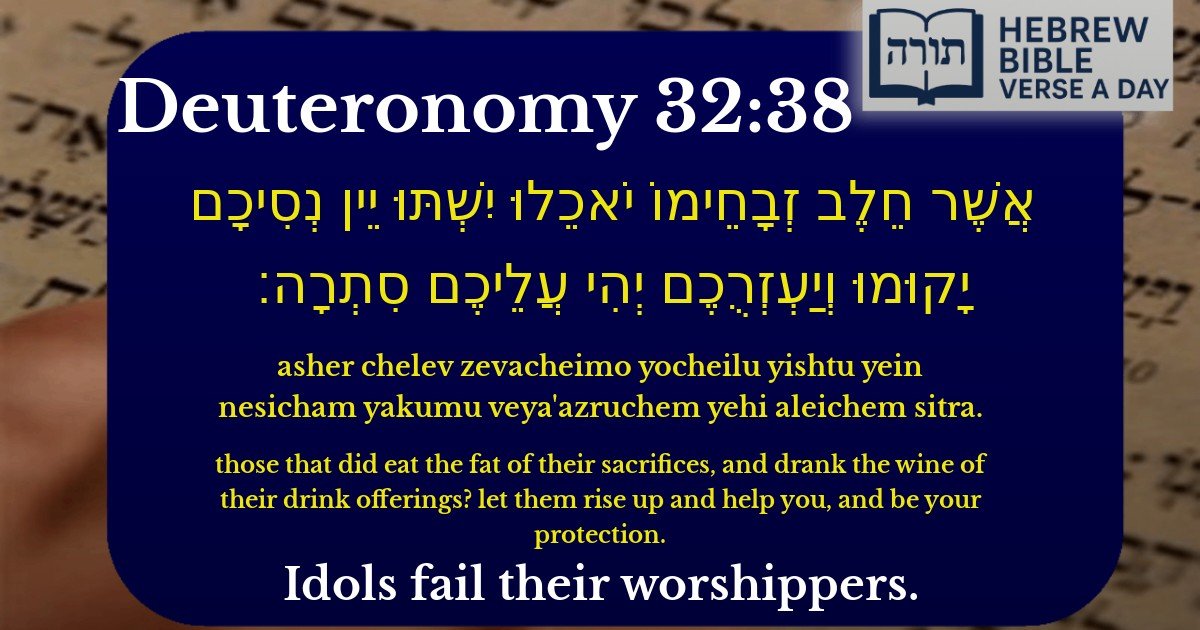
אֲשֶׁר חֵלֶב זְבָחֵימוֹ יֹאכֵלוּ יִשְׁתּוּ יֵין נְסִיכָם יָקוּמוּ וְיַעְזְרֻכֶם יְהִי עֲלֵיכֶם סִתְרָה׃
English Translation
those that did eat the fat of their sacrifices, and drank the wine of their drink offerings? let them rise up and help you, and be your protection.
Transliteration
Asher chelev zevacheimo yocheilu yishtu yein nesicham yakumu veya'azruchem yehi aleichem sitra.
Hebrew Leining Text
אֲשֶׁ֨ר חֵ֤לֶב זְבָחֵ֙ימוֹ֙ יֹאכֵ֔לוּ יִשְׁתּ֖וּ יֵ֣ין נְסִיכָ֑ם יָק֙וּמוּ֙ וְיַעְזְרֻכֶ֔ם יְהִ֥י עֲלֵיכֶ֖ם סִתְרָֽה׃
🎵 Listen to leining
Parasha Commentary
📚 Talmud Citations
This verse is not quoted in the Talmud.
Context in Tanakh
The verse (Devarim 32:38) appears in Shirat Ha'azinu, Moshe's prophetic song warning Bnei Yisrael against idolatry. It mocks the futility of worshipping false gods who cannot save their devotees, contrasting with Hashem's eternal protection.
Rashi's Explanation
Rashi interprets this as sarcasm directed at idol worshippers: "Let those gods you served rise up now in your time of need!" The "fat of their sacrifices" and "wine of their drink offerings" refer to the lavish offerings given to idols, which are powerless to help.
Ibn Ezra's Commentary
Ibn Ezra notes the poetic parallelism - the first half describes the idolaters' devotion ("ate fat... drank wine"), while the second half exposes the emptiness of their trust ("let them rise and help you"). The rhetorical question implies the obvious answer: these gods cannot protect.
Midrashic Interpretation (Sifrei)
The Midrash connects this to the golden calf episode, where the people "ate and drank" (Shemot 32:6) before rising to revel. Here too, their indulgence precedes their downfall, showing how physical pleasures blind people to spiritual truth.
Halachic Insight (Rambam)
Rambam (Hilchot Avodat Kochavim 1:1) cites this verse when explaining how idolatry begins - people mistakenly attribute power to celestial bodies or intermediaries, forgetting that only Hashem provides true protection ("sitra").
Key Themes