

Join Our Newsletter To Be Informed When New Videos Are Posted
Hebrew Text
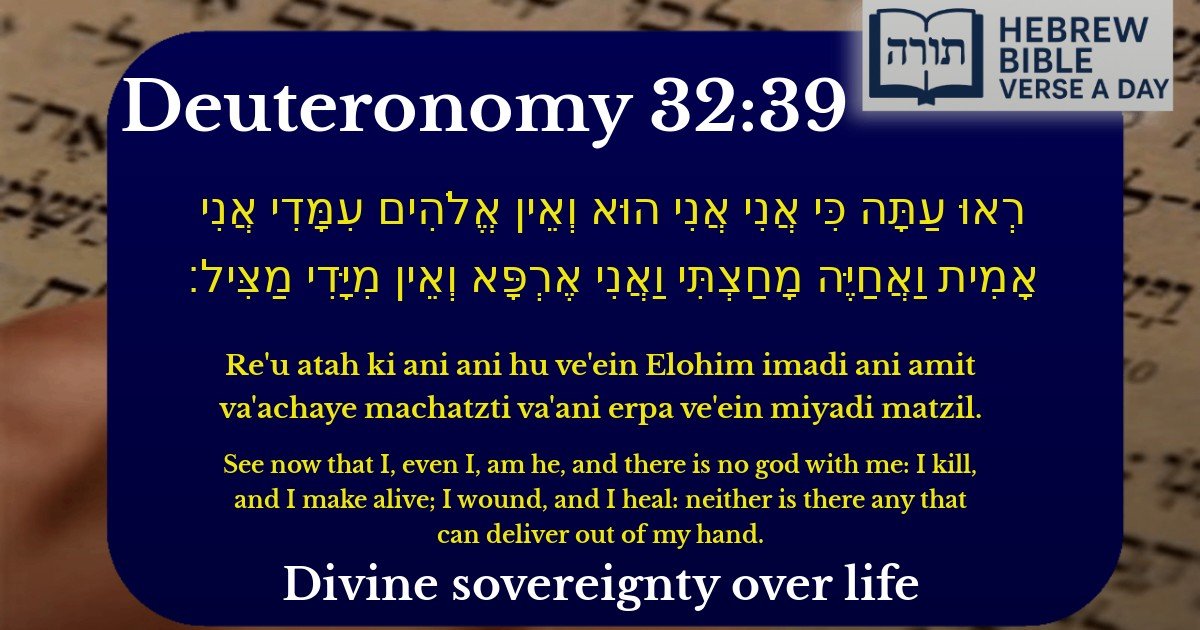
רְאוּ עַתָּה כִּי אֲנִי אֲנִי הוּא וְאֵין אֱלֹהִים עִמָּדִי אֲנִי אָמִית וַאֲחַיֶּה מָחַצְתִּי וַאֲנִי אֶרְפָּא וְאֵין מִיָּדִי מַצִּיל׃
English Translation
See now that I, even I, am he, and there is no god with me: I kill, and I make alive; I wound, and I heal: neither is there any that can deliver out of my hand.
Transliteration
Re'u atah ki ani ani hu ve'ein Elohim imadi ani amit va'achaye machatzti va'ani erpa ve'ein miyadi matzil.
Hebrew Leining Text
רְא֣וּ ׀ עַתָּ֗ה כִּ֣י אֲנִ֤י אֲנִי֙ ה֔וּא וְאֵ֥ין אֱלֹהִ֖ים עִמָּדִ֑י אֲנִ֧י אָמִ֣ית וַאֲחַיֶּ֗ה מָחַ֙צְתִּי֙ וַאֲנִ֣י אֶרְפָּ֔א וְאֵ֥ין מִיָּדִ֖י מַצִּֽיל׃
🎵 Listen to leining
Parasha Commentary
📚 Talmud Citations
This verse is quoted in the Talmud.
📖 Berakhot 10a
The verse is referenced in a discussion about God's power over life and death, emphasizing His unique sovereignty.
📖 Megillah 31a
The verse is cited in the context of the liturgical readings, highlighting God's ultimate control over human fate.
Context and Source
The verse (Devarim 32:39) appears in Shirat Ha'azinu, the song that Moshe Rabbeinu taught Bnei Yisrael before his passing. It is a declaration of Hashem's absolute sovereignty and uniqueness, emphasizing His exclusive control over life and death, as well as His power to bring both suffering and healing.
Exegesis of the Verse
"See now that I, even I, am He" – Rashi explains that this is a proclamation of Hashem's eternal and unchanging nature. The double emphasis ("I, even I") underscores that Hashem alone is the true Judge and Master of the universe, with no other power sharing in His dominion.
"And there is no god with Me" – Rambam (Hilchot Yesodei HaTorah 1:7) cites this verse as proof that Hashem is absolutely One, with no partnership or division in His essence. The Midrash (Sifrei Devarim 329) elaborates that this negates any belief in intermediaries or dualistic powers.
"I kill, and I make alive" – The Talmud (Berachot 60a) derives from this that Hashem alone controls life and death, and no other force can independently grant life or take it away. The Ibn Ezra adds that this also refers to resurrection (techiyat hameitim), demonstrating Hashem's power over both the natural and supernatural.
"I wound, and I heal" – The Sforno explains that even when Hashem brings suffering, it is ultimately for the purpose of healing and correction (yissurim shel ahavah). The Midrash (Devarim Rabbah 10:4) connects this to the idea that the same Divine attribute that brings justice also brings mercy.
"Neither is there any that can deliver out of My hand" – The Ramban teaches that this emphasizes Hashem's omnipotence—no force in creation can override His decree. The Malbim adds that this is a reassurance to Bnei Yisrael that even in exile, no nation can truly overpower them against Hashem's will.
Theological Implications
Practical Lessons
The Chofetz Chaim (in Sheim Olam) derives from this verse that one should place complete trust in Hashem, recognizing that all circumstances—whether favorable or challenging—come from Him alone. This awareness fosters bitachon (trust) and acceptance of Hashem's will.