

Join Our Newsletter To Be Informed When New Videos Are Posted
Hebrew Text
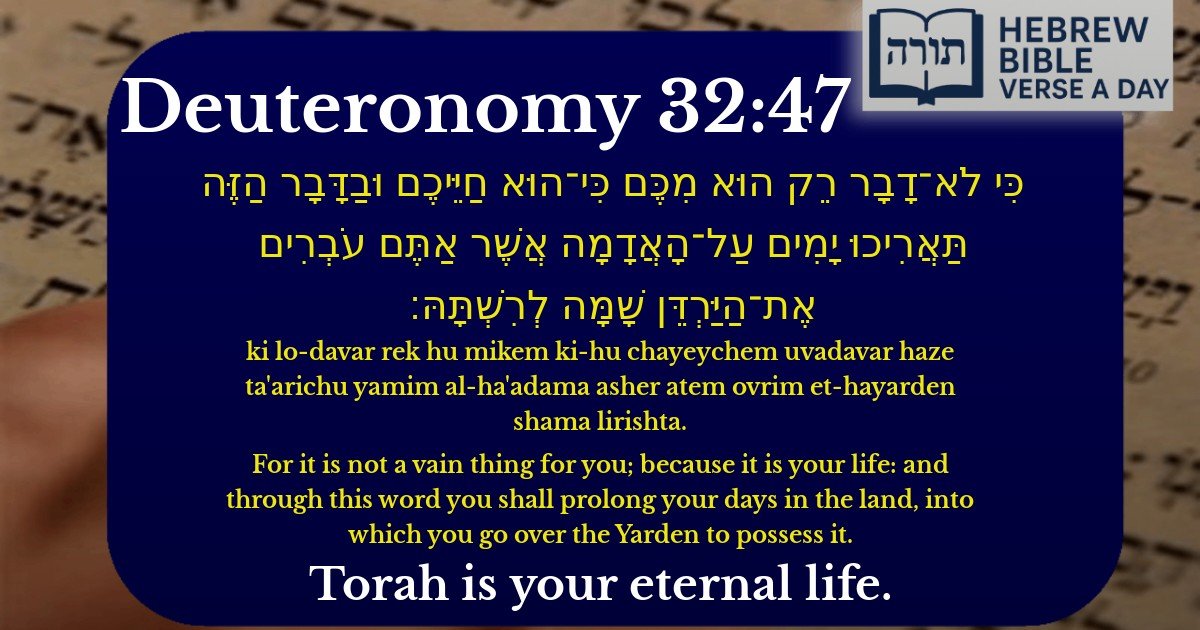
כִּי לֹא־דָבָר רֵק הוּא מִכֶּם כִּי־הוּא חַיֵּיכֶם וּבַדָּבָר הַזֶּה תַּאֲרִיכוּ יָמִים עַל־הָאֲדָמָה אֲשֶׁר אַתֶּם עֹבְרִים אֶת־הַיַּרְדֵּן שָׁמָּה לְרִשְׁתָּהּ׃
English Translation
For it is not a vain thing for you; because it is your life: and through this word you shall prolong your days in the land, into which you go over the Yarden to possess it.
Transliteration
Ki lo-davar rek hu mikem ki-hu chayeychem uvadavar haze ta'arichu yamim al-ha'adama asher atem ovrim et-hayarden shama lirishta.
Hebrew Leining Text
כִּ֠י לֹא־דָבָ֨ר רֵ֥ק הוּא֙ מִכֶּ֔ם כִּי־ה֖וּא חַיֵּיכֶ֑ם וּבַדָּבָ֣ר הַזֶּ֗ה תַּאֲרִ֤יכוּ יָמִים֙ עַל־הָ֣אֲדָמָ֔ה אֲשֶׁ֨ר אַתֶּ֜ם עֹבְרִ֧ים אֶת־הַיַּרְדֵּ֛ן שָׁ֖מָּה לְרִשְׁתָּֽהּ׃ {פ}
🎵 Listen to leining
Parasha Commentary
📚 Talmud Citations
This verse is quoted in the Talmud.
📖 Eruvin 54a
The verse is cited to emphasize the importance of Torah study, illustrating that the words of Torah are not empty but are the source of life and longevity.
📖 Yoma 72b
The verse is referenced in a discussion about the sanctity and life-giving power of the Torah, underscoring that engagement with Torah is not in vain but vital for life.
Rashi's Explanation
Rashi (Devarim 32:47) interprets the phrase "כִּי לֹא־דָבָר רֵק הוּא מִכֶּם" ("For it is not a vain thing for you") to mean that the Torah is not an empty or meaningless matter. Rather, it is the very essence of life for Bnei Yisrael. He emphasizes that if it seems "vain," it is only "מִכֶּם"—from you—meaning due to a lack of proper engagement and study. The Torah's depth and vitality are revealed to those who delve into it sincerely.
Rambam's Perspective
In Mishneh Torah (Hilchot Talmud Torah 3:9), Rambam teaches that Torah study is not merely an intellectual exercise but the foundation of Jewish life. The verse "כִּי־הוּא חַיֵּיכֶם" ("because it is your life") underscores that Torah observance is the source of spiritual and physical sustenance. Through Torah, one merits long life in Eretz Yisrael, as the verse concludes: "וּבַדָּבָר הַזֶּה תַּאֲרִיכוּ יָמִים" ("through this word you shall prolong your days").
Midrashic Interpretation
The Sifrei (Devarim 32:47) elaborates that the Torah is called "חַיֵּיכֶם" ("your life") because it sustains those who cling to it, just as food sustains the body. The Midrash further connects this to the reward of dwelling in Eretz Yisrael, teaching that Torah study and mitzvot are the keys to maintaining possession of the land.
Talmudic Insight
The Gemara (Eruvin 54a) expounds on the phrase "וּבַדָּבָר הַזֶּה תַּאֲרִיכוּ יָמִים", stating that prolonged life in the land is contingent upon diligent Torah study. The Talmud cites Rabbi Elazar, who teaches that one who treats Torah study as secondary will find their life treated as secondary by Heaven, whereas one who prioritizes Torah merits long and fulfilled days.
Practical Implications