

Join Our Newsletter To Be Informed When New Videos Are Posted
Hebrew Text
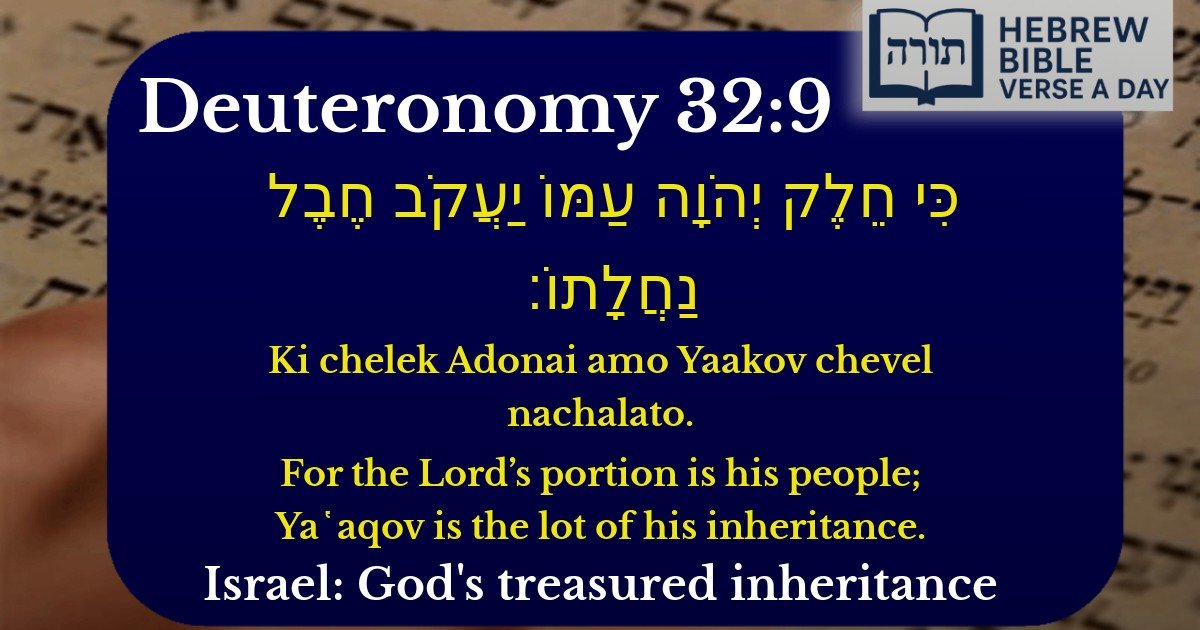
כִּי חֵלֶק יְהֹוָה עַמּוֹ יַעֲקֹב חֶבֶל נַחֲלָתוֹ׃
English Translation
For the Lord’s portion is his people; Ya῾aqov is the lot of his inheritance.
Transliteration
Ki chelek Adonai amo Yaakov chevel nachalato.
Hebrew Leining Text
כִּ֛י חֵ֥לֶק יְהֹוָ֖ה עַמּ֑וֹ יַעֲקֹ֖ב חֶ֥בֶל נַחֲלָתֽוֹ׃
🎵 Listen to leining
Parasha Commentary
📚 Talmud Citations
This verse is quoted in the Talmud.
📖 Berakhot 57a
The verse is cited in a discussion about the special relationship between God and the Jewish people, emphasizing their unique status as His chosen inheritance.
📖 Megillah 16a
The verse is referenced in the context of discussing the divine selection and protection of the Jewish people, highlighting their covenantal bond with God.
Understanding the Verse
The verse "כִּי חֵלֶק יְהֹוָה עַמּוֹ יַעֲקֹב חֶבֶל נַחֲלָתוֹ" (Devarim 32:9) emphasizes the unique relationship between Hashem and the Jewish people. The language of "portion" (חֵלֶק) and "inheritance" (נַחֲלָה) conveys a deep, covenantal bond, as if Hashem has chosen Klal Yisrael as His treasured possession.
Rashi's Explanation
Rashi interprets this verse by noting that "חֵלֶק יְהֹוָה עַמּוֹ" means that Hashem has designated the Jewish people as His own portion, just as a person selects a prized possession for themselves. The phrase "יַעֲקֹב חֶבֶל נַחֲלָתוֹ" further emphasizes that Yaakov (representing the Jewish people) is the "rope" (חֶבֶל) of His inheritance—a metaphor for an unbreakable connection, as a rope is made of many strands woven together, symbolizing the enduring bond between Hashem and His people.
Rambam's Perspective
Rambam (Hilchot Yesodei HaTorah 1:1) underscores that the Jewish people's special status is rooted in their acceptance of the Torah and their commitment to serving Hashem. This verse reflects the idea that Hashem's relationship with Klal Yisrael is not arbitrary but based on their role as bearers of divine truth.
Midrashic Insights
The Midrash (Sifrei Devarim 312) elaborates that this verse teaches that Hashem and the Jewish people are inseparable. Just as a person does not forsake their inheritance, Hashem will never abandon His people, even in times of exile. The Midrash also compares the relationship to a king who divides his estate among his children but reserves the choicest portion for his most beloved son—Yaakov.
Kabbalistic Interpretation
In Kabbalistic thought (as discussed in the Zohar), the term "חֶבֶל" (rope) alludes to the spiritual connection between the Jewish people and the divine. Just as a rope connects two entities, the Jewish people serve as a conduit for bringing divine presence into the world.
Practical Implications