Frequently Asked Questions
Q: What does 'precious fruits brought forth by the sun' mean in Deuteronomy 33:14?
A: According to Rashi, this verse refers to the abundant produce that grows during the summer months when the sun is strong, such as figs, grapes, and other fruits that ripen under the sun's warmth. The 'precious things put forth by the moon' refers to crops like cucumbers and gourds that thrive in the cooler nights.
Q: Why does the Torah mention both the sun and the moon in this blessing?
A: The Talmud (Berachot 59b) explains that the sun and moon each have unique roles in agriculture. The sun provides warmth for certain crops, while the moon influences moisture and nighttime growth. This verse highlights Hashem's blessing of balanced natural forces that sustain all types of produce.
Q: How does this verse apply to us today?
A: The Rambam teaches that this verse reminds us to appreciate Hashem's constant providence in nature. When we eat fruits or vegetables, we should recognize how the sun and moon work in harmony to produce our food, leading us to greater gratitude in our blessings (Hilchot Berachot 1:1-2).
Q: What is the deeper meaning behind calling these fruits 'precious'?
A: The Midrash (Sifrei Devarim) explains that 'precious' (מֶגֶד) implies these are not just physical blessings, but spiritual gifts. The fruits sustain our bodies so we can serve Hashem, making them doubly valuable - both materially and spiritually.
Q: Why is this verse part of Moses' blessings to the tribes?
A: As part of the blessing to Joseph's tribe (Deuteronomy 33:13), this refers to the agricultural richness of their territory. The Kli Yakar explains it symbolizes how spiritual blessings (represented by Joseph's righteousness) manifest as physical abundance when we follow Torah principles.

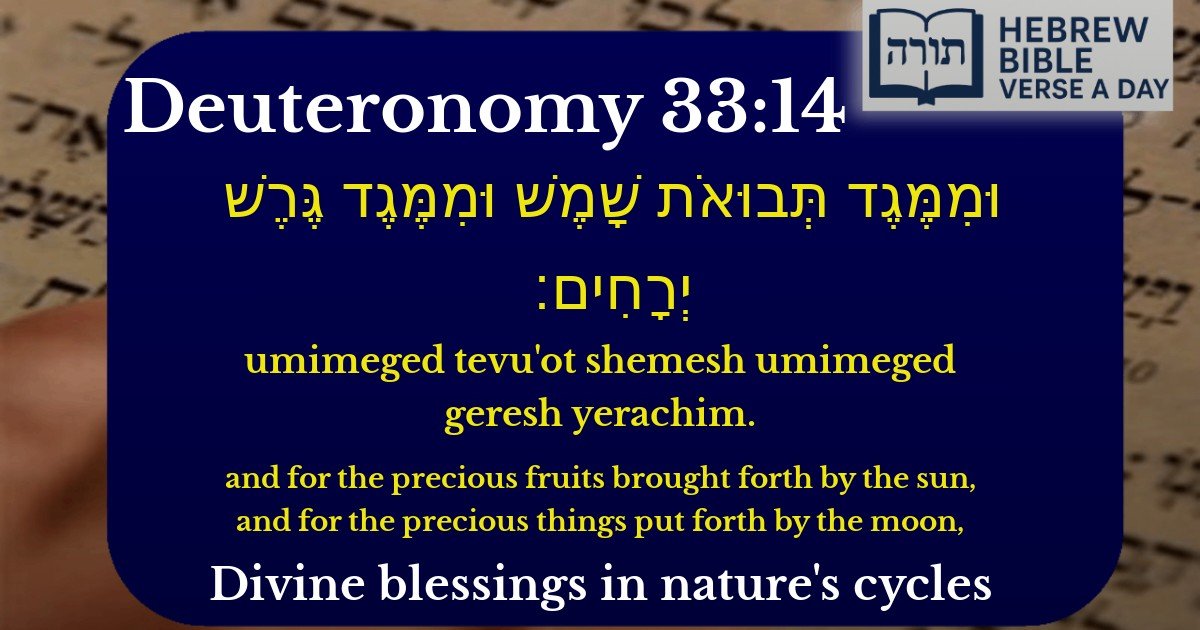

Explanation of the Verse
The verse "וּמִמֶּגֶד תְּבוּאֹת שָׁמֶשׁ וּמִמֶּגֶד גֶּרֶשׁ יְרָחִים" (Devarim 33:14) appears in Moshe's blessing to the tribe of Yosef. It speaks of the abundance and blessing of agricultural produce, attributed to the sun and the moon.
Rashi's Commentary
Rashi explains that "מִמֶּגֶד תְּבוּאֹת שָׁמֶשׁ" refers to the finest fruits that ripen under the sun's warmth, such as figs and grapes, which require ample sunlight. "מִמֶּגֶד גֶּרֶשׁ יְרָחִים" refers to crops that grow month by month (ירח means "month" or "moon"), such as vegetables and grains, which benefit from the moon's influence on moisture and growth cycles.
Ibn Ezra's Interpretation
Ibn Ezra adds that the sun and moon here symbolize the natural cycles Hashem established for agricultural bounty. The sun represents consistent, radiant energy, while the moon signifies the changing seasons and timely rains that ensure varied produce throughout the year.
Midrashic Insights
Halachic Perspective (Rambam)
Rambam (Hilchot Berachot 10:2) cites this verse when discussing blessings over seasonal fruits, teaching that we must recognize Hashem as the source of all natural abundance. The "precious fruits" remind us to recite Birkat Ha'aretz with gratitude.