
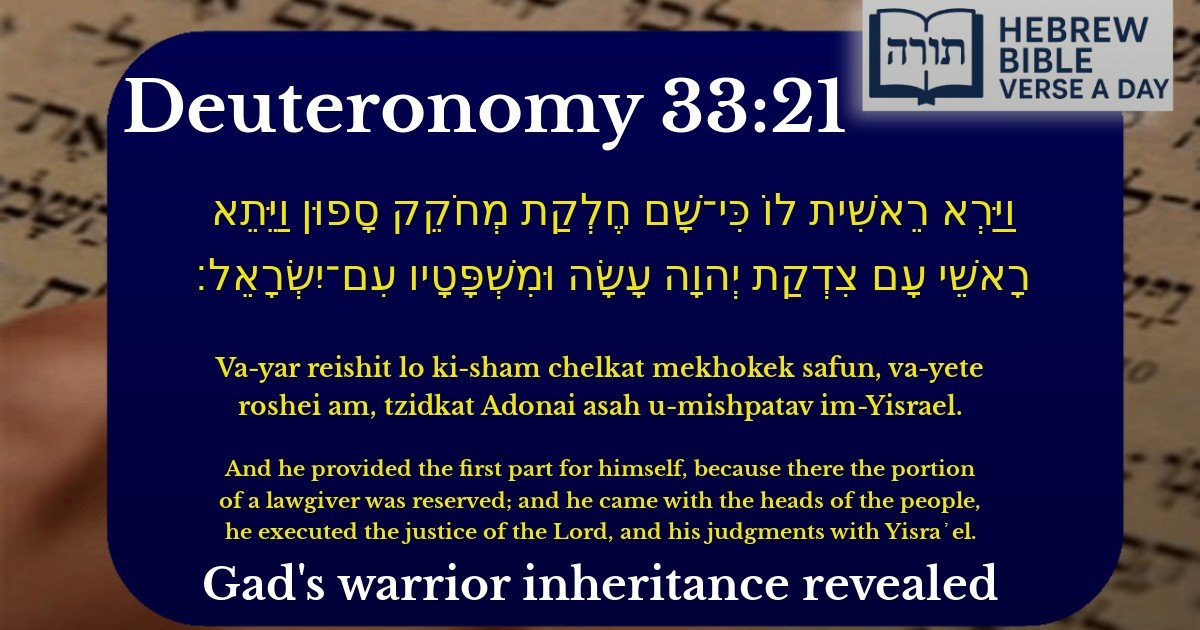

Deuteronomy 33:21 - Gad's warrior inheritance revealed

Deuteronomy 33:21 - דברים 33:21

Hebrew Text

וַיַּרְא רֵאשִׁית לוֹ כִּי־שָׁם חֶלְקַת מְחֹקֵק סָפוּן וַיֵּתֵא רָאשֵׁי עָם צִדְקַת יְהוָה עָשָׂה וּמִשְׁפָּטָיו עִם־יִשְׂרָאֵל׃

English Translation

And he provided the first part for himself, because there the portion of a lawgiver was reserved; and he came with the heads of the people, he executed the justice of the Lord, and his judgments with Yisra᾽el.

Transliteration

Va-yar reishit lo ki-sham chelkat mekhokek safun, va-yete roshei am, tzidkat Adonai asah u-mishpatav im-Yisrael.

Hebrew Leining Text

וַיַּ֤רְא רֵאשִׁית֙ ל֔וֹ כִּי־שָׁ֛ם חֶלְקַ֥ת מְחֹקֵ֖ק סָפ֑וּן וַיֵּתֵא֙ רָ֣אשֵׁי עָ֔ם צִדְקַ֤ת יְהֹוָה֙ עָשָׂ֔ה וּמִשְׁפָּטָ֖יו עִם־יִשְׂרָאֵֽל׃ {ס}        

🎵 Listen to leining

Parasha Commentary

Context of the Verse

This verse appears in Devarim (Deuteronomy) 33:21, as part of Moshe Rabbeinu's blessings to the tribes of Israel before his passing. The verse refers to the tribe of Gad, praising their role in settling the land and upholding justice.

Explanation of Key Phrases

  • "וַיַּרְא רֵאשִׁית לוֹ" (And he provided the first part for himself): Rashi explains that Gad chose their portion in the land of Israel first, settling east of the Jordan (in Gilead and Bashan), which was rich in pastureland for their flocks. This was done with Moshe's permission (Bamidbar 32).
  • "כִּי־שָׁם חֶלְקַת מְחֹקֵק סָפוּן" (because there the portion of a lawgiver was reserved): The Midrash (Bamidbar Rabbah 22:7) interprets this as referring to Moshe's burial place, which was in Gad's territory. The term "מְחֹקֵק" (lawgiver) alludes to Moshe, whose grave remained hidden ("סָפוּן"—concealed) to prevent idolatry.
  • "וַיֵּתֵא רָאשֵׁי עָם" (and he came with the heads of the people): Ramban notes that Gad fulfilled their promise to join the other tribes in conquering Canaan before settling their own land (Yehoshua 1:12-18). They demonstrated leadership by fighting alongside their brethren.
  • "צִדְקַת יְהוָה עָשָׂה וּמִשְׁפָּטָיו עִם־יִשְׂרָאֵל" (he executed the justice of the Lord, and his judgments with Israel): The Sforno explains that Gad upheld divine justice by keeping their oath to assist in the conquest, ensuring fairness in the division of the land.

Halachic and Ethical Lessons

The verse highlights the importance of:

  • Keeping one's word: Gad's commitment to fight alongside their brethren before settling their own land serves as a model for integrity.
  • Leadership and unity: By joining "the heads of the people," Gad demonstrated that tribal loyalty did not override national responsibility.
  • Divine justice: The phrase "צִדְקַת יְהוָה" emphasizes that true justice aligns with Torah values, not personal interests.

Connection to Moshe's Burial

The Talmud (Sotah 13b) elaborates that Gad's territory was honored with Moshe's burial site, yet it remained concealed to prevent it from becoming a place of improper worship. This teaches the principle of avoiding even the appearance of idolatry (avodah zarah).

📚 Talmud Citations

This verse is not quoted in the Talmud.

Frequently Asked Questions

Q: What does Deuteronomy 33:21 mean in simple terms?
A: This verse is part of Moses' final blessing to the tribes of Israel before his passing. It refers to the tribe of Gad, who chose their portion of land on the eastern side of the Jordan River (Rashi). The phrase 'portion of a lawgiver' indicates that Gad's territory was fitting for leaders, and they upheld justice and Torah law alongside the rest of Israel.
Q: Why is the tribe of Gad mentioned in Deuteronomy 33:21?
A: Gad is praised here because they were strong warriors who helped conquer the land (Midrash Tanchuma). Despite settling outside the main land of Israel, they remained committed to following Hashem's laws and supporting their brethren, showing unity and dedication to justice.
Q: What lesson can we learn from Deuteronomy 33:21 today?
A: The verse teaches the importance of taking responsibility and upholding justice, even when it requires extra effort. Gad could have been distant from the rest of Israel, but they actively participated in fulfilling Hashem's commandments (Rambam). This reminds us to stay connected to our community and Torah values.
Q: How does 'the portion of a lawgiver' apply to leadership?
A: Rashi explains that Gad's land was suitable for leaders ('m'chokek') because they were strong and righteous. True leadership in Judaism means upholding justice ('tzedek') and Torah values, as Gad did—protecting the people and following divine law.