
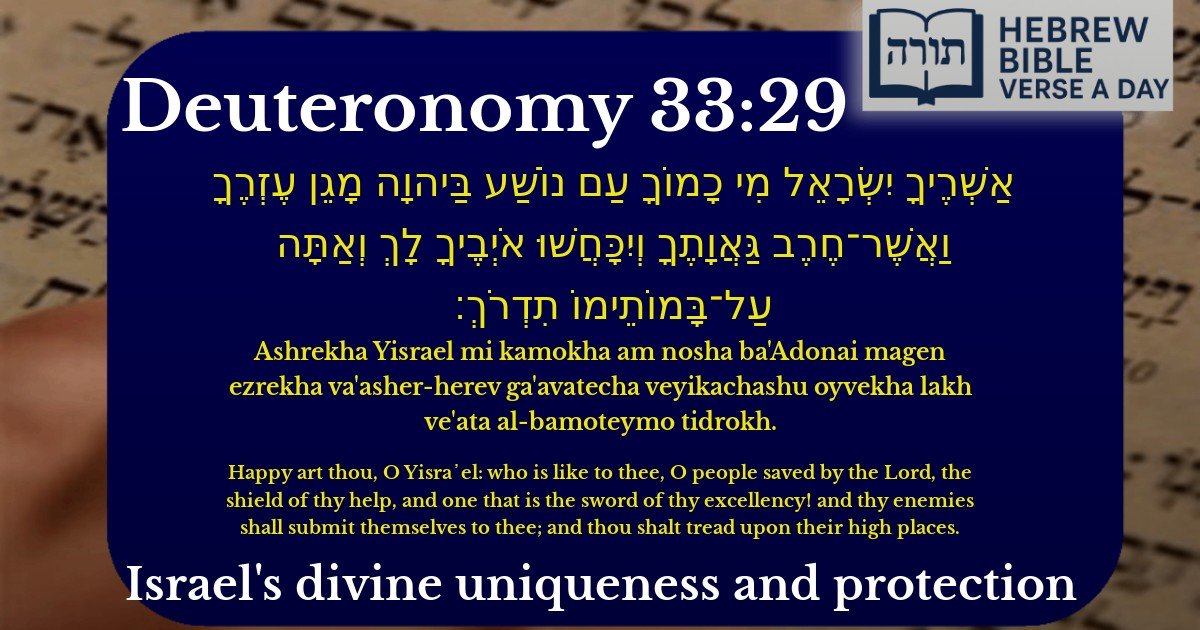

Deuteronomy 33:29 - Israel's divine uniqueness and protection

Deuteronomy 33:29 - דברים 33:29

Hebrew Text

אַשְׁרֶיךָ יִשְׂרָאֵל מִי כָמוֹךָ עַם נוֹשַׁע בַּיהוָה מָגֵן עֶזְרֶךָ וַאֲשֶׁר־חֶרֶב גַּאֲוָתֶךָ וְיִכָּחֲשׁוּ אֹיְבֶיךָ לָךְ וְאַתָּה עַל־בָּמוֹתֵימוֹ תִדְרֹךְ׃

English Translation

Happy art thou, O Yisra᾽el: who is like to thee, O people saved by the Lord, the shield of thy help, and one that is the sword of thy excellency! and thy enemies shall submit themselves to thee; and thou shalt tread upon their high places.

Transliteration

Ashrekha Yisrael mi kamokha am nosha ba'Adonai magen ezrekha va'asher-herev ga'avatecha veyikachashu oyvekha lakh ve'ata al-bamoteymo tidrokh.

Hebrew Leining Text

אַשְׁרֶ֨יךָ*(בספרי תימן אַשְׁרֶ֨יךָ באל״ף גדולה) יִשְׂרָאֵ֜ל מִ֣י כָמ֗וֹךָ עַ֚ם נוֹשַׁ֣ע בַּֽיהֹוָ֔ה מָגֵ֣ן עֶזְרֶ֔ךָ וַאֲשֶׁר־חֶ֖רֶב גַּאֲוָתֶ֑ךָ וְיִכָּחֲשׁ֤וּ אֹיְבֶ֙יךָ֙ לָ֔ךְ וְאַתָּ֖ה עַל־בָּמוֹתֵ֥ימוֹ תִדְרֹֽךְ׃ {ס}        

🎵 Listen to leining

Parasha Commentary

Overview of the Verse

The verse (Devarim 33:29) is part of Moshe Rabbeinu's final blessing to Bnei Yisrael before his passing. It extols the unique relationship between Hashem and Klal Yisrael, emphasizing their divine protection and ultimate triumph over enemies.

Key Themes and Interpretations

  • "Happy art thou, O Yisrael" (אַשְׁרֶיךָ יִשְׂרָאֵל): Rashi explains that this happiness stems from the fact that Hashem Himself is their salvation, unlike other nations who rely on human strength or alliances.
  • "Who is like to thee" (מִי כָמוֹךָ): The Midrash (Sifrei) highlights that no other nation enjoys such a direct and intimate relationship with Hashem, who fights their battles and protects them.
  • "Saved by the Lord" (עַם נוֹשַׁע בַּיהוָה): Ramban notes that this refers to both physical salvation in battle and spiritual redemption, as Hashem is the ultimate source of both.

The Imagery of Shield and Sword

The verse describes Hashem as "the shield of thy help" (מָגֵן עֶזְרֶךָ) and "the sword of thy excellency" (חֶרֶב גַּאֲוָתֶךָ). Ibn Ezra explains that the "shield" represents divine protection, while the "sword" signifies Hashem's active role in defeating enemies. The Malbim adds that these metaphors illustrate how Hashem is both defender and aggressor on behalf of Klal Yisrael.

Victory Over Enemies

The phrase "thy enemies shall submit themselves to thee" (וְיִכָּחֲשׁוּ אֹיְבֶיךָ לָךְ) is interpreted by Rashi as enemies being forced to feign friendship out of fear. The Sforno elaborates that this submission demonstrates the futility of opposing a nation under Hashem's direct guardianship.

Treading on High Places

"Thou shalt tread upon their high places" (וְאַתָּה עַל־בָּמוֹתֵימוֹ תִדְרֹךְ) is understood by the Rambam (in his commentary on the Mishnah) as a metaphor for total victory, where even the enemy's strongest fortresses (symbolized by "high places") are conquered. The Kli Yakar connects this to the idea that Bnei Yisrael will rise above all worldly powers through divine assistance.

Conclusion from Traditional Sources

Collectively, the verse underscores the unparalleled bond between Hashem and Klal Yisrael, assuring them of eternal protection and supremacy when they remain faithful to the Torah. As the Ohr HaChaim emphasizes, this blessing is eternal, applying in every generation where Yisrael merits Hashem's salvation.

📚 Talmud Citations

This verse is not quoted in the Talmud.

Frequently Asked Questions

Q: What does Deuteronomy 33:29 mean?
A: Deuteronomy 33:29 is part of Moses' final blessing to the Israelites before his passing. It praises Israel as a unique nation saved by Hashem, who protects them ('the shield of thy help') and empowers them ('the sword of thy excellency'). The verse assures Israel that their enemies will submit, and they will triumph over them ('tread upon their high places'). Rashi explains that this highlights Israel's special relationship with Hashem and their divinely granted strength.
Q: Why is Deuteronomy 33:29 important?
A: This verse is important because it reinforces the idea of Israel's chosenness and divine protection. The Rambam (Maimonides) teaches that recognizing Hashem's constant help strengthens our faith and gratitude. The Talmud (Berachot 4b) also connects such verses to the daily prayers, reminding Jews of their eternal bond with Hashem and His role as their protector.
Q: What can we learn from Deuteronomy 33:29 today?
A: We learn that even in difficult times, Hashem is our shield and source of strength. The Midrash (Sifrei Devarim) explains that this verse teaches us to trust in divine assistance while also taking action ('the sword of thy excellency' implies human effort). Today, this means balancing faith in Hashem with our responsibilities, knowing that He guides and protects the Jewish people.
Q: How does 'tread upon their high places' apply today?
A: The phrase 'tread upon their high places' symbolizes overcoming challenges and adversaries. The Malbim explains that 'high places' represent the pride and power of enemies, which Israel will subdue. Today, this can inspire perseverance in spiritual and physical struggles, trusting that Hashem will help us rise above obstacles, just as He did for our ancestors.
Q: Who is the 'shield' and 'sword' in this verse?
A: The 'shield' refers to Hashem's protection, as Rashi explains—He defends Israel from harm. The 'sword' represents the strength Hashem grants Israel to achieve victory. The Talmud (Megillah 10b) teaches that true success comes from divine help combined with human effort. Thus, the verse emphasizes that both defense and victory come through Hashem's support.