

Join Our Newsletter To Be Informed When New Videos Are Posted
Hebrew Text
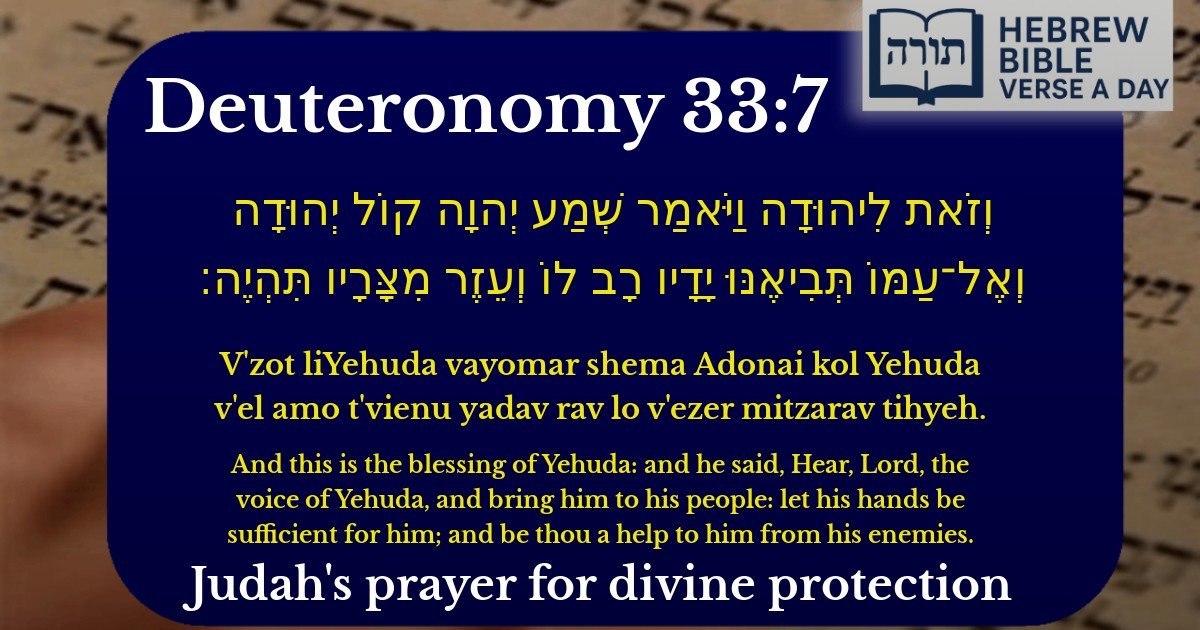
וְזֹאת לִיהוּדָה וַיֹּאמַר שְׁמַע יְהוָה קוֹל יְהוּדָה וְאֶל־עַמּוֹ תְּבִיאֶנּוּ יָדָיו רָב לוֹ וְעֵזֶר מִצָּרָיו תִּהְיֶה׃
English Translation
And this is the blessing of Yehuda: and he said, Hear, Lord, the voice of Yehuda, and bring him to his people: let his hands be sufficient for him; and be thou a help to him from his enemies.
Transliteration
V'zot liYehuda vayomar shema Adonai kol Yehuda v'el amo t'vienu yadav rav lo v'ezer mitzarav tihyeh.
Hebrew Leining Text
וְזֹ֣את לִיהוּדָה֮ וַיֹּאמַר֒ שְׁמַ֤ע יְהֹוָה֙ ק֣וֹל יְהוּדָ֔ה וְאֶל־עַמּ֖וֹ תְּבִיאֶ֑נּוּ יָדָיו֙ רָ֣ב ל֔וֹ וְעֵ֥זֶר מִצָּרָ֖יו תִּהְיֶֽה׃ {פ}
🎵 Listen to leining
Parasha Commentary
📚 Talmud Citations
This verse is not quoted in the Talmud.
Overview of the Verse
This verse is part of Moshe's blessings to the tribes of Israel before his passing (Devarim 33:7). It is addressed specifically to the tribe of Yehuda (Judah), emphasizing divine protection, strength in battle, and leadership among the tribes.
Rashi's Commentary
Rashi explains that the phrase "שְׁמַע יְהוָה קוֹל יְהוּדָה" ("Hear, Lord, the voice of Yehuda") refers to Yehuda's prayer in times of war. He connects this to the historical role of Yehuda as a leader in battle, particularly during the conquest of Eretz Yisrael (see Yehoshua 10). Rashi also interprets "וְאֶל־עַמּוֹ תְּבִיאֶנּוּ" ("and bring him to his people") as a request that Yehuda's warriors return safely from battle to their families.
Rambam's Perspective
Rambam (Hilchot Melachim 12:5) alludes to Yehuda's role as the royal tribe, from which the Davidic dynasty emerges. The phrase "יָדָיו רָב לוֹ" ("let his hands be sufficient for him") can be understood as Yehuda's strength in upholding Torah leadership and governance, ensuring justice and unity among Bnei Yisrael.
Midrashic Interpretation
The Midrash (Bamidbar Rabbah 13:8) elaborates that Yehuda's blessing includes both physical and spiritual strength. "וְעֵזֶר מִצָּרָיו תִּהְיֶה" ("and be Thou a help to him from his enemies") is seen as a promise of divine assistance against all adversaries, whether external enemies or internal strife. The Midrash also links this to Yehuda's earlier repentance (e.g., in the story of Tamar), showing that his leadership is rooted in humility and teshuvah.
Key Themes