

Join Our Newsletter To Be Informed When New Videos Are Posted
Hebrew Text
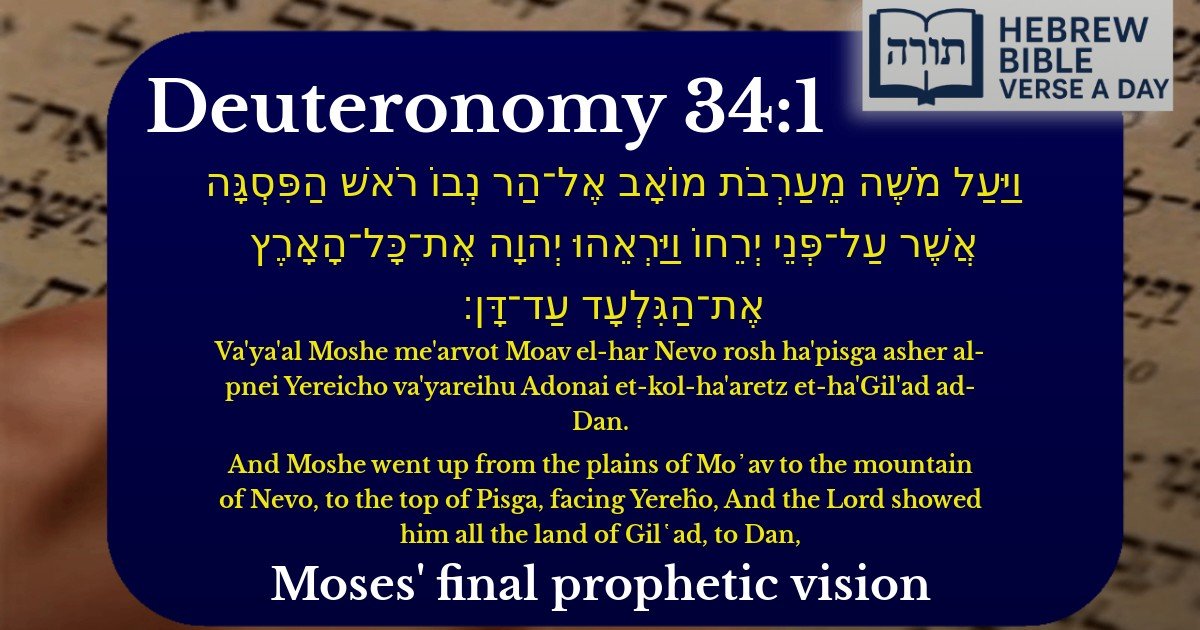
וַיַּעַל מֹשֶׁה מֵעַרְבֹת מוֹאָב אֶל־הַר נְבוֹ רֹאשׁ הַפִּסְגָּה אֲשֶׁר עַל־פְּנֵי יְרֵחוֹ וַיַּרְאֵהוּ יְהוָה אֶת־כָּל־הָאָרֶץ אֶת־הַגִּלְעָד עַד־דָּן׃
English Translation
And Moshe went up from the plains of Mo᾽av to the mountain of Nevo, to the top of Pisga, facing Yereĥo, And the Lord showed him all the land of Gil῾ad, to Dan,
Transliteration
Va'ya'al Moshe me'arvot Moav el-har Nevo rosh ha'pisga asher al-pnei Yereicho va'yareihu Adonai et-kol-ha'aretz et-ha'Gil'ad ad-Dan.
Hebrew Leining Text
וַיַּ֨עַל מֹשֶׁ֜ה מֵעַרְבֹ֤ת מוֹאָב֙ אֶל־הַ֣ר נְב֔וֹ רֹ֚אשׁ הַפִּסְגָּ֔ה אֲשֶׁ֖ר עַל־פְּנֵ֣י יְרֵח֑וֹ וַיַּרְאֵ֨הוּ יְהֹוָ֧ה אֶת־כׇּל־הָאָ֛רֶץ אֶת־הַגִּלְעָ֖ד עַד־דָּֽן׃
🎵 Listen to leining
Parasha Commentary
📚 Talmud Citations
This verse is quoted in the Talmud.
📖 Sotah 13b
The verse is referenced in the discussion about Moses' ascent to Mount Nebo and his view of the land of Israel before his death.
📖 Megillah 19a
The verse is mentioned in the context of discussing the boundaries of the land of Israel as seen by Moses.
Moshe's Ascent to Har Nevo
The verse describes Moshe's ascent from the plains of Moav to Har Nevo, the summit of Pisga. Rashi (Devarim 34:1) explains that this ascent was a gradual climb, emphasizing that Moshe was still physically strong at the age of 120, as his "eye had not dimmed, nor his vigor fled" (Devarim 34:7). The Sifrei (Devarim 357) adds that this ascent was divinely ordained, demonstrating Hashem's compassion in allowing Moshe to see the Land before his passing.
The Significance of Har Nevo
Har Nevo is identified by the Midrash (Bamidbar Rabbah 19:13) as the burial place of Moshe, chosen because it overlooks Eretz Yisrael. The Rambam (Hilchos Beis HaBechirah 7:6) notes that seeing the Land from this vantage point was a form of spiritual consolation for Moshe, fulfilling his lifelong yearning to enter it. The Kli Yakar (Devarim 34:1) suggests that the name "Pisga" (from the root "pesag," meaning "to split") alludes to the splitting of Moshe's vision, allowing him to see the entire Land miraculously.
The Vision of the Land
Hashem showed Moshe the Land from Gilad to Dan. Rashi explains that "Dan" refers to the northernmost point of Eretz Yisrael, indicating that Moshe was granted a panoramic view of the entire territory. The Talmud (Sotah 13b) teaches that this vision included not only the physical Land but also its future history—the conquest by Yehoshua, the eras of the Judges and Kings, and even the eventual exiles. The Ramban (Devarim 34:1) adds that this divine vision transcended natural sight, enabling Moshe to perceive the spiritual essence of the Land.
Lessons from the Verse