

Join Our Newsletter To Be Informed When New Videos Are Posted
Hebrew Text
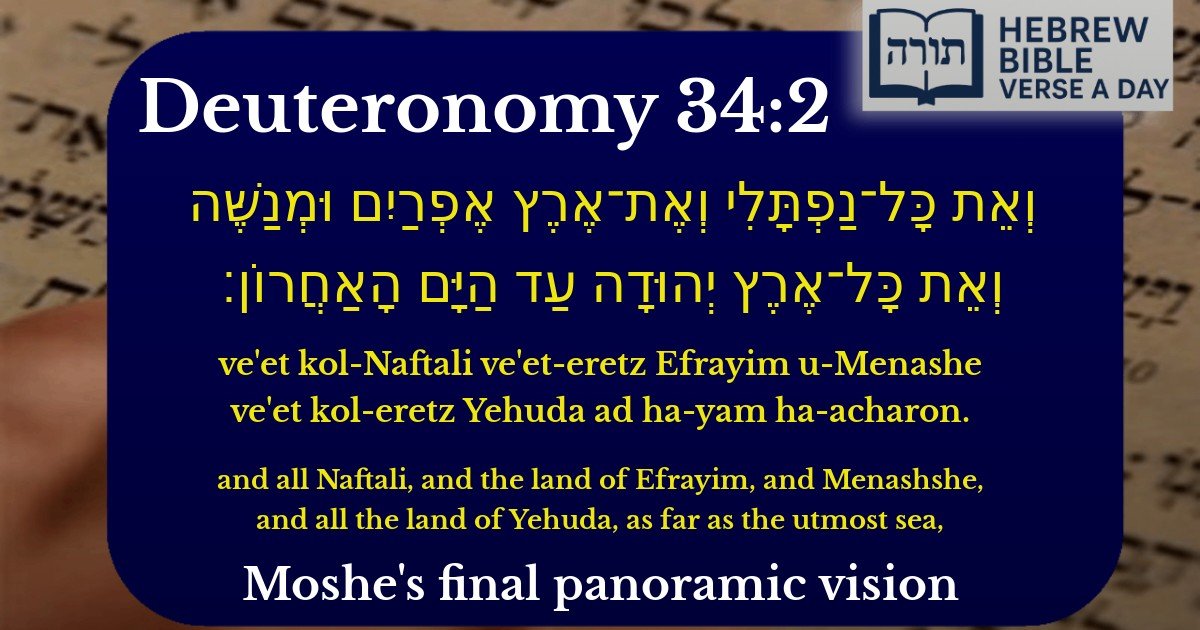
וְאֵת כָּל־נַפְתָּלִי וְאֶת־אֶרֶץ אֶפְרַיִם וּמְנַשֶּׁה וְאֵת כָּל־אֶרֶץ יְהוּדָה עַד הַיָּם הָאַחֲרוֹן׃
English Translation
and all Naftali, and the land of Efrayim, and Menashshe, and all the land of Yehuda, as far as the utmost sea,
Transliteration
Ve'et kol-Naftali ve'et-eretz Efrayim u-Menashe ve'et kol-eretz Yehuda ad ha-yam ha-acharon.
Hebrew Leining Text
וְאֵת֙ כׇּל־נַפְתָּלִ֔י וְאֶת־אֶ֥רֶץ אֶפְרַ֖יִם וּמְנַשֶּׁ֑ה וְאֵת֙ כׇּל־אֶ֣רֶץ יְהוּדָ֔ה עַ֖ד הַיָּ֥ם הָאַחֲרֽוֹן׃
🎵 Listen to leining
Parasha Commentary
📚 Talmud Citations
This verse is not quoted in the Talmud.
Geographical Context in Traditional Sources
The verse lists territories associated with the tribes of Naftali, Efrayim, Menashshe, and Yehuda, extending "as far as the utmost sea" (הַיָּם הָאַחֲרוֹן). Rashi (Devarim 34:2) identifies the "utmost sea" as the Mediterranean Sea, the western boundary of Eretz Yisrael. This delineation reflects the biblical borders of the Land of Israel as promised to the descendants of Avraham (Bereishit 15:18). The inclusion of these specific tribes highlights regions of historical and spiritual significance.
Tribal Allocations and Their Significance
Theological Implications of the Borders
The Sifrei (Devarim 51) teaches that these boundaries reflect the ideal extent of Jewish sovereignty, contingent upon the nation's adherence to mitzvot. The "utmost sea" serves not only as a physical marker but also as a spiritual reminder of Hashem's promise and the Jewish people's responsibility to sanctify the land. The Radak (Yehoshua 1:4) emphasizes that these borders will be fully realized in the Messianic era, as per the original covenant.