

Join Our Newsletter To Be Informed When New Videos Are Posted
Hebrew Text
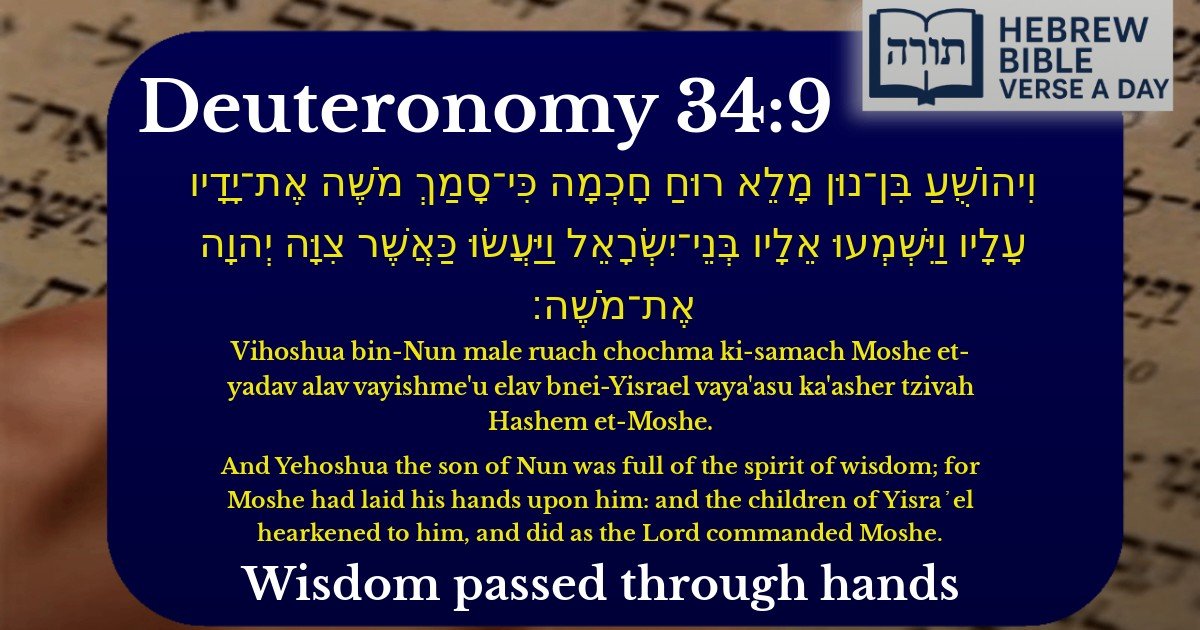
וִיהוֹשֻׁעַ בִּן־נוּן מָלֵא רוּחַ חָכְמָה כִּי־סָמַךְ מֹשֶׁה אֶת־יָדָיו עָלָיו וַיִּשְׁמְעוּ אֵלָיו בְּנֵי־יִשְׂרָאֵל וַיַּעֲשׂוּ כַּאֲשֶׁר צִוָּה יְהוָה אֶת־מֹשֶׁה׃
English Translation
And Yehoshua the son of Nun was full of the spirit of wisdom; for Moshe had laid his hands upon him: and the children of Yisra᾽el hearkened to him, and did as the Lord commanded Moshe.
Transliteration
Vihoshua bin-Nun male ruach chochma ki-samach Moshe et-yadav alav vayishme'u elav bnei-Yisrael vaya'asu ka'asher tzivah Hashem et-Moshe.
Hebrew Leining Text
וִיהוֹשֻׁ֣עַ בִּן־נ֗וּן מָלֵא֙ ר֣וּחַ חׇכְמָ֔ה כִּֽי־סָמַ֥ךְ מֹשֶׁ֛ה אֶת־יָדָ֖יו עָלָ֑יו וַיִּשְׁמְע֨וּ אֵלָ֤יו בְּנֵֽי־יִשְׂרָאֵל֙ וַֽיַּעֲשׂ֔וּ כַּאֲשֶׁ֛ר צִוָּ֥ה יְהֹוָ֖ה אֶת־מֹשֶֽׁה׃
🎵 Listen to leining
Parasha Commentary
📚 Talmud Citations
This verse is quoted in the Talmud.
📖 Sotah 13b
The verse is referenced in the discussion about the transfer of leadership from Moses to Joshua, emphasizing the divine approval and wisdom bestowed upon Joshua.
📖 Sanhedrin 8a
The verse is cited in the context of discussing the qualifications and divine appointment of leaders, particularly focusing on Joshua's wisdom and the Israelites' obedience to him.
The Spirit of Wisdom in Yehoshua
The verse states that Yehoshua was "full of the spirit of wisdom" (רוּחַ חָכְמָה). Rashi explains that this refers to the divine inspiration (רוּחַ הַקֹּדֶשׁ) that rested upon Yehoshua, enabling him to lead Israel with wisdom and discernment. The Midrash (Bamidbar Rabbah 21:14) teaches that this wisdom was a direct result of Moshe's סְמִיכָה (laying of hands), which transferred spiritual authority and leadership qualities to Yehoshua.
The Significance of Moshe's Semichah
The act of Moshe laying his hands (סָמַךְ אֶת־יָדָיו) on Yehoshua is understood by the Rambam (Hilchos Sanhedrin 4:1) as the biblical source for the rabbinic tradition of סְמִיכַת זְקֵנִים (ordination of scholars). This transmission of authority ensured continuity of Torah leadership. The Talmud (Sanhedrin 13b) emphasizes that this was not merely symbolic but an actual transfer of spiritual power from Moshe to his successor.
Israel's Acceptance of Yehoshua's Leadership
The verse notes that Bnei Yisrael "hearkened to him" (וַיִּשְׁמְעוּ אֵלָיו). The Sifrei (Devarim 34:9) comments that this demonstrates the complete acceptance of Yehoshua's authority, just as they had accepted Moshe's. This was crucial for maintaining unity during the transition of leadership. The phrase "as Hashem commanded Moshe" (כַּאֲשֶׁר צִוָּה ה' אֶת־מֹשֶׁה) shows that Yehoshua's authority was divinely ordained, not self-assumed.
Lessons in Leadership Transition