

Join Our Newsletter To Be Informed When New Videos Are Posted
Hebrew Text
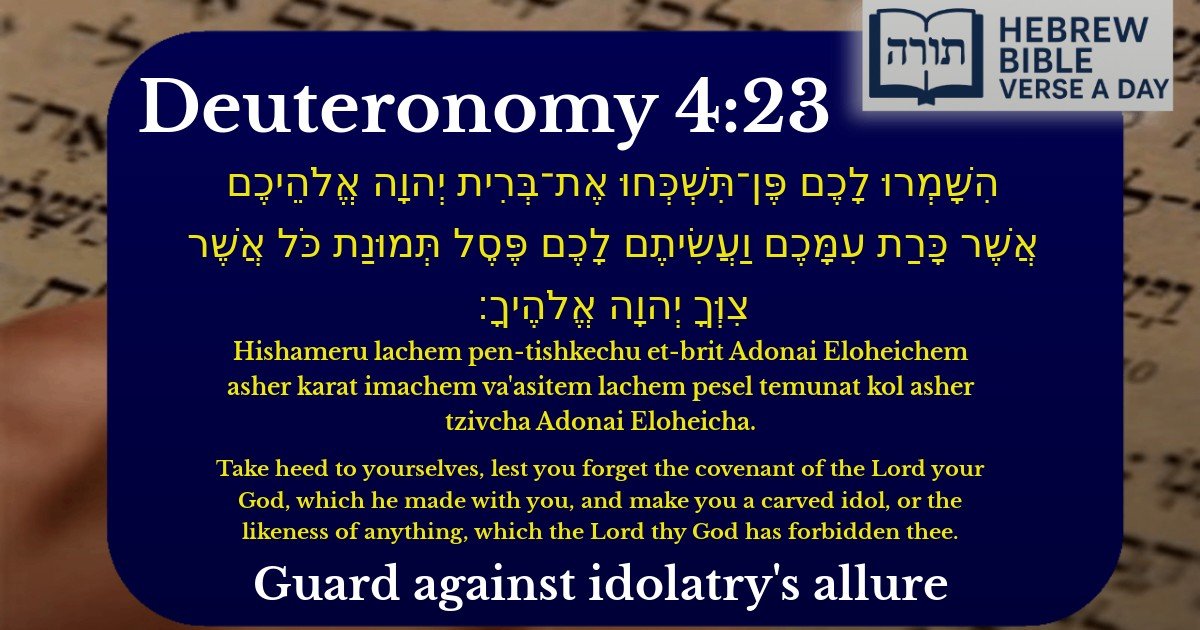
הִשָּׁמְרוּ לָכֶם פֶּן־תִּשְׁכְּחוּ אֶת־בְּרִית יְהוָה אֱלֹהֵיכֶם אֲשֶׁר כָּרַת עִמָּכֶם וַעֲשִׂיתֶם לָכֶם פֶּסֶל תְּמוּנַת כֹּל אֲשֶׁר צִוְּךָ יְהוָה אֱלֹהֶיךָ׃
English Translation
Take heed to yourselves, lest you forget the covenant of the Lord your God, which he made with you, and make you a carved idol, or the likeness of anything, which the Lord thy God has forbidden thee.
Transliteration
Hishameru lachem pen-tishkechu et-brit Adonai Eloheichem asher karat imachem va'asitem lachem pesel temunat kol asher tzivcha Adonai Eloheicha.
Hebrew Leining Text
הִשָּׁמְר֣וּ לָכֶ֗ם פֶּֽן־תִּשְׁכְּחוּ֙ אֶת־בְּרִ֤ית יְהֹוָה֙ אֱלֹ֣הֵיכֶ֔ם אֲשֶׁ֥ר כָּרַ֖ת עִמָּכֶ֑ם וַעֲשִׂיתֶ֨ם לָכֶ֥ם פֶּ֙סֶל֙ תְּמ֣וּנַת כֹּ֔ל אֲשֶׁ֥ר צִוְּךָ֖ יְהֹוָ֥ה אֱלֹהֶֽיךָ׃
🎵 Listen to leining
Parasha Commentary
📚 Talmud Citations
This verse is quoted in the Talmud.
The verse is referenced in a discussion about the severity of forgetting the Torah and the covenant, emphasizing the importance of remembering God's commandments.
Context and Source
The verse (Devarim 4:23) appears in Moshe's final address to Bnei Yisrael before they enter Eretz Yisrael. It serves as a warning against idolatry and forgetting the covenant with Hashem. Rashi explains that this admonition comes after Moshe recounts the giving of the Torah at Har Sinai, emphasizing the gravity of abandoning the covenant for foreign worship.
Warning Against Forgetfulness
The phrase "הִשָּׁמְרוּ לָכֶם פֶּן־תִּשְׁכְּחוּ" ("Take heed to yourselves, lest you forget") underscores the active effort required to remember the covenant. Rambam (Hilchos Avodah Zarah 2:3) teaches that forgetfulness leads to spiritual decline, as one gradually strays from mitzvos. The Sforno adds that this forgetfulness is not merely intellectual but a moral failing—a deliberate turning away from divine commandments.
The Danger of Idolatry
The verse specifically warns against creating a "פֶּסֶל תְּמוּנַת כֹּל" ("carved idol, or the likeness of anything"). The Ramban explains that this prohibition extends beyond physical idols to any representation that might lead to avodah zarah, even if not worshipped directly. The Talmud (Sanhedrin 7b) derives from this that one who makes an idol, even for others, violates a Torah prohibition.
The Covenant as a Safeguard
The mention of "בְּרִית יְהוָה" ("the covenant of the Lord") ties this warning to the broader relationship between Hashem and Klal Yisrael. The Midrash (Devarim Rabbah 2:29) states that the covenant is compared to a marriage bond—forgetting it is akin to betrayal. The Kli Yakar emphasizes that the land itself rejects those who violate this covenant, linking it to the eventual exile.
Practical Implications