

Join Our Newsletter To Be Informed When New Videos Are Posted
Hebrew Text
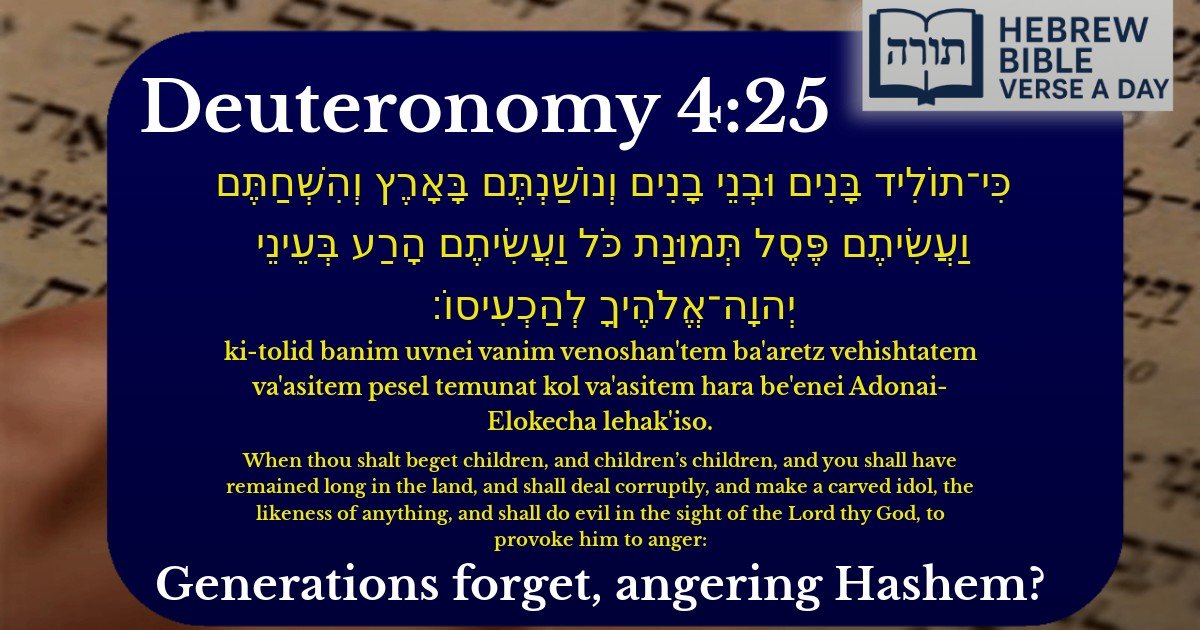
כִּי־תוֹלִיד בָּנִים וּבְנֵי בָנִים וְנוֹשַׁנְתֶּם בָּאָרֶץ וְהִשְׁחַתֶּם וַעֲשִׂיתֶם פֶּסֶל תְּמוּנַת כֹּל וַעֲשִׂיתֶם הָרַע בְּעֵינֵי יְהוָה־אֱלֹהֶיךָ לְהַכְעִיסוֹ׃
English Translation
When thou shalt beget children, and children’s children, and you shall have remained long in the land, and shall deal corruptly, and make a carved idol, the likeness of anything, and shall do evil in the sight of the Lord thy God, to provoke him to anger:
Transliteration
Ki-tolid banim uvnei vanim venoshan'tem ba'aretz vehishtatem va'asitem pesel temunat kol va'asitem hara be'enei Adonai-Elokecha lehak'iso.
Hebrew Leining Text
כִּֽי־תוֹלִ֤יד בָּנִים֙ וּבְנֵ֣י בָנִ֔ים וְנוֹשַׁנְתֶּ֖ם בָּאָ֑רֶץ וְהִשְׁחַתֶּ֗ם וַעֲשִׂ֤יתֶם פֶּ֙סֶל֙ תְּמ֣וּנַת כֹּ֔ל וַעֲשִׂיתֶ֥ם הָרַ֛ע בְּעֵינֵ֥י יְהֹוָה־אֱלֹהֶ֖יךָ לְהַכְעִיסֽוֹ׃
🎵 Listen to leining
Parasha Commentary
📚 Talmud Citations
This verse is not quoted in the Talmud.
Context in Devarim (Deuteronomy)
This verse appears in Devarim 4:25, part of Moshe Rabbeinu's admonition to Bnei Yisrael before entering Eretz Yisrael. It serves as a warning against spiritual decline over generations, particularly the danger of idolatry after prolonged settlement in the land.
Rashi's Explanation
Rashi emphasizes the progression of spiritual decay: "When you shall beget children and children's children" implies that the corruption arises after generations become distant from the Exodus and Matan Torah. The phrase "and you shall have remained long in the land" suggests comfort leads to forgetfulness of Hashem's miracles. Rashi interprets "וְהִשְׁחַתֶּם" (and shall deal corruptly) as a reference to idolatry, the root of all corruption.
Rambam's Perspective
In Hilchot Avodah Zarah (1:1), Rambam explains that this verse describes a historical process: after the era of Enosh, humanity gradually turned from monotheism to idolatry due to prolonged comfort and philosophical errors. The Torah warns that Bnei Yisrael could repeat this decline if they grow complacent in Eretz Yisrael.
Ibn Ezra's Linguistic Insight
Ibn Ezra notes that "פֶּסֶל תְּמוּנַת כֹּל" (a carved idol, the likeness of anything) includes not just graven images but any representation used for worship—even if initially intended to honor Hashem. This broad prohibition prevents any slippery slope toward avodah zarah.
Midrashic Interpretation (Sifri)
Chassidic Perspective (Sefat Emet)
The Sefat Emet explains that "children's children" represents a test of legacy: each generation must actively transmit emunah (faith). Passive inheritance leads to spiritual erosion. The land's bounty ("נוֹשַׁנְתֶּם בָּאָרֶץ") becomes a test—will prosperity draw them closer to Hashem or toward materialism?
Halachic Implications (Mishneh Torah)
Rambam (Hilchot Avodah Zarah 2:1-2) derives from this verse that any act resembling idolatrous practice—even without intent to worship—is forbidden if it might lead others to error. The emphasis on "תְּמוּנַת כֹּל" teaches that no form of representation is permitted for worship purposes.