

Join Our Newsletter To Be Informed When New Videos Are Posted
Hebrew Text
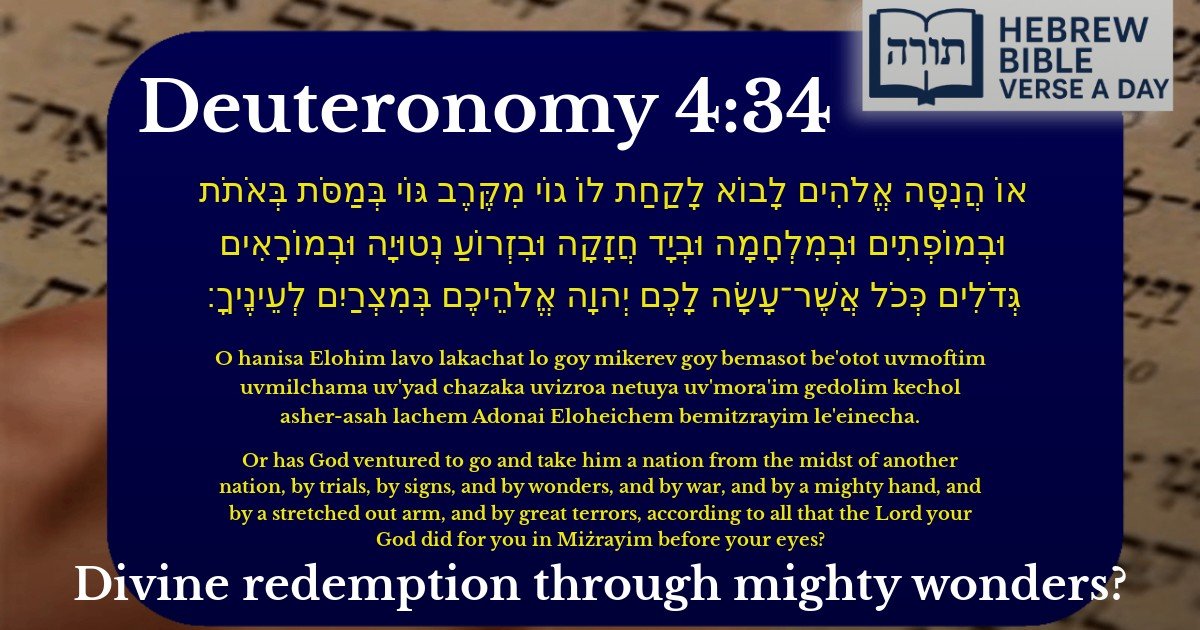
אוֹ הֲנִסָּה אֱלֹהִים לָבוֹא לָקַחַת לוֹ גוֹי מִקֶּרֶב גּוֹי בְּמַסֹּת בְּאֹתֹת וּבְמוֹפְתִים וּבְמִלְחָמָה וּבְיָד חֲזָקָה וּבִזְרוֹעַ נְטוּיָה וּבְמוֹרָאִים גְּדֹלִים כְּכֹל אֲשֶׁר־עָשָׂה לָכֶם יְהוָה אֱלֹהֵיכֶם בְּמִצְרַיִם לְעֵינֶיךָ׃
English Translation
Or has God ventured to go and take him a nation from the midst of another nation, by trials, by signs, and by wonders, and by war, and by a mighty hand, and by a stretched out arm, and by great terrors, according to all that the Lord your God did for you in Miżrayim before your eyes?
Transliteration
O hanisa Elohim lavo lakachat lo goy mikerev goy bemasot be'otot uvmoftim uvmilchama uv'yad chazaka uvizroa netuya uv'mora'im gedolim kechol asher-asah lachem Adonai Eloheichem bemitzrayim le'einecha.
Hebrew Leining Text
א֣וֹ ׀ הֲנִסָּ֣ה אֱלֹהִ֗ים לָ֠ב֠וֹא לָקַ֨חַת ל֣וֹ גוֹי֮ מִקֶּ֣רֶב גּוֹי֒ בְּמַסֹּת֩ בְּאֹתֹ֨ת וּבְמוֹפְתִ֜ים וּבְמִלְחָמָ֗ה וּבְיָ֤ד חֲזָקָה֙ וּבִזְר֣וֹעַ נְטוּיָ֔ה וּבְמוֹרָאִ֖ים גְּדֹלִ֑ים כְּ֠כֹ֠ל אֲשֶׁר־עָשָׂ֨ה לָכֶ֜ם יְהֹוָ֧ה אֱלֹהֵיכֶ֛ם בְּמִצְרַ֖יִם לְעֵינֶֽיךָ׃
🎵 Listen to leining
Parasha Commentary
📚 Talmud Citations
This verse is not quoted in the Talmud.
Context of the Verse
This verse appears in Devarim (Deuteronomy) 4:34, where Moshe Rabbeinu reminds Bnei Yisrael of the unparalleled miracles Hashem performed to redeem them from Mitzrayim (Egypt). The rhetorical question emphasizes that no other nation has experienced such divine intervention in history.
Rashi's Explanation
Rashi (Devarim 4:34) explains that the phrase "הֲנִסָּה אֱלֹהִים" ("has God ventured") means: Hashem tested His own power to take a nation from another nation through open miracles. This was unprecedented—no deity had ever done such a thing for their people. Rashi highlights that the plagues (מַסֹּת) and signs (אֹתֹת) were clear demonstrations of Hashem's exclusive relationship with Klal Yisrael.
Rambam on Divine Miracles
Rambam (Moreh Nevuchim 2:35) discusses how the Exodus miracles were necessary to establish the truth of Torah and prophecy. The "מוֹפְתִים" (wonders) were not arbitrary but served to validate Moshe's leadership and Hashem's covenant with Israel. The "יָד חֲזָקָה" (mighty hand) refers to the severity of the plagues, while "זְרוֹעַ נְטוּיָה" (outstretched arm) symbolizes continuous divine intervention.
Midrashic Insights
Theological Significance
This verse serves as a foundational proof of hashgacha pratis (divine providence) over Klal Yisrael. The Ibn Ezra emphasizes that the Exodus was unique because it involved a sustained series of miracles (מַסֹּת... מוֹפְתִים)—unlike isolated wonders performed for other nations. The "מִלְחָמָה" (war) may allude to the drowning of Pharaoh’s army, demonstrating Hashem’s absolute control over nature and history.
Halachic Implications
The Sefer HaChinuch (Mitzvah 21) derives from this verse the obligation to remember the Exodus daily, as these miracles affirm our belief in Hashem’s ongoing involvement in the world. The "יָד חֲזָקָה" and "זְרוֹעַ נְטוּיָה" are invoked in the Haggadah, linking the historical redemption to future geulah (redemption).