

Join Our Newsletter To Be Informed When New Videos Are Posted
Hebrew Text
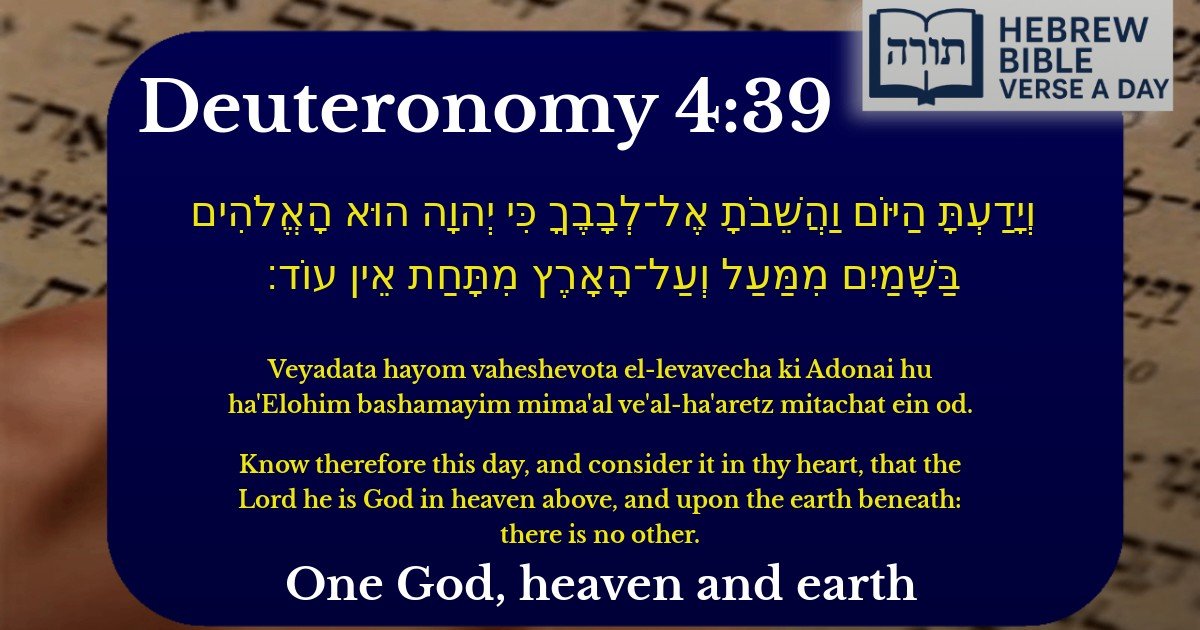
וְיָדַעְתָּ הַיּוֹם וַהֲשֵׁבֹתָ אֶל־לְבָבֶךָ כִּי יְהוָה הוּא הָאֱלֹהִים בַּשָּׁמַיִם מִמַּעַל וְעַל־הָאָרֶץ מִתָּחַת אֵין עוֹד׃
English Translation
Know therefore this day, and consider it in thy heart, that the Lord he is God in heaven above, and upon the earth beneath: there is no other.
Transliteration
Veyadata hayom vaheshevota el-levavecha ki Adonai hu ha'Elohim bashamayim mima'al ve'al-ha'aretz mitachat ein od.
Hebrew Leining Text
וְיָדַעְתָּ֣ הַיּ֗וֹם וַהֲשֵׁבֹתָ֮ אֶל־לְבָבֶ֒ךָ֒ כִּ֤י יְהֹוָה֙ ה֣וּא הָֽאֱלֹהִ֔ים בַּשָּׁמַ֣יִם מִמַּ֔עַל וְעַל־הָאָ֖רֶץ מִתָּ֑חַת אֵ֖ין עֽוֹד׃
🎵 Listen to leining
Parasha Commentary
📚 Talmud Citations
This verse is quoted in the Talmud.
📖 Berakhot 33b
The verse is referenced in a discussion about the nature of prayer and the recognition of God's sovereignty.
📖 Megillah 25a
The verse is cited in the context of discussing the proper way to acknowledge and declare God's unity.
Understanding the Verse
The verse (Devarim 4:39) emphasizes the fundamental principle of Yichud Hashem (the Oneness of G-d), declaring that Hashem is the sole sovereign over all creation—both in the heavens and on earth. This is a core tenet of Jewish belief, as codified in Rambam's 13 Principles of Faith.
Rashi's Commentary
Rashi explains that the phrase "וְיָדַעְתָּ הַיּוֹם" ("Know therefore this day") implies that this knowledge should be as clear and certain to you as if you had witnessed it firsthand today. The instruction to "וַהֲשֵׁבֹתָ אֶל־לְבָבֶךָ" ("consider it in thy heart") means that this truth must be internalized deeply, not merely acknowledged intellectually.
Rambam's Perspective
In Hilchot Yesodei HaTorah (1:1-7), Rambam elaborates on this verse, teaching that recognizing Hashem's absolute unity and dominion is the foundation of all mitzvot. The declaration "אֵין עוֹד" ("there is no other") negates any form of dualism or polytheism, affirming that Hashem alone governs all existence.
Midrashic Insights
Practical Implications
This verse serves as a daily reminder to affirm Hashem's unity, as reflected in the Shema prayer. The Sages (Berachot 13b) stress that reciting Shema with proper intent fulfills the commandment to "know and consider" this truth. Additionally, the Chovot HaLevavot (Duties of the Heart) emphasizes that internalizing this belief guides ethical and spiritual conduct.