Frequently Asked Questions
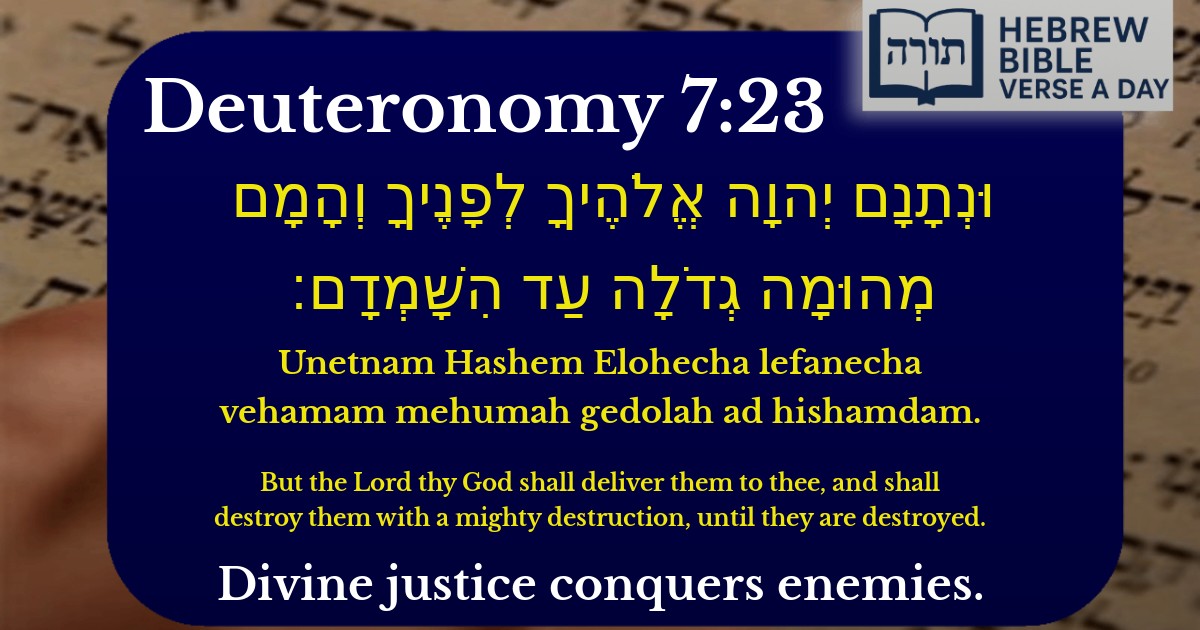
Q: What does Deuteronomy 7:23 mean?
A: Deuteronomy 7:23 is part of Moshe's speech to the Israelites before entering the Land of Israel. It reassures them that Hashem will help them defeat their enemies in battle, delivering them into their hands and ensuring their complete downfall. Rashi explains that this verse emphasizes divine assistance in overcoming obstacles when fulfilling Hashem's commandments.
Q: Why is this verse important in Judaism?
A: This verse is important because it demonstrates Hashem's active role in Jewish history and His commitment to the Jewish people when they follow the Torah. The Rambam (Hilchot Melachim 7:15) derives from such verses that wars for settling Eretz Yisrael are considered milchemet mitzvah (obligatory wars), showing the divine promise of victory when fought according to Torah principles.
Q: What can we learn from Deuteronomy 7:23 today?
A: We learn that even when facing overwhelming challenges, trust in Hashem's help is fundamental. The Sforno notes that this verse teaches that victories come through divine intervention, not merely human strength. This applies spiritually today - when overcoming personal struggles in serving Hashem, we must remember that success ultimately comes from Him.
Q: How does 'destroy them with a mighty destruction' align with Jewish values of compassion?
A: The Talmud (Yevamot 79a) explains that these commands applied specifically to the seven Canaanite nations who posed an existential threat to Israel's spiritual mission. The Rambam (Melachim 6:4) clarifies that peace offerings were always made first, and destruction was only when they refused coexistence. Jewish tradition emphasizes that war is never desirable, but sometimes necessary for survival.
Q: Does this verse mean Jews should physically fight enemies today?
A: No. The Chazon Ish (Eretz Yisrael 1:1) explains that these commandments were specific to the conquest period under Yehoshua. Today, unless directed by clear halachic authority and prophecy (which we currently lack), we don't initiate such wars. The verse's eternal lesson is about trusting Hashem during challenges, not about contemporary warfare.


Context in the Torah
This verse (Devarim 7:23) appears in Parashat Eikev, where Moshe reassures Bnei Yisrael of Hashem's assistance in conquering the nations of Canaan. The promise emphasizes divine intervention in battle and the ultimate eradication of Israel's enemies.
Rashi's Commentary
Rashi explains the phrase "וְהָמָם מְהוּמָה גְדֹלָה" ("and shall destroy them with a mighty destruction") as referring to a state of confusion and panic that Hashem will instill in the enemy nations. He cites the example of the Canaanite kings who were struck with terror (as seen in Yehoshua 10:10), causing them to flee or fight ineffectively.
Rambam's Perspective
In Mishneh Torah (Hilchot Melachim 5:1), Rambam interprets this verse as part of the broader mitzvah to eradicate the seven Canaanite nations. He emphasizes that this commandment was specific to that historical context and not a general license for warfare beyond the Torah's directives.
Midrashic Interpretation
The Sifrei Devarim (on this verse) connects the "mighty destruction" to the miraculous nature of the conquest. It teaches that the victories would be so decisive that the nations would recognize Hashem's hand in Israel's success, fulfilling the promise that "the fear and dread of you shall be upon all the land" (Yehoshua 2:9).
Grammatical Insight
Halachic Implications
Tosafot (Avodah Zarah 20b) derives from the phrase "עַד הִשָּׁמְדָם" ("until they are destroyed") that there is an obligation to pursue the complete elimination of Amalek and the seven nations when the opportunity arises under proper halachic conditions (e.g., during the era of the monarchy with a Sanhedrin).
Spiritual Lesson
The Kli Yakar notes that the verse begins with "וּנְתָנָם יְהוָה אֱלֹהֶיךָ לְפָנֶיךָ" - emphasizing that victory comes only when Bnei Yisrael recognize that success comes from Hashem, not their own military strength (as warned in Devarim 8:17). The "mighty destruction" serves to remove any illusion of human supremacy in warfare.