

Join Our Newsletter To Be Informed When New Videos Are Posted
Hebrew Text
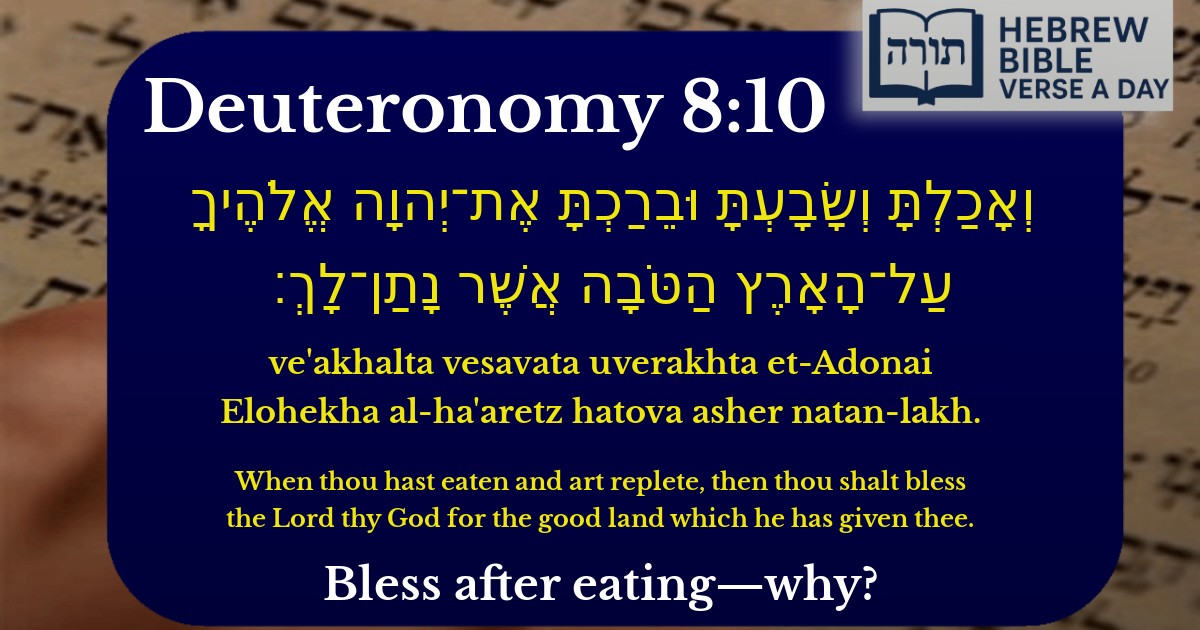
וְאָכַלְתָּ וְשָׂבָעְתָּ וּבֵרַכְתָּ אֶת־יְהוָה אֱלֹהֶיךָ עַל־הָאָרֶץ הַטֹּבָה אֲשֶׁר נָתַן־לָךְ׃
English Translation
When thou hast eaten and art replete, then thou shalt bless the Lord thy God for the good land which he has given thee.
Transliteration
Ve'akhalta vesavata uverakhta et-Adonai Elohekha al-ha'aretz hatova asher natan-lakh.
Hebrew Leining Text
וְאָכַלְתָּ֖ וְשָׂבָ֑עְתָּ וּבֵֽרַכְתָּ֙ אֶת־יְהֹוָ֣ה אֱלֹהֶ֔יךָ עַל־הָאָ֥רֶץ הַטֹּבָ֖ה אֲשֶׁ֥ר נָֽתַן־לָֽךְ׃
🎵 Listen to leining
Parasha Commentary
📚 Talmud Citations
This verse is quoted in the Talmud.
📖 Berakhot 48b
The verse is cited in the discussion about the obligation to recite the Birkat Hamazon (Grace after Meals), emphasizing the commandment to bless God after eating.
📖 Sotah 36a
The verse is referenced in the context of discussing the importance of gratitude to God for His blessings, particularly in relation to the land of Israel.
The Mitzvah of Birkat Hamazon
The verse (Devarim 8:10) establishes the biblical obligation to recite Birkat Hamazon (Grace After Meals) after eating and being satisfied. This mitzvah is derived from the phrase "וּבֵרַכְתָּ אֶת־יְהוָה אֱלֹהֶיךָ" ("then thou shalt bless the Lord thy God"). According to Rambam (Hilchot Berachot 1:1), this is one of the 613 mitzvot, obligating us to express gratitude to Hashem after partaking of His bounty.
Rashi's Explanation
Rashi comments that the verse links blessing Hashem specifically to being "שָׂבָעְתָּ" ("satiated"), teaching that the obligation applies only after eating enough to feel satisfied. However, the Sages extended this mitzvah to require a blessing even after eating a smaller amount (Berachot 20b), ensuring we acknowledge Hashem's kindness at all times.
The Significance of the Land
The verse emphasizes blessing Hashem "עַל־הָאָרֶץ הַטֹּבָה" ("for the good land"). The Talmud (Berachot 48b) explains that this refers to Eretz Yisrael, which is intrinsically connected to our sustenance. The Midrash (Sifrei Devarim 8:10) elaborates that the land's goodness is reflected in its fruits, which are blessed when we recite Birkat Hamazon with proper intent.
Halachic Details from the Shulchan Aruch
Spiritual Lessons from the Verse
The Kli Yakar teaches that this verse warns against arrogance—even when one is satiated, they must remember that all sustenance comes from Hashem. The Netziv (Ha'amek Davar) adds that recognizing Hashem's kindness through Birkat Hamazon strengthens our bond with Him and prevents us from taking His blessings for granted.