

Join Our Newsletter To Be Informed When New Videos Are Posted
Hebrew Text
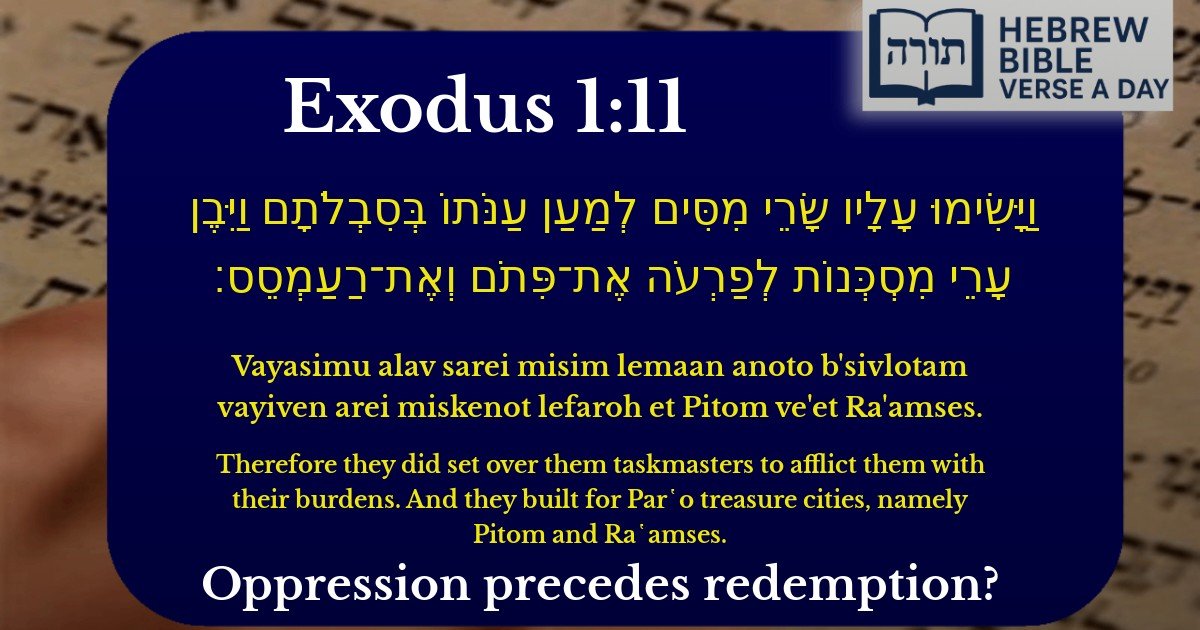
וַיָּשִׂימוּ עָלָיו שָׂרֵי מִסִּים לְמַעַן עַנֹּתוֹ בְּסִבְלֹתָם וַיִּבֶן עָרֵי מִסְכְּנוֹת לְפַרְעֹה אֶת־פִּתֹם וְאֶת־רַעַמְסֵס׃
English Translation
Therefore they did set over them taskmasters to afflict them with their burdens. And they built for Par῾o treasure cities, namely Pitom and Ra῾amses.
Transliteration
Vayasimu alav sarei misim lemaan anoto b'sivlotam vayiven arei miskenot lefaroh et Pitom ve'et Ra'amses.
Hebrew Leining Text
וַיָּשִׂ֤ימוּ עָלָיו֙ שָׂרֵ֣י מִסִּ֔ים לְמַ֥עַן עַנֹּת֖וֹ בְּסִבְלֹתָ֑ם וַיִּ֜בֶן עָרֵ֤י מִסְכְּנוֹת֙ לְפַרְעֹ֔ה אֶת־פִּתֹ֖ם וְאֶת־רַעַמְסֵֽס׃
🎵 Listen to leining
Parasha Commentary
📚 Talmud Citations
This verse is quoted in the Talmud.
📖 Sotah 11a
The verse is referenced in the context of discussing the hardships the Israelites faced in Egypt, particularly focusing on the labor imposed upon them by Pharaoh.
Rashi's Explanation of the Taskmasters
Rashi (Exodus 1:11) explains that the phrase "שָׂרֵי מִסִּים" (taskmasters) refers to officers appointed to impose forced labor upon the Israelites. The word "מִסִּים" is derived from the root meaning "to impose," indicating that these officers were specifically assigned to burden the Israelites with harsh labor. Rashi further notes that the purpose was "לְמַעַן עַנֹּתוֹ" (to afflict them), showing Pharaoh's intent to break their spirit through oppression.
Rambam on the Nature of the Oppression
Rambam (Hilchot Avadim 9:8) discusses the ethical implications of forced labor, emphasizing that the Egyptians' actions violated the basic dignity of human beings. The Torah later commands us to remember this oppression (Deuteronomy 24:18) to instill compassion for the vulnerable. The building of Pitom and Raamses as treasure cities was not merely economic exploitation but a deliberate strategy to crush the Israelites' morale.
Midrashic Insights on Pitom and Raamses
The Midrash (Shemot Rabbah 1:10) elaborates that Pitom (פִּתֹם) is called so because it was built on unstable ground ("פה תם"—"here it was swallowed"), causing structures to collapse repeatedly. Raamses (רַעַמְסֵס) is interpreted as a place where the Israelites were subjected to backbreaking labor ("רע מעש"—"evil deeds"). These cities symbolize Pharaoh's cruelty and the futility of his efforts, as the Israelites continued to thrive despite the oppression.
Talmudic Perspective on the Burdens
The Talmud (Sotah 11a) describes how the Egyptians devised increasingly harsh labor:
This aligns with the verse's emphasis on "עַנֹּתוֹ בְּסִבְלֹתָם" (afflicting them with burdens), highlighting the escalating severity of the servitude.