Frequently Asked Questions
Q: Why are Dan, Naftali, Gad, and Asher mentioned together in Exodus 1:4?
A: These four tribes—Dan, Naftali, Gad, and Asher—are listed together in Exodus 1:4 as part of the seventy descendants of Jacob who went down to Egypt (see Genesis 46). Rashi explains that this verse highlights the fulfillment of G-d's promise to Jacob that his family would become a great nation in Egypt (Genesis 46:3).
Q: What is the significance of listing the tribes in Exodus 1:4?
A: The listing of these tribes in Exodus 1:4 emphasizes the continuity of the Israelite family and the beginnings of their growth into a nation. The Midrash (Shemot Rabbah 1:5) teaches that this verse connects to the broader narrative of the Exodus, showing how the Jewish people multiplied in Egypt despite hardships.
Q: Why are only four tribes mentioned here instead of all twelve?
A: Exodus 1:4 mentions only four tribes as part of a summary of Jacob's descendants who came to Egypt. The Torah sometimes lists partial groupings to highlight specific themes. Ramban (Nachmanides) suggests that these names may represent different family groups or maternal lineages (as Dan and Naftali were sons of Bilhah, while Gad and Asher were sons of Zilpah).
Q: How does Exodus 1:4 connect to the rest of the Exodus story?
A: This verse sets the stage for the enslavement and eventual redemption of the Jewish people. The Talmud (Sotah 11a) explains that listing the tribes reminds us of their righteous origins before the hardships in Egypt began, reinforcing the idea that their suffering was part of a divine plan leading to redemption.
Q: What lesson can we learn from Exodus 1:4 today?
A: This verse teaches the importance of remembering our roots and identity, even in difficult times. Just as the tribes maintained their lineage in Egypt, Jews today are reminded to uphold their heritage. The Sforno notes that the preservation of tribal identities was crucial for the future inheritance of the Land of Israel.

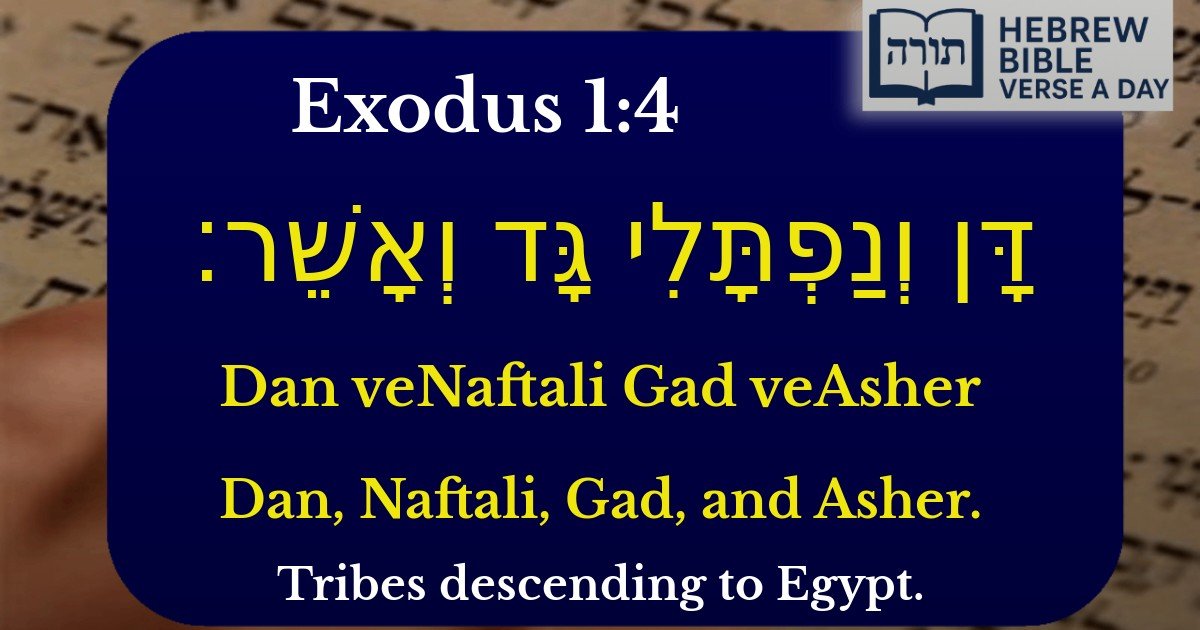

Overview of the Verse
The verse "Dan, Naftali, Gad, and Asher" lists four of the twelve tribes of Israel. These tribes are the descendants of Jacob's sons, each with unique characteristics and roles within the nation of Israel. Traditional Jewish sources provide insights into the spiritual and historical significance of each tribe.
Commentary on Each Tribe
Spiritual Significance
The order and grouping of these tribes often carry deeper meaning. The Midrash (Bamidbar Rabbah 2:7) teaches that each tribe's placement in the camp corresponded to their spiritual role. For example, Dan's position at the rear symbolized their role in protecting the nation from spiritual and physical threats. The inclusion of these tribes together may also hint at their complementary qualities—strength (Gad), swiftness (Naftali), judgment (Dan), and prosperity (Asher)—reflecting the diversity and unity of Klal Yisrael.
Historical Context
These tribes played vital roles in Israel's history. Gad and Naftali, for instance, were known for their valor in battles (Divrei HaYamim I 12:9-15). Asher's agricultural blessings sustained the nation, while Dan's descendants, including the judge Samson (Shofetim 13:2), delivered the people from oppression. The verse thus encapsulates their enduring legacy within the Jewish people.