

Join Our Newsletter To Be Informed When New Videos Are Posted
Hebrew Text
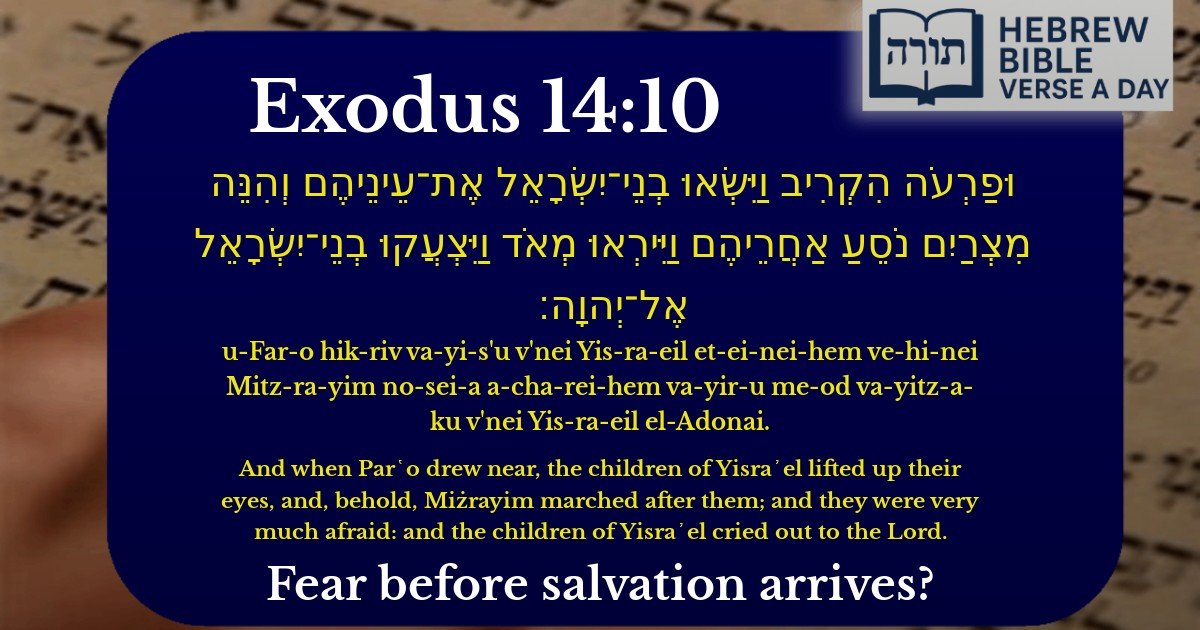
וּפַרְעֹה הִקְרִיב וַיִּשְׂאוּ בְנֵי־יִשְׂרָאֵל אֶת־עֵינֵיהֶם וְהִנֵּה מִצְרַיִם נֹסֵעַ אַחֲרֵיהֶם וַיִּירְאוּ מְאֹד וַיִּצְעֲקוּ בְנֵי־יִשְׂרָאֵל אֶל־יְהוָה׃
English Translation
And when Par῾o drew near, the children of Yisra᾽el lifted up their eyes, and, behold, Miżrayim marched after them; and they were very much afraid: and the children of Yisra᾽el cried out to the Lord.
Transliteration
U-Far-o hik-riv va-yi-s'u v'nei Yis-ra-eil et-ei-nei-hem ve-hi-nei Mitz-ra-yim no-sei-a a-cha-rei-hem va-yir-u me-od va-yitz-a-ku v'nei Yis-ra-eil el-Adonai.
Hebrew Leining Text
וּפַרְעֹ֖ה הִקְרִ֑יב וַיִּשְׂאוּ֩ בְנֵֽי־יִשְׂרָאֵ֨ל אֶת־עֵינֵיהֶ֜ם וְהִנֵּ֥ה מִצְרַ֣יִם&thinsp
🎵 Listen to leining
Parasha Commentary
📚 Talmud Citations
This verse is not quoted in the Talmud.
Context in the Exodus Narrative
This verse (Shemot 14:10) describes the pivotal moment when Pharaoh and the Egyptian army approach the Israelites after their departure from Egypt. The Israelites, trapped between the sea and the advancing army, experience terror and cry out to Hashem. This moment sets the stage for the miraculous splitting of the Yam Suf (Red Sea).
Rashi's Commentary on the Verse
Rashi explains that the phrase "וְהִנֵּה מִצְרַיִם נֹסֵעַ אַחֲרֵיהֶם" ("behold, Egypt was marching after them") implies that the Egyptians appeared as if they were traveling with the Israelites, suggesting they had peaceful intentions at first. However, their true malicious intent was soon revealed. Rashi also notes that the Israelites' fear stemmed from seeing the Egyptian forces in full military array, including chariots and horsemen.
The Nature of the Israelites' Fear
The Midrash (Mechilta d'Rabbi Yishmael) elaborates on the phrase "וַיִּירְאוּ מְאֹד" ("and they were very much afraid"):
The Significance of Crying Out to Hashem
Rambam (Hilchot Teshuvah 1:1) teaches that sincere prayer in times of distress is a fundamental expression of emunah (faith). The Israelites' cry ("וַיִּצְעֲקוּ בְנֵי־יִשְׂרָאֵל אֶל־יְהוָה") demonstrates their recognition that salvation comes only from Hashem, even when natural circumstances seem hopeless.
Chassidic Perspective on the Crisis
The Sfat Emet (R' Yehudah Aryeh Leib of Gur) explains that this moment was a test of faith. The Israelites had just witnessed the Ten Plagues and the Exodus, yet they still succumbed to fear when facing a new challenge. This teaches that emunah requires constant renewal, especially when confronted with new obstacles.