

Join Our Newsletter To Be Informed When New Videos Are Posted
Hebrew Text
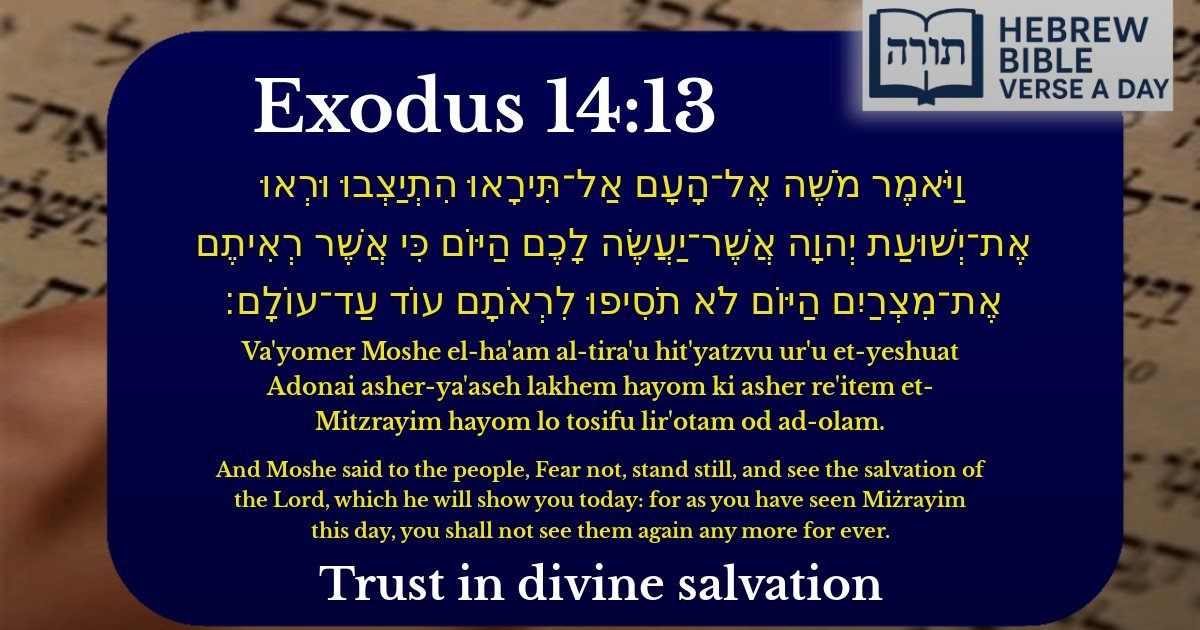
וַיֹּאמֶר מֹשֶׁה אֶל־הָעָם אַל־תִּירָאוּ הִתְיַצְבוּ וּרְאוּ אֶת־יְשׁוּעַת יְהוָה אֲשֶׁר־יַעֲשֶׂה לָכֶם הַיּוֹם כִּי אֲשֶׁר רְאִיתֶם אֶת־מִצְרַיִם הַיּוֹם לֹא תֹסִיפוּ לִרְאֹתָם עוֹד עַד־עוֹלָם׃
English Translation
And Moshe said to the people, Fear not, stand still, and see the salvation of the Lord, which he will show you today: for as you have seen Miżrayim this day, you shall not see them again any more for ever.
Transliteration
Va'yomer Moshe el-ha'am al-tira'u hit'yatzvu ur'u et-yeshuat Adonai asher-ya'aseh lakhem hayom ki asher re'item et-Mitzrayim hayom lo tosifu lir'otam od ad-olam.
Hebrew Leining Text
וַיֹּ֨אמֶר מֹשֶׁ֣ה אֶל־הָעָם֮ אַל־תִּירָ֒אוּ֒ הִֽתְיַצְּב֗וּ וּרְאוּ֙ אֶת־יְשׁוּעַ֣ת יְהֹוָ֔ה אֲשֶׁר־יַעֲשֶׂ֥ה לָכֶ֖ם הַיּ֑וֹם כִּ֗י אֲשֶׁ֨ר רְאִיתֶ֤ם אֶת־מִצְרַ֙יִם֙ הַיּ֔וֹם לֹ֥א תֹסִ֛פוּ לִרְאֹתָ֥ם ע֖וֹד עַד־עוֹלָֽם׃
🎵 Listen to leining
Parasha Commentary
📚 Talmud Citations
This verse is quoted in the Talmud.
📖 Megillah 10b
The verse is referenced in the context of discussing divine salvation and the miracles performed for Israel, emphasizing God's power and protection.
📖 Sotah 36b
The verse is cited in a discussion about the splitting of the Red Sea and the faith of the Israelites during that event.
Context of the Verse
This verse (Shemot 14:13) is spoken by Moshe to Bnei Yisrael at the shores of the Yam Suf (Red Sea), as they are trapped between the pursuing Egyptian army and the sea. The people are gripped with fear, and Moshe reassures them of Hashem's imminent salvation.
Rashi's Explanation
Rashi explains that Moshe's words "אַל־תִּירָאוּ" ("Fear not") were directed at the people's fear of the approaching Egyptian army. He emphasizes that the phrase "הִתְיַצְבוּ" ("stand still") means they should stand firm in their faith and not flee, for Hashem will fight for them. Rashi also notes that "וּרְאוּ אֶת־יְשׁוּעַת יְהוָה" ("see the salvation of the Lord") refers to the miraculous splitting of the sea, which would demonstrate Hashem's power and deliverance.
Rambam's Perspective
Rambam (Hilchot Yesodei HaTorah 8:1) discusses the concept of divine miracles and how they serve to strengthen emunah (faith). Here, the salvation at the Yam Suf was a foundational event to instill absolute trust in Hashem's providence, as Moshe directs the people to witness His intervention directly.
Midrashic Insights
Ibn Ezra's Commentary
Ibn Ezra highlights the immediacy of the salvation ("הַיּוֹם"—"today"), stressing that the redemption would happen swiftly, without delay. He also interprets "לֹא תֹסִיפוּ לִרְאֹתָם עוֹד עַד־עוֹלָם" ("you shall not see them again forever") as a promise that the Egyptian threat would be permanently eradicated.
Chassidic Interpretation
The Sefat Emet teaches that "הִתְיַצְבוּ" ("stand still") symbolizes the need for inner stability and bitachon (trust) in Hashem, even when facing seemingly insurmountable challenges. The physical salvation at the Yam Suf also reflects a spiritual lesson: true deliverance comes through unwavering faith.