

Join Our Newsletter To Be Informed When New Videos Are Posted
Hebrew Text
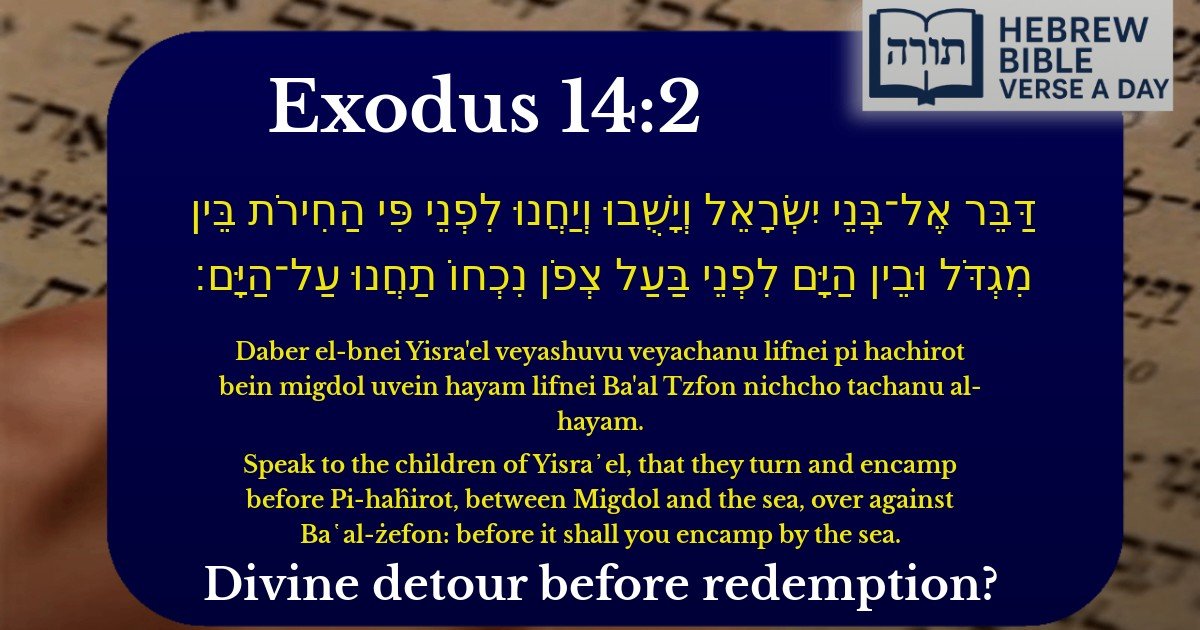
דַּבֵּר אֶל־בְּנֵי יִשְׂרָאֵל וְיָשֻׁבוּ וְיַחֲנוּ לִפְנֵי פִּי הַחִירֹת בֵּין מִגְדֹּל וּבֵין הַיָּם לִפְנֵי בַּעַל צְפֹן נִכְחוֹ תַחֲנוּ עַל־הַיָּם׃
English Translation
Speak to the children of Yisra᾽el, that they turn and encamp before Pi-haĥirot, between Migdol and the sea, over against Ba῾al-żefon: before it shall you encamp by the sea.
Transliteration
Daber el-bnei Yisra'el veyashuvu veyachanu lifnei pi hachirot bein migdol uvein hayam lifnei Ba'al Tzfon nichcho tachanu al-hayam.
Hebrew Leining Text
דַּבֵּר֮ אֶל־בְּנֵ֣י יִשְׂרָאֵל֒ וְיָשֻׁ֗בוּ וְיַחֲנוּ֙ לִפְנֵי֙ פִּ֣י הַחִירֹ֔ת בֵּ֥ין מִגְדֹּ֖ל וּבֵ֣ין הַיָּ֑ם לִפְנֵי֙ בַּ֣עַל צְפֹ֔ן נִכְח֥וֹ תַחֲנ֖וּ עַל־הַיָּֽם׃
🎵 Listen to leining
Parasha Commentary
📚 Talmud Citations
This verse is not quoted in the Talmud.
Location and Significance of Pi-haĥirot
Rashi (Shemot 14:2) explains that "Pi-haĥirot" means "the mouth of freedom," alluding to the fact that this was the place where Bnei Yisrael would ultimately achieve their freedom from Mitzrayim. The name symbolizes the transition from slavery to redemption, marking a pivotal moment in their journey.
Strategic Positioning by the Sea
The instruction to encamp by the sea appears counterintuitive, as it seemingly traps Bnei Yisrael between the sea and Pharaoh's approaching army. Ramban (Shemot 14:2) suggests that this positioning was deliberate to demonstrate Hashem's miraculous intervention. By placing them in a seemingly hopeless situation, the eventual splitting of the sea would be an undeniable display of divine power.
Ba῾al-żefon: A Test of Faith
The mention of "Ba῾al-żefon" (lit. "Master of the North") is significant. The Midrash (Shemot Rabbah 21:5) explains that this was the only Egyptian deity left standing after the plagues, preserved by Hashem to test Bnei Yisrael's faith. Pharaoh, seeing them encamped near this idol, would mistakenly believe his god was delivering them into his hands, thereby emboldening him to pursue them.
Between Migdol and the Sea
Divine Plan for Kiddush Hashem
The Sforno (Shemot 14:2) highlights that this encampment was designed to sanctify Hashem's name. By orchestrating events so that Pharaoh would chase Bnei Yisrael into a dead end, the subsequent miracles would publicly affirm Hashem's supremacy over nature and the false gods of Egypt, ultimately leading to the declaration, "Hashem yilachem lachem" (Shemot 14:14).