

Join Our Newsletter To Be Informed When New Videos Are Posted
Hebrew Text
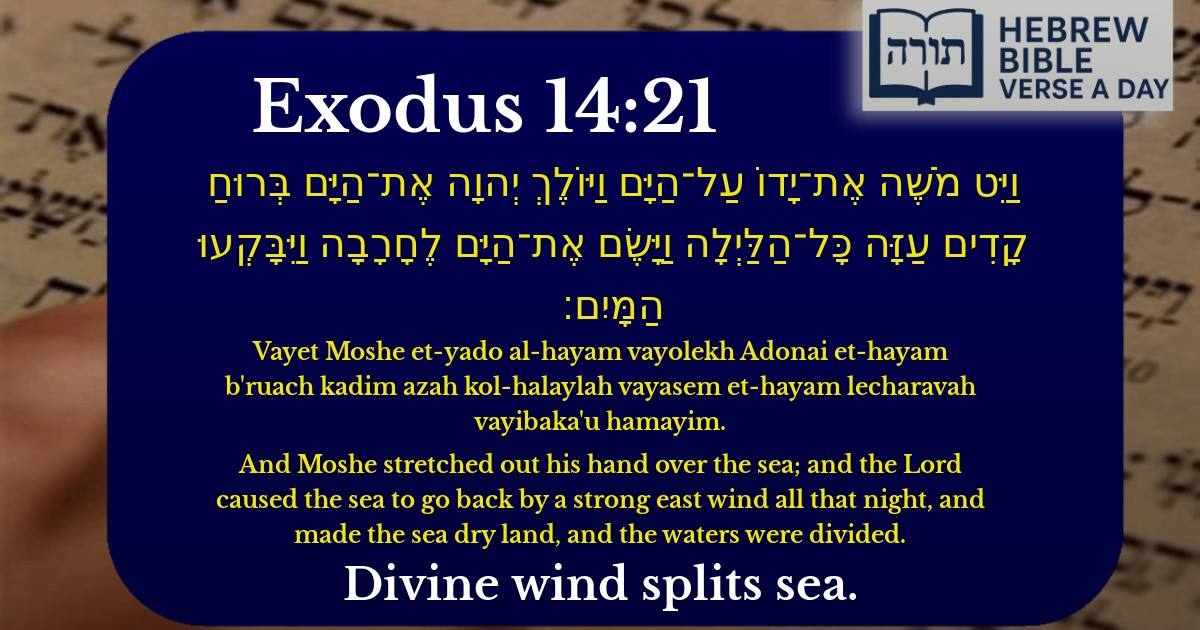
וַיֵּט מֹשֶׁה אֶת־יָדוֹ עַל־הַיָּם וַיּוֹלֶךְ יְהוָה אֶת־הַיָּם בְּרוּחַ קָדִים עַזָּה כָּל־הַלַּיְלָה וַיָּשֶׂם אֶת־הַיָּם לֶחָרָבָה וַיִּבָּקְעוּ הַמָּיִם׃
English Translation
And Moshe stretched out his hand over the sea; and the Lord caused the sea to go back by a strong east wind all that night, and made the sea dry land, and the waters were divided.
Transliteration
Vayet Moshe et-yado al-hayam vayolekh Adonai et-hayam b'ruach kadim azah kol-halaylah vayasem et-hayam lecharavah vayibaka'u hamayim.
Hebrew Leining Text
וַיֵּ֨ט מֹשֶׁ֣ה אֶת־יָדוֹ֮ עַל־הַיָּם֒ וַיּ֣וֹלֶךְ יְהֹוָ֣ה&thinsp
🎵 Listen to leining
Parasha Commentary
📚 Talmud Citations
This verse is quoted in the Talmud.
📖 Megillah 10b
The verse is referenced in a discussion about the miracles performed during the Exodus, particularly the splitting of the Red Sea.
📖 Sotah 36b
The verse is cited in the context of discussing the actions of Moses and the divine intervention during the Exodus.
The Miracle of the Splitting of the Sea
The verse describes the miraculous event of Kriyat Yam Suf (the splitting of the Red Sea), where Moshe stretched out his hand over the sea, and Hashem caused the sea to divide through a strong east wind. This event is foundational in Jewish tradition, demonstrating Hashem's absolute power over nature and His salvation of Bnei Yisrael.
Rashi's Explanation of Moshe's Action
Rashi (Shemot 14:21) notes that the phrase "וַיֵּט מֹשֶׁה אֶת־יָדוֹ" ("And Moshe stretched out his hand") does not mean that Moshe himself caused the sea to split. Rather, it was a symbolic gesture demonstrating that the miracle was performed in response to Moshe's faith and obedience to Hashem's command. The actual splitting was entirely the work of Hashem.
The Role of the East Wind
The verse mentions that Hashem used a "רוּחַ קָדִים עַזָּה" ("strong east wind") to dry the sea. The Midrash (Shemot Rabbah 21:6) explains that this wind was not an ordinary natural phenomenon but a specially created wind for this miracle. The Rambam (Moreh Nevuchim 2:29) discusses how Hashem can manipulate natural forces to perform miracles while maintaining the appearance of natural processes.
The Timing of the Miracle
The phrase "כָּל־הַלַּיְלָה" ("all that night") teaches that the splitting did not happen instantaneously but unfolded gradually. The Mechilta (Beshalach 4) explains that this was to test the faith of Bnei Yisrael—only those who entered the sea with complete trust in Hashem merited to witness the full miracle.
The Significance of the Dry Land
The verse states "וַיָּשֶׂם אֶת־הַיָּם לֶחָרָבָה" ("and made the sea dry land"). The Talmud (Sotah 36b) elaborates that the sea floor was not merely exposed but transformed into solid, walkable ground—a double miracle of both splitting the waters and hardening the seabed. This demonstrated Hashem's complete mastery over creation.
Spiritual Lessons from the Splitting