

Join Our Newsletter To Be Informed When New Videos Are Posted
Hebrew Text
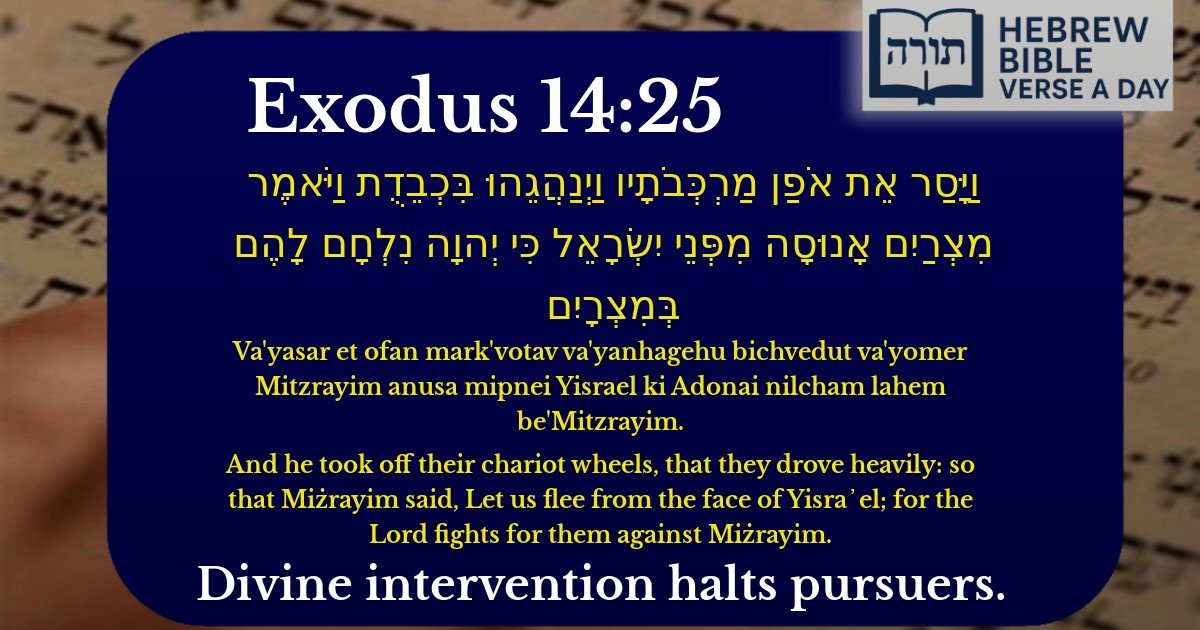
וַיָּסַר אֵת אֹפַן מַרְכְּבֹתָיו וַיְנַהֲגֵהוּ בִּכְבֵדֻת וַיֹּאמֶר מִצְרַיִם אָנוּסָה מִפְּנֵי יִשְׂרָאֵל כִּי יְהוָה נִלְחָם לָהֶם בְּמִצְרָיִם
English Translation
And he took off their chariot wheels, that they drove heavily: so that Miżrayim said, Let us flee from the face of Yisra᾽el; for the Lord fights for them against Miżrayim.
Transliteration
Va'yasar et ofan mark'votav va'yanhagehu bichvedut va'yomer Mitzrayim anusa mipnei Yisrael ki Adonai nilcham lahem be'Mitzrayim.
Hebrew Leining Text
וַיָּ֗סַר אֵ֚ת אֹפַ֣ן מַרְכְּבֹתָ֔יו וַֽיְנַהֲגֵ֖הוּ בִּכְבֵדֻ֑ת וַיֹּ֣אמֶר מִצְרַ֗יִם אָנ֙וּסָה֙ מִפְּנֵ֣י יִשְׂרָאֵ֔ל כִּ֣י יְהֹוָ֔ה נִלְחָ֥ם לָהֶ֖ם בְּמִצְרָֽיִם׃ {פ}
🎵 Listen to leining
Parasha Commentary
📚 Talmud Citations
This verse is not quoted in the Talmud.
Context in Shemot (Exodus) 14:25
This verse describes the climax of Kriyat Yam Suf (the Splitting of the Red Sea), where Hashem intervenes to save Bnei Yisrael from the pursuing Egyptian army. The removal of the chariot wheels and the subsequent declaration by the Egyptians highlight Divine intervention and the recognition of Hashem's power.
Rashi's Explanation of "וַיָּסַר אֵת אֹפַן מַרְכְּבֹתָיו"
Rashi (Shemot 14:25) explains that Hashem caused the wheels of the Egyptian chariots to become detached ("ויסר"—"He removed"), making them immobile. This was a miraculous act, as the wheels were not merely stuck but actively removed from their axles. Rashi further notes that the Egyptians themselves acknowledged this as supernatural, leading to their realization that "Hashem fights for Israel."
Meaning of "וַיְנַהֲגֵהוּ בִּכְבֵדֻת"
The phrase "וינהגהו בכבדת" ("that they drove heavily") is interpreted by the Mechilta (a halachic Midrash on Shemot) to mean that the chariots became burdensome and difficult to maneuver. The Ibn Ezra adds that this was a direct result of the wheels being removed, causing the chariots to sink into the muddy seabed, further demonstrating Hashem's control over nature.
Egypt's Declaration: "אָנוּסָה מִפְּנֵי יִשְׂרָאֵל"
The Egyptians' cry, "Let us flee from before Israel", reflects their sudden recognition of Divine justice. The Midrash Tanchuma (Beshalach 10) explains that at this moment, Pharaoh’s army understood that they were not merely fighting Israel but opposing Hashem Himself. This aligns with the principle of "המקום נלחם להם" ("The Omnipresent fights for them"), emphasizing that their defeat was inevitable.
Rambam's Perspective on Divine Intervention
Rambam (Hilchot Yesodei HaTorah 8:1) discusses miracles as temporary suspensions of natural law to affirm Hashem’s sovereignty. Here, the removal of the chariot wheels served as an unmistakable sign that Egypt’s military might was powerless against Divine will, reinforcing the lesson that "כי ה' נלחם להם" ("for Hashem fights for them").
Lessons from the Verse