

Join Our Newsletter To Be Informed When New Videos Are Posted
Hebrew Text
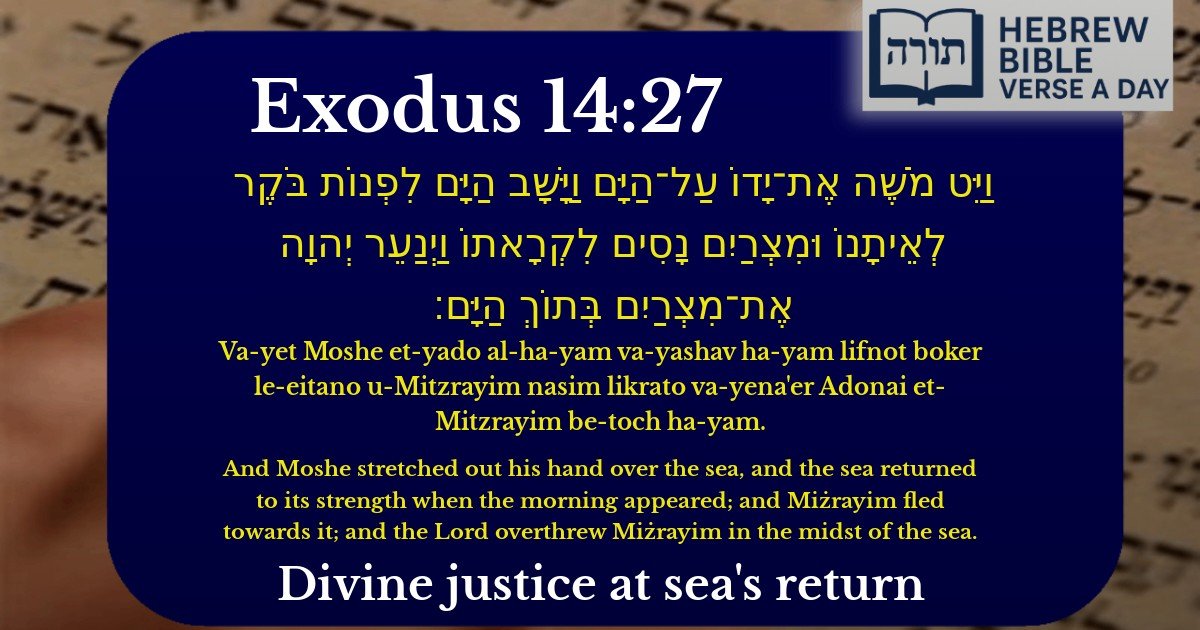
וַיֵּט מֹשֶׁה אֶת־יָדוֹ עַל־הַיָּם וַיָּשָׁב הַיָּם לִפְנוֹת בֹּקֶר לְאֵיתָנוֹ וּמִצְרַיִם נָסִים לִקְרָאתוֹ וַיְנַעֵר יְהוָה אֶת־מִצְרַיִם בְּתוֹךְ הַיָּם׃
English Translation
And Moshe stretched out his hand over the sea, and the sea returned to its strength when the morning appeared; and Miżrayim fled towards it; and the Lord overthrew Miżrayim in the midst of the sea.
Transliteration
Va-yet Moshe et-yado al-ha-yam va-yashav ha-yam lifnot boker le-eitano u-Mitzrayim nasim likrato va-yena'er Adonai et-Mitzrayim be-toch ha-yam.
Hebrew Leining Text
וַיֵּט֩ מֹשֶׁ֨ה אֶת־יָד֜וֹ עַל־הַיָּ֗ם וַיָּ֨שׇׁב הַיָּ֜ם לִפְנ֥וֹת בֹּ֙קֶר֙ לְאֵ֣יתָנ֔וֹ וּמִצְרַ֖יִם נָסִ֣ים לִקְרָאת֑וֹ וַיְנַעֵ֧ר יְהֹוָ֛ה אֶת־מִצְרַ֖יִם בְּת֥וֹךְ הַיָּֽם׃
🎵 Listen to leining
Parasha Commentary
📚 Talmud Citations
This verse is quoted in the Talmud.
📖 Megillah 10b
The verse is referenced in a discussion about the miracles performed at the Red Sea, emphasizing God's power and the downfall of the Egyptians.
📖 Sotah 36b
The verse is cited in a discussion about the splitting of the Red Sea and the actions of Moses, highlighting the divine intervention in the event.
Moshe's Action and the Sea's Return
The verse states, "וַיֵּט מֹשֶׁה אֶת־יָדוֹ עַל־הַיָּם" ("And Moshe stretched out his hand over the sea"). Rashi explains that this action was not merely symbolic but a fulfillment of Hashem's command (Exodus 14:26). The Midrash (Shemot Rabbah 21:6) elaborates that Moshe's outstretched hand demonstrated his complete faith in Hashem's power, serving as a model for future generations to trust in divine intervention even when the natural order seems immutable.
The Timing of the Sea's Return
The phrase "לִפְנוֹת בֹּקֶר" ("when the morning appeared") is interpreted by the Talmud (Berachot 9b) as referring to the last watch of the night, just before dawn. Rambam (Hilchot Teshuvah 2:4) notes that this timing symbolizes the idea that salvation often comes at the darkest hour, reinforcing the theme of divine providence (השגחה פרטית). The sea returned "לְאֵיתָנוֹ" ("to its strength"), which Ibn Ezra explains as its natural state, emphasizing that the miracle was temporary and controlled by Hashem's will.
The Egyptians' Flight and Destruction
The verse describes how "מִצְרַיִם נָסִים לִקְרָאתוֹ" ("Miżrayim fled towards it"). The Mechilta (Beshalach 6) comments that the Egyptians, in their panic, ran toward the sea rather than away from it, demonstrating their irrational desperation. This aligns with the principle of divine judgment (מידת הדין), where Hashem sometimes causes the wicked to act against their own survival.
The phrase "וַיְנַעֵר יְהוָה אֶת־מִצְרַיִם בְּתוֹךְ הַיָּם" ("the Lord overthrew Miżrayim in the midst of the sea") is interpreted by the Midrash (Pirkei DeRabbi Eliezer 42) as a violent shaking, uprooting the Egyptians like chaff in the wind. The Kli Yakar adds that this language reflects the complete annihilation of their power, ensuring they could no longer pursue Bnei Yisrael.
Key Themes from Orthodox Jewish Sources