

Join Our Newsletter To Be Informed When New Videos Are Posted
Hebrew Text
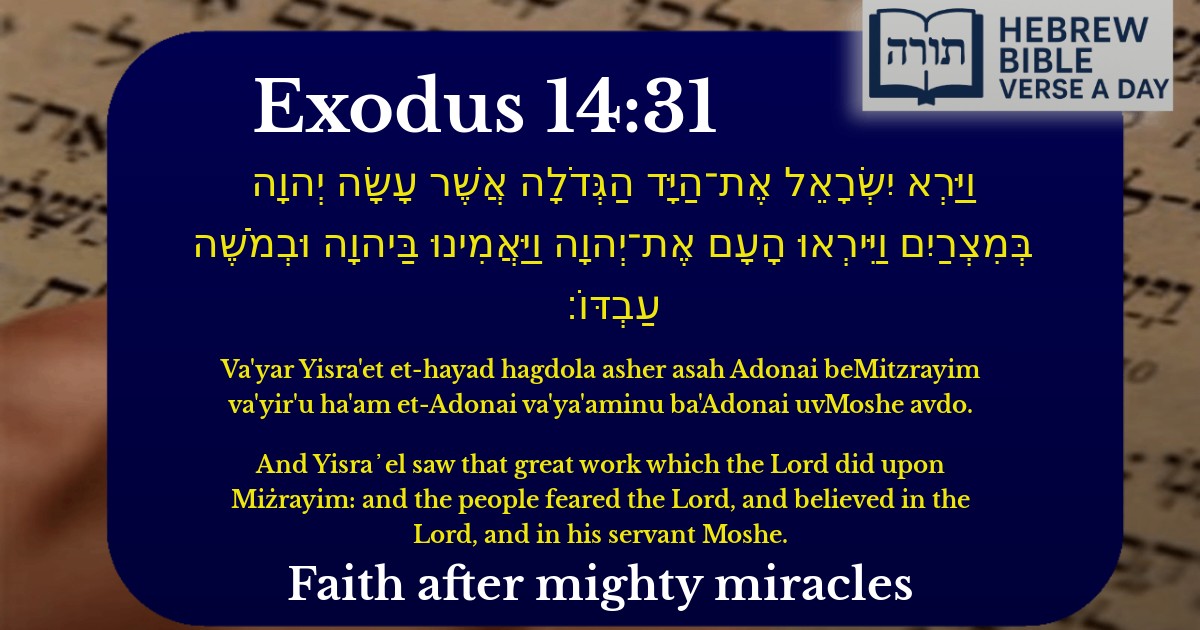
וַיַּרְא יִשְׂרָאֵל אֶת־הַיָּד הַגְּדֹלָה אֲשֶׁר עָשָׂה יְהוָה בְּמִצְרַיִם וַיִּירְאוּ הָעָם אֶת־יְהוָה וַיַּאֲמִינוּ בַּיהוָה וּבְמֹשֶׁה עַבְדּוֹ׃
English Translation
And Yisra᾽el saw that great work which the Lord did upon Miżrayim: and the people feared the Lord, and believed in the Lord, and in his servant Moshe.
Transliteration
Va'yar Yisra'et et-hayad hagdola asher asah Adonai beMitzrayim va'yir'u ha'am et-Adonai va'ya'aminu ba'Adonai uvMoshe avdo.
Hebrew Leining Text
וַיַּ֨רְא יִשְׂרָאֵ֜ל אֶת־הַיָּ֣ד הַגְּדֹלָ֗ה אֲשֶׁ֨ר עָשָׂ֤ה יְהֹוָה֙ בְּמִצְרַ֔יִם וַיִּֽירְא֥וּ הָעָ֖ם אֶת־יְהֹוָ֑ה וַֽיַּאֲמִ֙ינוּ֙ בַּֽיהֹוָ֔ה וּבְמֹשֶׁ֖ה עַבְדּֽוֹ׃ {פ}
🎵 Listen to leining
Parasha Commentary
📚 Talmud Citations
This verse is quoted in the Talmud.
📖 Sotah 31a
The verse is cited in a discussion about the nature of faith and fear of God, illustrating how the Israelites' belief in God and Moses was strengthened by witnessing the miracles in Egypt.
The Great Hand of Hashem
The verse states, "And Yisrael saw that great work which the Lord did upon Mitzrayim". Rashi explains that the "great hand" refers to the mighty and supernatural miracles performed by Hashem during the Exodus, particularly the splitting of the Red Sea (Yam Suf). The term "הַיָּד הַגְּדֹלָה" (the great hand) emphasizes that these were not natural events but direct divine interventions, demonstrating Hashem's absolute power over creation.
Fear and Belief in Hashem
The verse continues, "and the people feared the Lord, and believed in the Lord". The Rambam (Hilchos Yesodei HaTorah 1:1-2) teaches that witnessing such miracles instills yiras Hashem (fear/awe of G-d) and strengthens emunah (faith). The Talmud (Makkos 23b) notes that this belief was not merely intellectual but experiential—they saw and internalized Hashem's presence.
Belief in Moshe as Hashem's Servant
The verse concludes, "and in Moshe His servant". The Midrash (Shemos Rabbah 23:5) explains that recognizing Moshe's role as עַבְדּוֹ (His servant) was essential because a true prophet must be validated through undeniable signs. The people now fully accepted Moshe's leadership and his divine mission, as his prophecies had been confirmed through the plagues and the Exodus.