

Join Our Newsletter To Be Informed When New Videos Are Posted
Hebrew Text
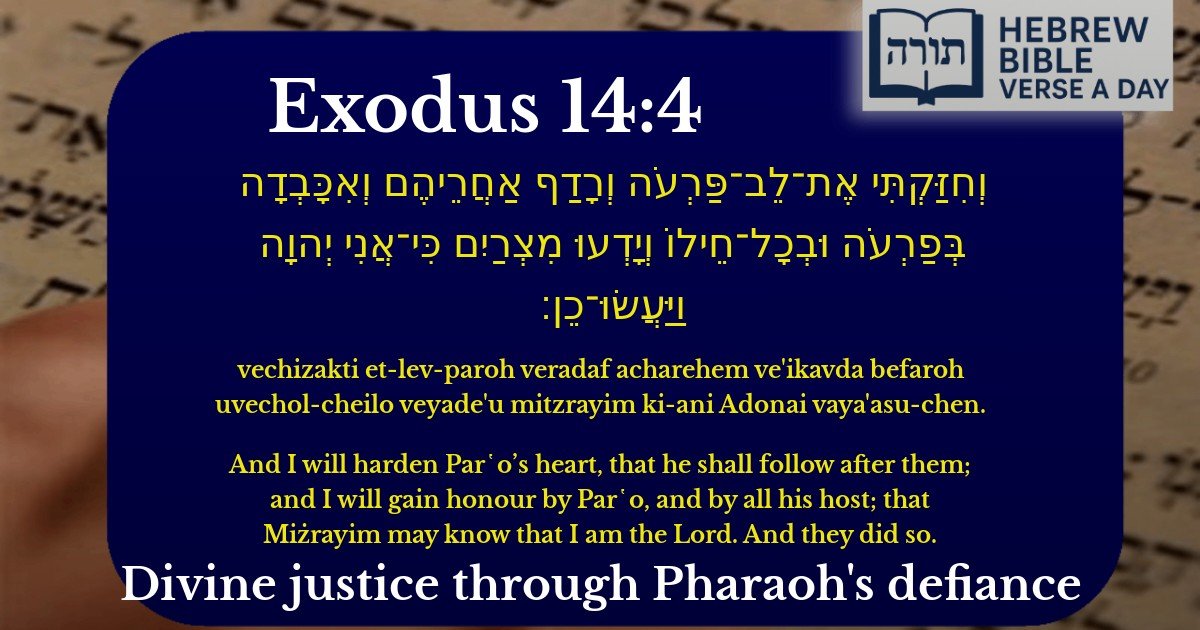
וְחִזַּקְתִּי אֶת־לֵב־פַּרְעֹה וְרָדַף אַחֲרֵיהֶם וְאִכָּבְדָה בְּפַרְעֹה וּבְכָל־חֵילוֹ וְיָדְעוּ מִצְרַיִם כִּי־אֲנִי יְהוָה וַיַּעֲשׂוּ־כֵן׃
English Translation
And I will harden Par῾o’s heart, that he shall follow after them; and I will gain honour by Par῾o, and by all his host; that Miżrayim may know that I am the Lord. And they did so.
Transliteration
Vechizakti et-lev-paroh veradaf acharehem ve'ikavda befaroh uvechol-cheilo veyade'u mitzrayim ki-ani Adonai vaya'asu-chen.
Hebrew Leining Text
וְחִזַּקְתִּ֣י אֶת־לֵב־פַּרְעֹה֮ וְרָדַ֣ף אַחֲרֵיהֶם֒ וְאִכָּבְדָ֤ה בְּפַרְעֹה֙ וּבְכׇל־חֵיל֔וֹ וְיָדְע֥וּ מִצְרַ֖יִם כִּֽי־אֲנִ֣י יְהֹוָ֑ה וַיַּֽעֲשׂוּ־כֵֽן׃
🎵 Listen to leining
Parasha Commentary
📚 Talmud Citations
This verse is quoted in the Talmud.
📖 Sotah 36b
The verse is referenced in the context of discussing Pharaoh's hardened heart and the miracles performed in Egypt, illustrating God's power and sovereignty.
📖 Megillah 10b
The verse is mentioned in a discussion about the hardening of Pharaoh's heart and the divine purpose behind it, emphasizing the recognition of God's might by the Egyptians.
The Hardening of Pharaoh's Heart
The verse states, "And I will harden Pharaoh’s heart, that he shall follow after them" (Shemot 14:4). Rashi explains that Hashem hardened Pharaoh’s heart after he had already sinned repeatedly by refusing to release Bnei Yisrael despite witnessing the plagues. This hardening was a form of divine justice—denying Pharaoh the opportunity to repent after he had persistently rejected the signs of Hashem’s power. The Rambam (Hilchot Teshuvah 6:3) similarly teaches that when a sinner continues in their ways without repenting, Hashem may withhold the ability to repent as a punishment.
Divine Honor Through Pharaoh’s Actions
The verse continues, "And I will gain honor by Pharaoh, and by all his host". The Midrash (Shemot Rabbah 21:5) explains that Pharaoh’s pursuit of Bnei Yisrael into the Yam Suf would lead to a greater revelation of Hashem’s glory. By drowning Pharaoh and his army, Hashem demonstrated His absolute sovereignty to both the Egyptians and the Israelites. The Ibn Ezra notes that this public display of divine justice served as a lesson to all nations.
Recognition of Hashem’s Sovereignty
The verse concludes, "That Egypt may know that I am the Lord". The Netziv (Ha'amek Davar) emphasizes that the plagues and the splitting of the sea were not merely punitive but educational—forcing Egypt to acknowledge Hashem’s dominion. The Talmud (Sotah 11a) teaches that even Pharaoh’s magicians ultimately admitted, "This is the finger of G-d" (Shemot 8:15), showing that the recognition of divine power was inevitable.
Key Lessons from the Verse