

Join Our Newsletter To Be Informed When New Videos Are Posted
Hebrew Text
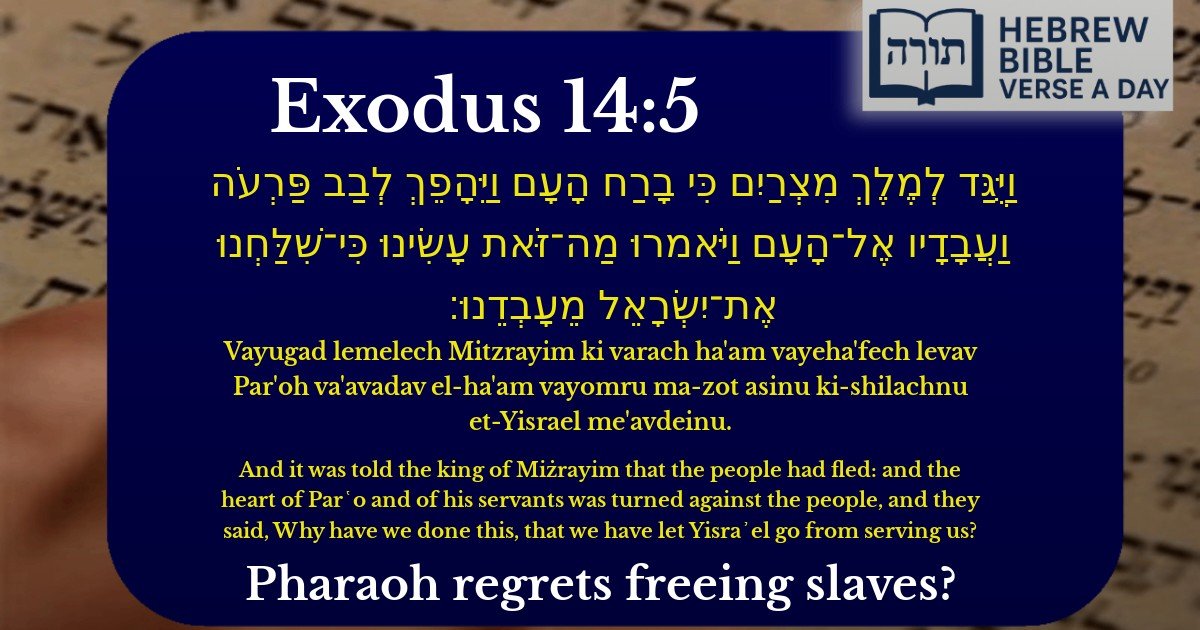
וַיֻּגַּד לְמֶלֶךְ מִצְרַיִם כִּי בָרַח הָעָם וַיֵּהָפֵךְ לְבַב פַּרְעֹה וַעֲבָדָיו אֶל־הָעָם וַיֹּאמרוּ מַה־זֹּאת עָשִׂינוּ כִּי־שִׁלַּחְנוּ אֶת־יִשְׂרָאֵל מֵעָבְדֵנוּ׃
English Translation
And it was told the king of Miżrayim that the people had fled: and the heart of Par῾o and of his servants was turned against the people, and they said, Why have we done this, that we have let Yisra᾽el go from serving us?
Transliteration
Vayugad lemelech Mitzrayim ki varach ha'am vayeha'fech levav Par'oh va'avadav el-ha'am vayomru ma-zot asinu ki-shilachnu et-Yisrael me'avdeinu.
Hebrew Leining Text
וַיֻּגַּד֙ לְמֶ֣לֶךְ מִצְרַ֔יִם כִּ֥י בָרַ֖ח הָעָ֑ם וַ֠יֵּהָפֵ֠ךְ לְבַ֨ב פַּרְעֹ֤ה וַעֲבָדָיו֙ אֶל־הָעָ֔ם וַיֹּֽאמְרוּ֙ מַה־זֹּ֣את עָשִׂ֔ינוּ כִּֽי־שִׁלַּ֥חְנוּ אֶת־יִשְׂרָאֵ֖ל מֵעׇבְדֵֽנוּ׃
🎵 Listen to leining
Parasha Commentary
📚 Talmud Citations
This verse is not quoted in the Talmud.
Pharaoh's Change of Heart
The verse describes Pharaoh's sudden regret after allowing Bnei Yisrael to leave Egypt. Rashi (Shemot 14:5) explains that Pharaoh and his servants initially consented to their departure due to the overwhelming devastation of the Ten Plagues. However, upon realizing that Bnei Yisrael had no intention of returning after their three-day journey (as initially requested), their hearts hardened again.
The Nature of "וַיֵּהָפֵךְ לְבַב" (The Heart Was Turned)
The phrase "וַיֵּהָפֵךְ לְבַב" indicates a complete reversal of attitude. The Midrash Tanchuma (Beshalach 1) teaches that this was a divine intervention—Hashem hardened Pharaoh's heart to pursue Bnei Yisrael, thereby setting the stage for the final redemption at the Yam Suf. Rambam (Hilchot Teshuvah 6:3) discusses how repeated sinful behavior can lead to a state where repentance becomes impossible, which aligns with Pharaoh's persistent defiance.
Pharaoh's Servants' Realization
The exclamation "מַה־זֹּאת עָשִׂינוּ" ("What have we done?") reflects their belated recognition of the economic and labor consequences of losing Bnei Yisrael. The Malbim (Shemot 14:5) notes that their regret stemmed from self-interest rather than moral reflection—they lamented the loss of their slaves, not the injustice of slavery itself.
Lessons in Divine Providence