

Join Our Newsletter To Be Informed When New Videos Are Posted
Hebrew Text
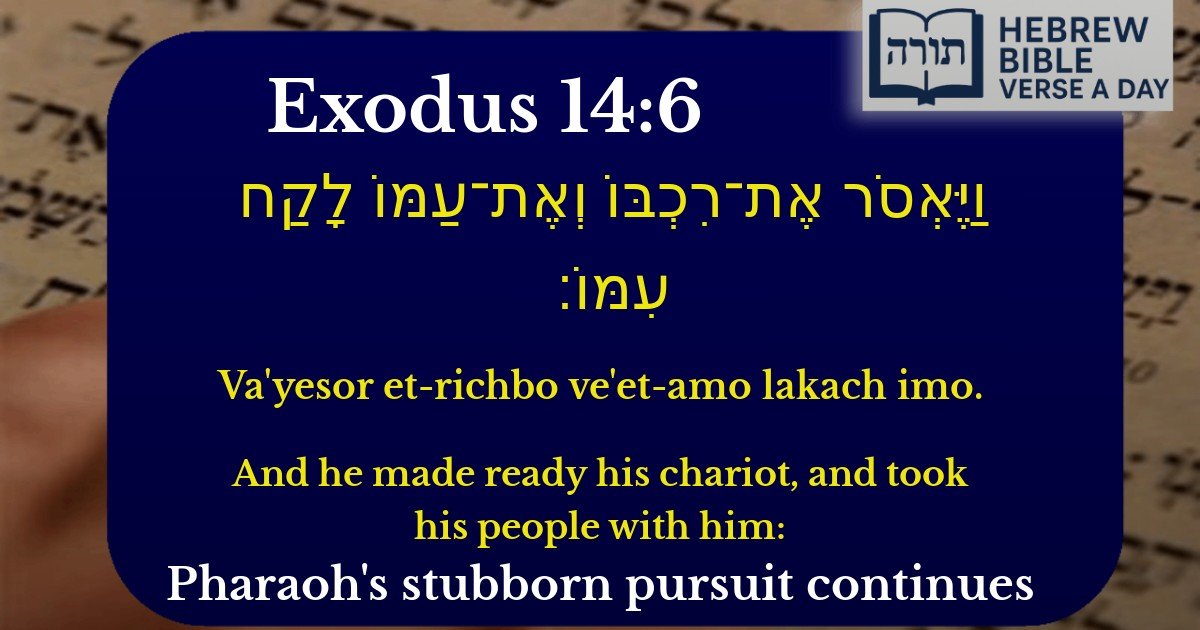
וַיֶּאְסֹר אֶת־רִכְבּוֹ וְאֶת־עַמּוֹ לָקַח עִמּוֹ׃
English Translation
And he made ready his chariot, and took his people with him:
Transliteration
Va'yesor et-richbo ve'et-amo lakach imo.
Hebrew Leining Text
וַיֶּאְסֹ֖ר אֶת־רִכְבּ֑וֹ וְאֶת־עַמּ֖וֹ לָקַ֥ח עִמּֽוֹ׃
🎵 Listen to leining
Parasha Commentary
📚 Talmud Citations
This verse is not quoted in the Talmud.
Context of the Verse
This verse (Shemot/Exodus 14:6) describes Pharaoh's preparations to pursue the Israelites after they left Egypt. The phrase "וַיֶּאְסֹר אֶת־רִכְבּוֹ" ("And he made ready his chariot") signifies Pharaoh's personal involvement in leading the chase, demonstrating his stubbornness and refusal to accept Hashem's supremacy even after the ten plagues.
Rashi's Commentary
Rashi explains that Pharaoh himself harnessed his chariot, rather than delegating this task to his servants. This emphasizes his eagerness and determination to recapture the Israelites, as he personally took charge of the mission. Rashi also notes that Pharaoh took "his people" (עַמּוֹ), referring not only to his soldiers but also to the Egyptian populace, indicating a national mobilization against Bnei Yisrael.
Midrashic Insights
Rambam's Perspective
In Moreh Nevuchim (Guide for the Perplexed 3:36), Rambam discusses Pharaoh's hardened heart as an example of divine justice. By pursuing the Israelites despite clear signs of Hashem's power, Pharaoh demonstrated his free will in choosing evil, thereby justifying his eventual punishment at the Yam Suf (Red Sea).
Symbolism of the Chariot
The Malbim notes that Pharaoh's chariot represents his reliance on military might and human power, in contrast to Bnei Yisrael's dependence on divine salvation. This theme recurs throughout the Exodus narrative, emphasizing that true victory comes from Hashem, not human strength.