

Join Our Newsletter To Be Informed When New Videos Are Posted
Hebrew Text
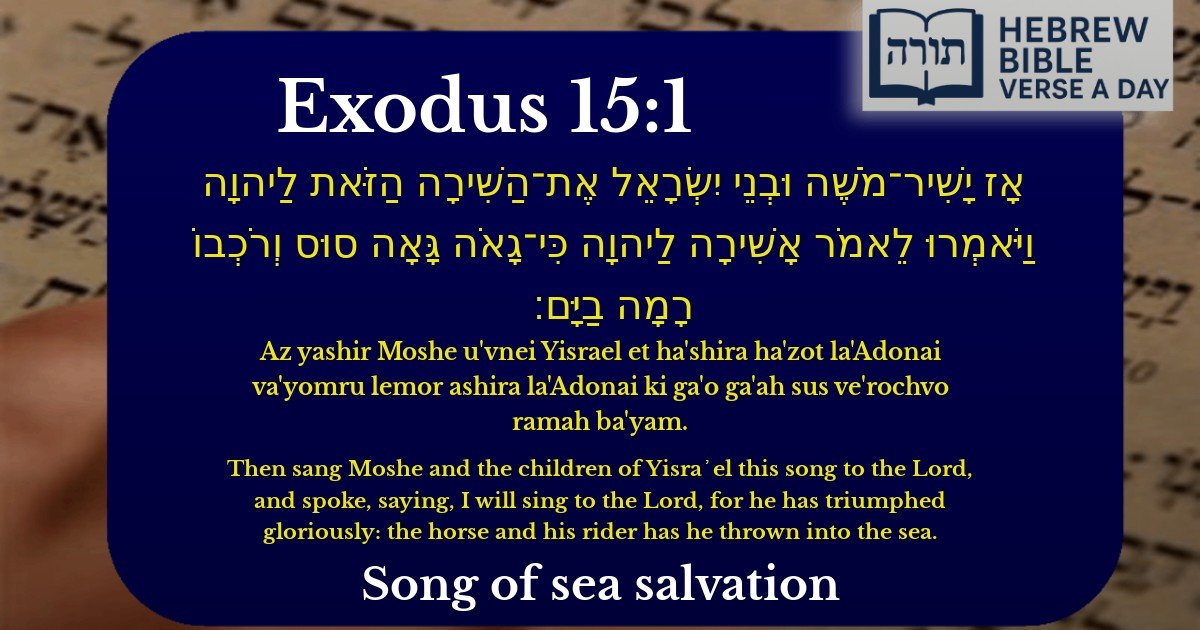
אָז יָשִׁיר־מֹשֶׁה וּבְנֵי יִשְׂרָאֵל אֶת־הַשִּׁירָה הַזֹּאת לַיהוָה וַיֹּאמְרוּ לֵאמֹר אָשִׁירָה לַיהוָה כִּי־גָאֹה גָּאָה סוּס וְרֹכְבוֹ רָמָה בַיָּם׃
English Translation
Then sang Moshe and the children of Yisra᾽el this song to the Lord, and spoke, saying, I will sing to the Lord, for he has triumphed gloriously: the horse and his rider has he thrown into the sea.
Transliteration
Az yashir Moshe u'vnei Yisrael et ha'shira ha'zot la'Adonai va'yomru lemor ashira la'Adonai ki ga'o ga'ah sus ve'rochvo ramah ba'yam.
Hebrew Leining Text
אָ֣ז יָשִֽׁיר־מֹשֶׁה֩ וּבְנֵ֨י יִשְׂרָאֵ֜ל אֶת־הַשִּׁירָ֤ה הַזֹּאת֙ לַֽיהֹוָ֔ה וַיֹּאמְר֖וּ לֵאמֹ֑ר 
🎵 Listen to leining
Parasha Commentary
📚 Talmud Citations
This verse is quoted in the Talmud.
📖 Sotah 30b
The verse is discussed in the context of the Song of the Sea (Shirat HaYam) and its recitation by Moses and the Israelites. The Talmud explores the manner in which the song was sung and its significance.
📖 Megillah 10b
The verse is referenced in a discussion about the miracles performed by God for the Israelites, particularly the splitting of the Red Sea, and the subsequent song of praise.
📖 Sanhedrin 91b
The verse is mentioned in a broader discussion about resurrection and the future redemption, drawing parallels between the past deliverance at the Red Sea and future salvation.
The Song at the Sea (Shirat HaYam)
The verse describes the moment when Moshe and Bnei Yisrael sang Shirat HaYam (the Song at the Sea) after witnessing the miraculous splitting of the Yam Suf (Red Sea) and the drowning of Pharaoh's army. This song is one of the earliest recorded praises to Hashem in the Torah and is recited daily in the Pesukei D'Zimra (morning prayers).
Structure and Meaning of the Verse
The verse begins with "אָז יָשִׁיר־מֹשֶׁה וּבְנֵי יִשְׂרָאֵל" ("Then Moshe and Bnei Yisrael sang"), emphasizing the spontaneous outpouring of gratitude after witnessing Hashem's salvation. Rashi explains that the word "יָשִׁיר" (sang) is in the future tense ("will sing") to allude to the belief in Techiyat HaMeitim (Resurrection of the Dead), indicating that Moshe and Bnei Yisrael will sing this song again in the future.
The Triumph Over Pharaoh's Army
The phrase "כִּי־גָאֹה גָּאָה" ("for He has triumphed gloriously") is interpreted by the Midrash (Mechilta) as a double expression of Hashem's greatness—He is exalted in His essence (gavoh) and exalted in His deeds (ga'ah). The destruction of "סוּס וְרֹכְבוֹ" ("the horse and its rider") symbolizes the complete overthrow of Pharaoh's military might, demonstrating that Hashem fights for Yisrael.
Spiritual Significance
Grammatical Nuances
The Ibn Ezra points out that the phrase "רָמָה בַיָּם" ("thrown into the sea") uses the singular form (ramah) despite referring to many riders, teaching that each enemy was individually judged by Hashem.