

Join Our Newsletter To Be Informed When New Videos Are Posted
Hebrew Text
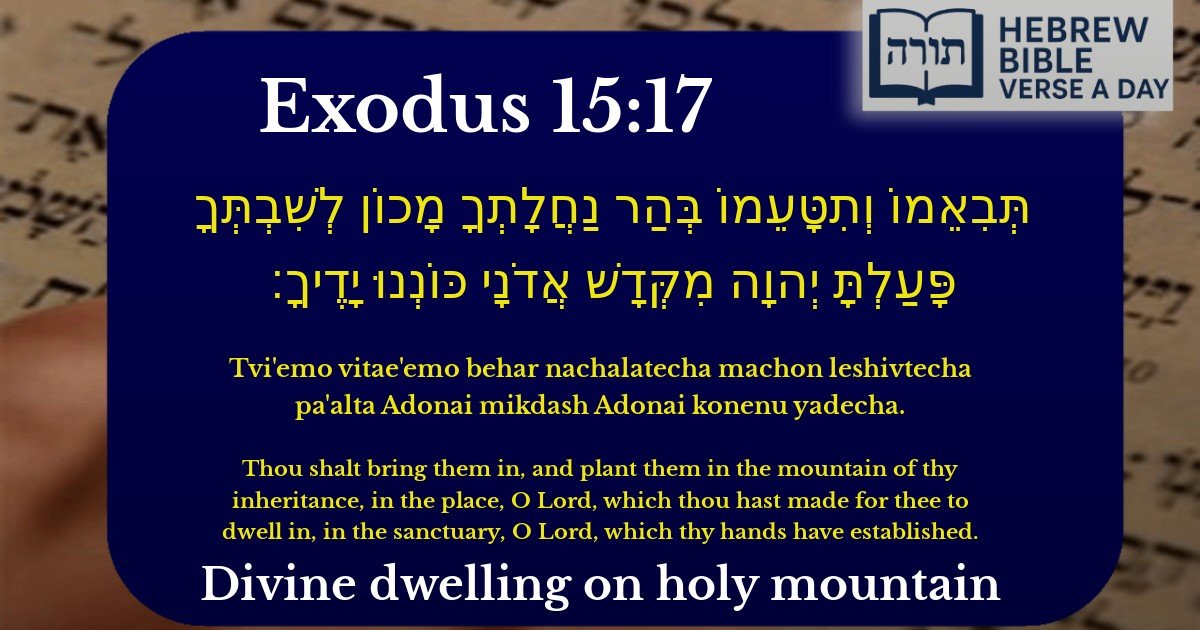
תְּבִאֵמוֹ וְתִטָּעֵמוֹ בְּהַר נַחֲלָתְךָ מָכוֹן לְשִׁבְתְּךָ פָּעַלְתָּ יְהוָה מִקְּדָשׁ אֲדֹנָי כּוֹנְנוּ יָדֶיךָ׃
English Translation
Thou shalt bring them in, and plant them in the mountain of thy inheritance, in the place, O Lord, which thou hast made for thee to dwell in, in the sanctuary, O Lord, which thy hands have established.
Transliteration
Tvi'emo vitae'emo behar nachalatecha machon leshivtecha pa'alta Adonai mikdash Adonai konenu yadecha.
Hebrew Leining Text
תְּבִאֵ֗מוֹ וְתִטָּעֵ֙מוֹ֙ בְּהַ֣ר נַחֲלָֽתְךָ֔ 
🎵 Listen to leining
Parasha Commentary
📚 Talmud Citations
This verse is not quoted in the Talmud.
Context in the Song of the Sea
This verse (Exodus 15:17) appears toward the end of Shirat HaYam (the Song of the Sea), sung by Bnei Yisrael after their miraculous crossing of the Red Sea. It expresses a prophetic vision of the future entry into Eretz Yisrael and the establishment of the Beit HaMikdash (Holy Temple).
Rashi's Explanation
Rashi explains that "the mountain of Your inheritance" refers to Har HaMoriah, the future site of the Beit HaMikdash. The phrase "the place which You have made for Your dwelling" alludes to the Mishkan (Tabernacle) and later the permanent Temple. Rashi notes that this verse demonstrates that the ultimate purpose of the Exodus was not merely liberation from Egypt, but the establishment of a dwelling place for the Divine Presence in Eretz Yisrael.
Rambam's Perspective
In Moreh Nevuchim (Guide for the Perplexed 3:32), Rambam discusses how this verse reflects the ultimate purpose of the Exodus - to bring the Jewish people to a place where they can properly serve Hashem through the sacrificial service in the Beit HaMikdash, which represents the highest form of Divine service.
Midrashic Interpretations
Kabbalistic Insight
The Zohar (2:157a) interprets "the mountain of Your inheritance" as representing the spiritual dimension of Malchut (Divine Kingship) which finds its physical manifestation in the Beit HaMikdash. The phrase "which Your hands have established" alludes to the two Temples built by human hands that were destroyed, and the future eternal Temple to be established by Divine hands.
Halachic Significance
The Sefer HaChinuch (Mitzvah 95) cites this verse when discussing the mitzvah to build the Beit HaMikdash, noting that the phrase "the place which You have made for Your dwelling" establishes that there is one specific, Divinely designated location for the Temple service.